The Big Book of Bitter Defeats

OUCH! Put Game 7 of the 2001 World Series in the Big Book of Bitter Defeats. The Arizona Diamondbacks rallied from down 2-1 in the bottom of the ninth inning against Mariano Rivera to dethrone the three-time defending World Champions and bring the title to a four-year old purple-wearing expansion team that’s $50 million dollars in debt. In the words of the Seattle Pilots manager Joe Schultz in Jim Bouton’s Ball Four, “Ah, shitfuck.”

As confident as I was when Rivera came in the game in the eighth inning to protect the slim lead, as soon as he got into trouble in the ninth, when Mark Grace singled, I knew it could get ugly. It did, and Mariano’s poor throw to second base on Damian Miller’s bunt was the backbreaker. Everything else was just a formality.

What can you say? I’d still take Mariano out there with a 1-run lead and all the money on the table every day for the rest of my life, if I had the option. Hats off to the Diamondbacks. They beat our best, and after outplaying the Yanks for most of the World Series, the veteran cast of Curt Schilling, Randy Johnson, Mark Grace, Luis Gonzalez, Matt Williams, Steve Finley, Mike Morgan, Bobby Witt, Greg Swindell, et al–a veritable roll-call of the long-suffering–deserve their World Championship.

But they also beat a deeply flawed team that had been papering over the cracks for too long, a team with a gimpy starting rotation, a short bullpen, and subpar production at every corner power position. A team that went further than even the most ardent Yankees fan could have possibly hoped, and helped to provide a welcome diversion for this tragedy-wracked city. The thrills that Joe Torre’s team has provided over the past three-and-a-half weeks, to say nothing of the past six years, are priceless–they’ll be remembered as fondly as any I’ve ever experienced in 25 years as a baseball fan. Like the times I’ve watched my other nearest and dearest teams–the L.A Dodgers in the 1978 World Series, the Utah Jazz in the 1997 and 1998 NBA Finals, the University of Utah in the 1998 NCAA Basketball Finals–fall just short of the grand prize, all I can think is, “Wow. They gave us one hell of a ride.” So, to be honest, it really doesn’t matter to me that they came up short this time. There will be no tears on this pillow tonight.

I’m reminded of a lonely, chilly October night in 1997, the night after the Yanks had been eliminated by the Indians in the first round. I was walking down Avenue A in the East Village of Manhattan and I passed a bar called 2A, which had a chalkboard in the window. It read:

“Only 107 days until Pitchers and Catchers. GO YANKEES!”

I hadn’t been a Yankee fan for very long at that time; I’d stowed myself away on the bandwagon late in ’96, a year after moving to the city. But suddenly I understood. These are the New York Yankees. You can hate them all you want, you can even celebrate having pounded that wooden stake through their heart–this time. But know this: they will be back, and they will be stepping on necks and breaking hearts sooner than the headlines can read “Expansion Team Fire Sale.” No Yankees fan takes this team and its successes for granted. No fans better understand the hair’s breadth that separates a great pitch and a bad one, the World Championship trophy and the Thanks For Playing handshake that comes with the home board-game edition. And none of us has any doubt that someday soon the Yankees will be the World Champions once again.

All the Marbles

Here it is. One game for all the marbles. There’s no tomorrow. This is do or die. Championship or bust. All the money’s on the table. This is it. This is the reason they play the…. Sorry. My cliché monkey got carried away while I was finishing my coffee. I could write a million words right now and not do justice to what’s at stake here. This is Game 7 of the World Series, and anyone–player or fan–with an imagination has been there before. No further explanation needed.

There are four pieces of very good news for Yankee fans today:

1) Randy Johnson (2-0, 1.12 ERA, 18 K in 16 IP in the World Series) probably won’t be pitching tonight.

2) Neither will Jay Witasick (54.00 ERA in 1.1 IP).

3) There will be no more Saturday games in this World Series. The Yanks have lost the two Saturday night games by a combined score of 24-3.

4) The Chow Mein group will be ordering Vietnamese Grilled Pork Chops tonight. Like a manager apportioning his resources, last night we deferred our traditional good mojo-inducing meal to a Game 7, if necessary. Perhaps we erred in not going for the kill, perhaps we were selfishly preserving our stomachs. Cholesterol counts be damned, tonight is it.

Like most Yankee fans, I found it impossible to take my own advice about enjoying the game last night. Somewhere, anywhere, it certainly DOES get better than being down 15 runs in the fourth inning in a World Series game. By the time it was 12-0, my friends and I had sought relief in Pee Wee’s Big Adventure on HBO and were considering our other Saturday night social obligations.

But, as we’ve reminded ourselves a few times during this postseason, it’s still only one game. Once it became apparent that Andy Pettitte REALLY didn’t have it, Joe Torre managed to preserve the better end of his bullpen for Game 7. Witasick and Randy Choate, who pitched 2+ innings, don’t figure much in Torre’s plans, and Mike Stanton, also with 2 innings, needed the work anyway.

That was last night, which is as gone as a Barry Bonds home run. Tonight’s matchup features two 20-game winners in Curt Schilling and Roger Clemens–a marquee pairing if there ever was one. Neither pitcher is 100%, but all hands (except for the aforementioned) are on deck to pitch. Bob Brenly will probably have to pry the ball out of Schilling’s cold, dead hand, while the Yanks will look for 6 innings from Clemens, one from Ramiro Mendoza and/or Stanton, and then two from Mariano Rivera (it’s 11 AM and my heart just started pounding with an adrenaline surge as I typed that). Neither starter has ever pitched a game as big as this. Clemens has closed out a World Series before, in 1999, and his tightrope-walking performance on Tuesday in the face of a 2-0 deficit was as clutch as he’s ever been. As for Schilling, I’m not going to review the soap opera that’s played out between him and Bob Brenly over the past three days; I suspect it’s equal parts bullshit, ego inflation, and gamesmanship directed at the Yankees.

Win or lose, this is undoubtedly the final hurrah in pinstripes for a significant portion of these Yankees. Paul O’Neill is retiring, as is Luis Sojo. Despite his home-run heroics in Game 5, Scott Brosius probably evaporated any chances of a contract renewal by opening the floodgates on a wide throw to Jorge Posada in the second inning last night. Chuck Knoblauch is likely on the first bus out of town. Tino Martinez might be gone as well. Orlando Hernandez’s status is up in the air. David Justice may have played his way out of town… the list goes on. You could win some championships with that bunch.

But those potential departures are issues for tomorrow. Tonight these are still the New York Yankees, and they’ve got a dyansty to defend. If anyone thinks they’re going down without a fight, they’d best think again. You never know what you’re going to get with a Game 7–an 11-0 blowout like in 1985 or a tense 1-0 thriller like in 1991. My money’s still on Rivera leaping into Jorge Posada’s arms once again. GO YANKEES!

The Biggest Hurdle

The Yankees are within one game of their fourth straight World Championship, but they may be facing their biggest hurdle of all. It stands six foot ten, has a wicked fastball, a mean slider, and a nasty scowl, and answers to the nickname The Big Unit. If you need to come up with one game to save your season, you could do a hell of a lot worse than having Randy Johnson on the mound.

Johnson has three Cy Young awards to his credit and deserves a fourth this year after winning 21 games and leading the league with a 2.49 ERA and 372 strikeouts. After taking a loss in Game 1 of the NL Division Series, the knock on him was that he wasn’t a big-game pitcher–he’d lost seven straight postseason games. Of course, what few bothered to consider was that his team had scored eight runs for him in that span. And anybody who’s forgotten his performance in the 1995 AL Division Series against the Yanks–after winning a one-game do-or-die against the California Angels to make the playoffs, Johnson won his start and then won the deciding Game 5 out of the bullpen–hasn’t been paying attention long enough to gain entry into this argument.

Johnson took the loss in Game 1 of this year’s Division Series against St. Louis. He allowed three runs, two in the first and one in the third. Not a terrible performance, by any stretch, but it was his worst outing of the post. Since that third inning, he’s allowed two runs over a thirty-inning span. He won three straight starts, polishing off the Braves in Game 5 of the NLCS and the Yanks in Game 2 of the World Series. Two of those three games were complete-game 3-hitters. All told, his line for the postseason: 3-1. 1.36 ERA, 39 Ks and only 25 baserunners in 33 innings. Opponents are hitting a mere .165 against him in that span.

Johnson’s a lefty, which complicates matters for the lefty-heavy Yankees. Tonight, only Tino Martinez will be in the lineup, while Paul O’Neill and David Justice will sit in favor of Chuck Knoblauch and Shane Spencer. Spencer joined Jorge Posada and Alfonso Soriano as the only Yanks to get hits off of Johnson in Game 2. Randy Velarde, who has hit Johnson well in the past (19-42 entering the series), started at first base in that game, but will be on the bench tonight–look for him to be the first pinch-hitter against Johnson.

The Yanks’ best shot at winning this game is to outlast Johnson and hope that they can do damage against the Diamondbacks’ soft bullpen. Whether it’s twice-bitten Byung Hyun Kim, geezer Mike Morgan or the various other castoffs at Bob Brenly’s mercy, the Yanks have to be feeling like they’ll go through the bullpen like a hot knife through butter. Johnson threw 111 pitches–nowhere near his season high of 147, and five below his season average–five days ago, so fatigue shouldn’t be an issue for him, the way it was with Curt Schilling’s start on three days’s rest.

The Yanks will once again depend on Andy Pettitte to keep them close. Pettitte gave up an early run in Game 2 but hung with the Big Unit almost pitch for pitch from there until he surrendered a three-run homer to Matt Williams in the 7th inning. He’s pitched some amazingly clutch games in his career and he’s as good a bet as the Yanks have going for them right now.

After the past two games, it would seem that nothing can top the drama we’ve witnessed. But either outcome tonight–the Yanks getting past the Big Unit to win #4, or Johnson forcing a Game 7 showdown between Roger Clemens and Curt Schilling–could make those key home runs by Tino Martinez, Derek Jeter, and Scott Brosius seem like yesterday’s news. This has already been the most thrilling three-and-a-half weeks of baseball I’ve ever witnessed, and the setup right now is as good as it gets, folks. Enjoy the game.

Déjà Vû All Over Again

On Wednesday night, Bob Brenly left his young closer in long enough to turn into a pumpkin, and the Yanks found some late treats in their Halloween bags. Last night the Diamondbacks’ manager was still in the festive spirit; like Santa Claus, he delivered Byung Hyun Kim to the Yankees once again. It’s like déjà vû all over again, or something.

Kim had thrown 61 pitches in Game 4 and yielded both the game-tying and game-winning home runs. Once again, the poor young closer allowed a two-out game-tying shot, this time to Scott Brosius. While Kim’s combination of misfortune and bad timing has consigned him to the circle of Hell reserved for October goats–Mitch Williams, Bill Buckner, Mickey Owen, and Ralph Branca, please welcome your new roommate–the blame for all of this should fall squarely on the shoulders of Brenly. It’s only slight hyperbole to call Brenly’s decision to send Kim out there again “the single most stupid decision in the history of organized sport,” as one post on Baseball Primer put it. The litany of Brenly’s poor decisions in the World Series grows longer by the day–must we be subjected to more bunting? And just what the hell are you doing with a lineup that features a .307 OBP in the top spot and a .386 OBP in the eighth one?

The midnight madness of the past two nights has fried my brain, shredded my vocal cords, and probably shortened my life expectancy–those pork chops take a toll. So you’ll have to forgive the piecemeal nature of the rest of this post as I point out a few things:

• Brenly’s decisions fly in the face of rational analysis, but so does the Yanks’ continued success in these situations. Since 1998, the Yanks have played 12 postseason games decided by 1 run. They’ve won all 12 (props to Rob Neyer, who pointed this out yesterday).

• ESPN ran this comparison of the Yanks bullpen and their opponents. It was late when I jotted these stats on a napkin; I think they go back to 1998, but it might be ’96:

Yanks: 8-0, 2.30 ERA, 12 saves, 0 blown saves

Opponents: 1-7, 4.70 ERA, 1 save, 7 blown saves

Come playoff time there are two types of closers: Mariano Rivera, and Everybody Else.

• The Yanks have been outscored 19-10 in the series but are up 3-2. The Pythagorean Winning Percentage (one of Bill James’ most trust formulas) of a team with that breakdown is .208, meaning their expected result over the five games is 1-4. Obviously, things haven’t quite unfolded like that. They’ve been outscored 10-9 in the past four games but are 3-1 in that span.

• David Justice looks worse than any ballplayer I’ve ever seen right now. He has no business being in the Yankee lineup. A one-legged blind man wielding a toilet plunger during a tornado would have a better chance of getting a hit right now.

• Bernie Williams isn’t winning any prizes either. He’s been sleepwalking–three times this postseason he’s gotten caught not running hard out of the batter’s box. Last night, he hit a blooper which Tony Womack dropped in short left-centerfield, but only got a single out of it. Williams might not have made it into second safely, but he should have at least run hard and taken a wide turn at first base. Anything else, quite frankly, looks horseshit, given the high stakes.

• Alfonso Soriano has had some amazing highs and lows in this series. Brilliant, run-saving diving stops in two of the last three nights, and the game-winning hit last night. On the other hand, his “throw” home in the eighth inning of Game 4 could have been mistaken for a shot-put in the general vicinity of first base, and his ground out on a 3-0 pitch to snuff a potential rally in Game 3.

• I’ve been a big fan of Curt Schilling, but I’ve seen the ugly side of his gung-ho attitude over the past few days. Publicly lobbying his manager for the Game 4 start, second-guessing him after being removed, and the head-hiding in the dugout, as if to say, “The performance of my teammates is beneath me to watch.” He clearly has no faith in his mates to get the job done, and as much as we admire those who want the ball in the crucial situations (think: Michael Jordan), that’s a poisonous attitude on a baseball team. On the other hand, this is a man who watched Mitch Williams blow four saves in one postseason (including two of his own starts), so it’s tough to blame him for his skepticism.

• Bill Simmons, the ESPN Page 2’s Sports Guy, is hilarious today, with his piece on Red Sox fans considering conversion to being Yankee fans.

• My roommate, Issa Clubb, spends as much time combing the Mac user community online as I do the baseball one. He posted this to the Macintosh News Network board. It’s too good not to share; the hyperbole is unfortunately not far from the truth. Here it is:

Nov 2, 2001 New York City — Macintosh computer geek Macaddled suffered a fatal heart attack last night in apparent response to the New York Yankees’ inability to win a normal game by scoring 3 runs in the 6th or something.

Witnesses say that he became particularly agitated when Yankee David Justice, who had one weak hit and 9 strikeouts in the Series, swung at a 3-0 pitch with a man on. Police are investigating a hole in the wall of Macaddled’s apartment which appears to bear the outlines of his fist.

They add that he began hyperventilating when he saw Arizona closer Kim out to start the 9th after having thrown 62 pitches the night before, screaming in between breaths, “Has the world gone mad??” and “Up is down!! Black is white!!”

He was unconscious at the time of Scott Brosius’ home run. He regained consciousness only to see that Mike Morgan, his great-grandcousin, was pitching in the 10th. He promptly fainted and was blissfully unaware of Mariano Rivera loading the bases in the bottom of the 10th. His family credit the grace of God with sparing him such unnecessary pain.

His last words were delirious: “Joe’s got his earthly delights from that pact with the devil, now where’s mine, dammit!!”

Hat Trick

“Ugh. That half-inning may well be the series.”

Those were my words on the in-game web log over at Mostly Baseball, where I’ve been involved in a running commentary of nearly every Yankee postseason game. The Arizona Diamondbacks had just scored two runs in the eighth inning of Game 4 to go up 3-1. Snakes’ manager Bob Brenly, his decision to start Curt Schilling on three days’ rest seemingly vindicated, sent out his closer, Byung Hyun Kim, to get the final six outs and put his team one win away from the World Championship. You could hear a pin drop over at Chow Mein Central, the Futility Infielder headquarters.

I’ll admit it, I’d pretty much thrown in the towel. Neither my roommate nor my girlfriend could muster anything positive to say. Being a fan of these Yankees, one always expects the unexpected, but how often can you go to the well?

As I’ve said before, we tend to be a superstitious lot underneath the Chow Mein sign. When the ninth inning came, I retreated to my bedroom. “I’m going looking for talismans,” I announced. I donned my navy-blue David Cone practice jersey. And then I had a stroke of genius.

Back in late April, I attended games on consecutive weekends where the giveaway was a Yankee cap of sorts. Now, I tend to prefer the genuine article, the fitted New Era 5950 cap which every major leaguer wears. But desperate times–say, looking down the barrel of a 3-1 World Series deficit–call for desperate measures. So I pulled out an adjustable cap which says “World Champions NY [logo] 1998-1999-2000″. Never worn it before, but maybe that meant the cap still had a few hits left in it.

It did, to say the least. After Tino Martinez’s 2-run homer in the bottom of the ninth inning–as exciting as any I’ve seen since Jim Leyritz’s game-tying 3-run shot in Game 4 of the 1996 Series, on The Short List–I ran into my room and got an identical cap for my roommate. The gang at Chow Mein jumped up and down. We screamed ourselves hoarse. The game wasn’t over, but the Yanks suddenly had life. Stick that in your 3-1 graphic, Fox.

The hat thusly donned by my roomie made the ending a formality. For the life of me, I do not understand what Bob Brenly was thinking in sending Byun Hung Curveball back out for the 10th inning. Kim had already pitched two innings and surrendered the game-tying shot. A third inning rendered him useless for Game 5. He got two outs, but Derek Jeter, nearly invisible thus far in the series, poked one over the short porch (“Short porch! Short porch!” shouted the roomie as the ball left Jeter’s bat) in right field to give the Yanks their second GOMP (Get Off My Property) home run of the postseason and tie the Series at two games apiece.

The list of reasons this game will forever be remembered is long. It was only the third time in World Series history (and the first in over 70 years) that a team came from down 2 runs in the 9th inning to win a game–a shocking stat, now that I think about it. It was the first time in a World Series that a team had tied the game with a home run in the 9th, then won it with another homer in extra innings. The two homers were hit by two players were a combined 1-for-23 in the Series up to that point. This was the first Major League Baseball game ever played on Halloween, and when the clock struck midnight, we had the first November baseball in ML history as well. Derek Jeter, the first batter after the clock struck 12, is now being hailed as “Mr. November.” Byun Hung Curveball, on the other hand, turned into a pumpkin, thanks to the oh-so-second-guess-able way in which Bob Brenly handled his pitchers (preserving your ace for a potential Game 7 when you’ve still got to win Game 4 is ass-backwards. Joe Sheehan over at Baseball Prospectus picks apart this and several other lousy Brenly decisions). Brenly now has a haunting Halloween tale which should scare any manager. Yankee manager Joe Torre and General Manager Brian Cashman’s contracts both expired at midnight, though the early line has them showing up for work today, anyway, with contract extensions to follow just as soon as George Steinbrenner gets his drawer full of turtleneck sweaters in order.

Of course, as Jeter noted in the postgame, Mike Mussina and the Yanks must beat the Diamondbacks (who send Miguel Batista to the mound) in order for their Game 4 win to mean much. Heading back to Arizona down 3-2 with Randy Johnson and Curt Schilling lined up is a harrowing proposition, to say the least. Mussina should be more effective than he was in Game 1, when he lasted only three innings. Batista will likely need bullpen support, though of course he can thank Brenly when Mike Morgan or Greg Swindell has to pitch a key situation in the late innings because Kim is unavailable. Tonight is the season finale on baseball in the Bronx, and it probably marks Paul O’Neill’s final appearance at Yankee Stadium, so look for some high drama there, not that there won’t be enough already.

The Diamondback players, to a man, would probably refuse to admit that they believe in ghosts, even the kind that seem to inhabit Yankee Stadium come October. But don’t think they’re not spooked right now.

The Weird Series

Very weird game last night, and an even weirder odyssey to get there. I left work on the waaaay west side of Manhattan, walking past Penn Station and Madison Square Garden, where several fire trucks had their sirens blaring. “What now?” I thought to myself. Anthrax, bomb scare, the return of the undead Michael Jordan…. the mind reels these days.

Got on the subway around 6:40 PM, and after transferring trains, was forced, with everybody else, to get off the train one stop early (they had shut the 161st Street/Yankee Stadium stop due to security issues) and walk 12 blocks through the Bronx to Yankee Stadium. I was by myself, as my fellow ticketholder plans to arrive late due to other obligations. No expert in Bronx geography, I could see the glow from the stadium lights once I emerged from the 149th Street station and simply followed the throngs of people to the ballpark. Where even more throngs awaited. I believe the polite term is “clusterfuck”. Due to the heavy security surrounding President George W. Bush’s visit to throw out the first pitch, every ticketholder had to pass through a metal detector prior to entering the ballpark. But seemingly no one was even being let in prior to Bush’s entry–I stood in a crowd for well over an hour without moving significantly closer, and the ballgame started without me and at least ten thousand other paying customers getting in. We all missed Bush throwing out the first pitch, though we did see his helicopter come and go, not to mention the thunderous F-16 flyover. I was briefed on the first inning by a man with one of those headphone radios, and as I neared the entry, another fan dictated a rudimentary play-by-play from his wife via cel phone. Ah, the wonders of technology.

I finally made it to my seat (row T, five rows from the top, but behind home plate, so pretty good, actually) a few minutes past 9 PM, just in time for the bottom of the second inning. Jorge Posada led off the inning with a solo home run to left field. Suddenly, I felt right right at home.

The ballgame was tense, puncutated by fielding gaffes on Arizona’s part and gems by the Yankees. Diamondback catcher Damian Miller had a rough night, dropping one pop foul, letting another one drop in fair territory before rolling foul (replays looked as if it actually glanced off his glove, which would have allowed the go-ahead run to score for the Yanks), and later nearly collided with first baseman Mark Grace, who dropped another foul. Meanwhile, Yank second baseman Alfonso Soriano made a diving stab to hold Erubiel Durazo to a single and keep the go-ahead run from scoring in the sixth. Then Shane Spencer made a diving catch on a sinking Matt Williams liner to left field to close out the threat.

Roger Clemens came up big for the Yanks, with seven strong innings. He teetered on the brink of several walks; each time I muttered something about “a fat sack of Texas horseshit” getting the ball over, and the Rocket, fortunately, complied. Only in the fourth inning, where he issued a leadoff walk to Steve Finley, who scored on a sacrifice fly, did his control hurt him. Mariano Rivera smothered the Snakes in the final two innings, striking out four and making a spectacular unassisted tag on Craig Counsell, who inexplicably (but almost successfully) bunted Rivera’s first pitch. With no margin for error, it’s a great feeling to have the surest thing in World Series history protecting your lead.

A few thoughts on Bob Brenly’s decision to start Curt Schilling on short rest. We’ve heard a lot about the poor track record of pitchers starting on three days’ rest in recent postseasons, and the numbers aren’t pretty: 2-10, 6.95 ERA in 17 starts since 1998. But that cutoff is a totally arbitrary one–stretch the horizon back a little further and you’ve got Randy Johnson in ’95, Andy Pettitte in ’96, Mike Mussina and Jared Wright in ’97 pitching well and winning some BIG games.

In Jim Baker’s e-mailed Baseball Preview (which I highly recommend reading on a daily basis; email Buick8@aol.com to get added to the list), today Baker ran a quick study of pitchers in the postseason who, since 1968 (the year of Bob Gibson’s last big postseason) started a Game 4 on three days rest after starting Game 1. The names are some pretty formidable ones: Jim Palmer, Tom Seaver, Mike Cuellar, Ken Holtzman, Luis Tiant, Jack Morris, Jon Tudor, Frank Viola, Jose Rijo, Dave Stewart, Tom Glavine and Kevin Brown–two Hall of Famers and a few who may get there eventually. Overall, the pitchers were 9-9 with an ERA just over 3.00 in 21 starts. Six times, though, two pitchers who met the criteria started against each other, accounting for 12 of the 21 starts. A pretty strong showing, overall.

Though I am by no means an unbiased observer, I agree with Brenly’s decision. The Yanks are not hitting well and the D-Backs have a chance to go up 3-1. Schilling only threw 102 pitches in Game 1, and was never really pressured. If the Yanks somehow find a way to beat Schilling and tie the series 2-2, the D-Backs still have Miguel Batista going in Game 5 against Mike Mussina, who was less than effective in Game 1. Regardless of the order of the rotation, the games’ results are by no means academic (with a couple breaks, Brian Anderson would have beaten them last night, sheesh), and the D-Backs still have two to win one and take the lead leaving town. The absolute worst-case scenario for Brenly is that he goes back to Arizona down 3-2, with Randy Johnson and Curt Schilling, possibly the two best pitchers in baseball, lined up to face the Yanks in the final games. If Joe Torre could switch benches, I think even he would take those odds in a New York minute.

The Yanks now have some signs of life. Tonight they have El Duque, a pitcher with a great postseason track record, in a situation analagous to his 1998 start in the ALCS against Cleveland, down 2-1 in games. But this time he’s in the Bronx, where good things seem to happen to these Yankees. I’ve got my fingers crossed that trend continues, and a couple orders of grilled pork chops standing by.

That Purple Team

That purple team, the one with the Escape from Taco Bell uniforms and the most lethal pitching duo to reach a World Series since Sandy Koufax and Don Drysdale, has got the New York Yankees by the throats. Curt Schilling and Randy Johnson of the Arizona Diamondbacks have throttled the three-time defending World Champions in the first two games of this World Series to the tune of 1 run, 20 strikeouts, and a .102 batting average. The Yankees’ deer-in-the-headlights stare looks familiar, if only because we’ve seen it on their victims’ faces in Octobers past, as the Yanks forced the errors, pummelled the lame fastballs, and mounted the endless rallies.

But those days seem a long ways away right now, and it’s the Diamondbacks who are rallying. The Snakes emphatically took control of the series in the third inning of Game 1, when Luis Gonzalez crushed a Mike Mussina pitch for a two-run homer and a Steve Finley fly ball clanked off the iron glove of Justice (David Justice, the Yanks’ rightfielder). The onslaught was enough to end the evening of Mike Mussina, the Yanks’ best pitcher over the past two months, at an early hour. But the D-Backs weren’t done, adding another quartet of runs in the fourth inning at the expense of Randy Choate, thanks in part to a Scott Brosius error. It was a lost night for the Yanks, as Schilling cruised through seven innings before yielding to the ancient Mike Morgan.

The Yanks made a better show of it in Game 2, as Andy Pettitte hung in there against the Big Unit. Pettitte was nicked for a run in the second inning, as Danny Bautista doubled in Reggie Sanders, but he was dominant nonetheless, throwing only nine balls in his first 66 pitches and striking out seven. But Pettitte found trouble in the seventh, when he hit Luis Gonzalez and couldn’t get a double-play on an infield grounder by Reggie Sanders (announcer Tim McCarver harped on Brosius’s double-clutch before releasing the ball, but the fact is that speedy batter, Reggie Sanders, grounded into only 2 double plays in over 500 plate appearances this year). Then Bautista hit a comeback shot that richocheted off of Pettitte, and suddenly Andy was in a jam. He made his only real mistake of the night on an 0-1 fastball to Matt Williams, who deposited it in the left field stands for a 3-run homer. That lead was downright insurmountable against Randy Johnson, who went through the Yankee lineup like a blowtorch. Johnson struck out nine through the first five innings and allowed only one hit until the Yankee eighth. The Yanks mounted their closest thing to a rally, but pinch-hitter Luis Sojo, overmatched against the Big Unit, grounded into an inning-ending double play.

That move–pinch-hitting Sojo–is a telling one for the series. While Sojo has had his share of big hits, including three game-winners this year and the World Series-winning hit against the Mets last fall, his presence in theis crucial situation revealed just how thin Joe Torre’s bench is, and how desperately he seems to be grasping for past glories. With lefties Paul O’Neill, Tino Martinez, and David Justice out of the lineup and righties Shane Spencer and Randy Velarde in, Torre was left with Enrique Wilson, Clay Bellinger, Todd Greene, and Sojo as his options (Rob Neyer examines this state of affairs here). Bellinger, nothing if not a decent fastball hitter, would have probably been a better choice, but we can second-guess about that one until the cows come home and it still won’t change the score.

If any second-guessing of Torre should come about, a better place to start would be the decision to keep Pettitte in the game after Bautista’s ricochet. Ramiro Mendoza was already warmed up, and with Matt Williams, a struggling but powerful righty with a significant platoon differential (935 OPS vs. lefties, 719 vs. righties) at the plate, it made sense to go with Mendoza. Pettitte had pitched his heart out, but Torre’s loyalty to his starter cost them both the game.

But credit the Diamondbacks. They have played nearly flawless baseball in the series. Schilling and Johnson have continued to pitch like the ones in the catalog, and are now a combined 7-1 with a 1.07 ERA and 77 strikeouts in 67 innings this postseason. Their infield, particularly third baseman Williams, has played stellar defense. Unlikely hero Craig Counsell, with the most ridiculous batting stance this side of Tony Battista, continued his postseason tear with a home run in Game 1. Danny Bautista has continued to justify Bob Brenly’s faith in starting him over the red-hot Steve Finley by getting big hits. The Snakes are hungry, and they’re now two games away from dethroning the Yankees.

But history will note that a similar cast of Yankees overcame a similar hurdle five years ago. After being destroyed by the Atlanta Braves 12-1 and 4-0 in the first two games of the 1996 series, the Yanks roared back to take the next four. This time, they have the luxury of trying to get a leg up on their home field. Roger Clemens, nine days removed from his last start and apparently healthier, is faced with his biggest start as a Yankee. No team has ever come from down 3-0 to win a series, so Game 3 is about as must-win as they come. Fortunately for the Yanks, the back end of the Diamondbacks rotation is considerably less imposing than the front–the D-backs were 49-58 in games where their big duo didn’t get a decision. Quirky lefty Brian Anderson, 4-9 with a 5.20 ERA, faces Clemens in Game 3, and Miguel Batista will go in Game 4–unless Brenly deviates from his plan and brings back Curt Schilling on three days rest. Not exactly a rosy picture for the Yanks.

In the great tradition of lefty pitchers, Anderson is quite a wit. Talking about how the public sentiment largely seems to be backing the Yanks, even in the quarters of their most-hated rivals such as Boston, he said, “They’re anti-New York but they can’t be too happy about a purple team from Arizona winning it all.”

Thanks to the partial season ticket package in which I partake, I’ll be attending Game 3 in Yankee Stadium (look for me up in Row T of the Upper Deck, with the oxygen tank and the binoculars). The last time I was in Yankee Stadium for the World Series, I was in a similar seat, watching Roger Clemens nail the coffin shut on the Braves in the 1999 World Series for a four-game sweep. I can only hope Clemens summons up a similar result on Tuesday night. If he doesn’t, that purple team will be one win away from a World Championship.

The Buck Showalter Alumni Classic

I suppose I ought to tear myself away from reading my brand-new copy of The New Bill James Historical Baseball Abstract for long enough to jot down some thoughts about the World Series before it actually starts, especially given that the team I spend so much time following (and writing about) is one of the participants. But not before I pause to recommend that any baseball fan who spends significant time thinking about the game should avail themselves of a copy of this 1000-page masterwork. As somebody whose own view of baseball was shaped by James’ work in the eighties, and who still gets great mileage from that work (the 1985 version of the Historical Abstract is still close at hand and often referred to in my household), I am excited to see the developments in his analytic approach. I look forward to exploring the book in detail in the very near future and sharing my thoughts on it. I think it promises to revolutionize how we view certain aspects of the game and answer some of its Really Big Questions. But I’ll get to that another time…

Now then, onto the World Series, or the Buck Showalter Alumni Classic (Showalter is the immediate predecessor of both managers, having been fired by the Yanks before Joe Torre took over the team in the winter of 1995, and by the Diamondbacks after last year in favor of Bob Brenly). The past three days have been an opportunity for me to catch my breath after two solid weeks of exhilirating baseball. I have long held the first weekend of the NCAA Men’s Basketball Tournament to be the most thrilling concentration of sporting action in all of this great land. This year’s baseball postseason, up to this point, has been as heart-stopping as several of those weekends played consecutively, especially if you are a Yankees fan, which I am. Their sustained comeback against the Oakland A’s was remarkable, and their upset of the mighty Mariner juggernaut was even more so, even to somebody who, like me, still had every confidence that the Yankees could win.

I don’t mean to be smug here. And I don’t want anybody reading this who’s NOT a Yankees fan to get the idea that we Yankees fans take this for granted. Every year of this dyansty has brought new challenges, and each of their wins has felt like a completely different task from the one before it. The 1998 team had the pressure of validating their 114-win season as a motivator (see Mariners, Recently Departed). The 1999 team, more of a human-interest drama, had to overcome several brushes with mortality–Joe Torre’s prostate cancer, Darryl Strawberry’s colon cancer, the deaths of three players’ fathers, including Paul O’Neill’s on the day of the final World Series game–along with the usual pressure to repeat as champions. The 2000 team flopped historically down the stretch, nearly got waxed by the upstart A’s, then managed to Turn It On and peak at exactly the right time. This year’s run, in the aftermath of September 11, has taken on a symbolic significance to the city of New York that is unlike any other run I’ve ever witnessed in sports. I’ve been exhausted by it, at times, but I’m a damn long way from being tired of it.

For all of the Yankees surprising success in the first two rounds of the playoffs, it’s very clear to me that facing the Arizona Diamondbacks in the World Series is a completely different type of challenge from those they’ve conquered. That’s primarily due to the presence of two of the best and most dominating pitchers in baseball, Randy Johnson and Curt Schilling. While both the A’s and the Mariners threw some very good pitchers at the Yanks, none of them are as overpowering as the Snakes’ duo, and none of them are as experienced, either. Both Schilling and Johnson have long histories of pitching in big games to call upon, a significant advantage over the Tim Hudsons and Freddie Garcias at this time of year. Schilling carried the 1993 Phillies on his back through a very competitive World Series against the Toronto Blue Jays. Johnson, who beat the Yanks twice (once out of the bullpen) in the 1995 AL Divisional Series, has had some hard luck in his postseason career, but he’s unlikely to wilt beneath the harsh glare of the World Series spotlight.

For a franchise which has been in existence only four seasons, the Diamondbacks have a team which can go toe-to-toe in the Grizzled Veteran sweepstakes; statistically speaking, they’re the oldest team in the bigs, with an average age of 31.9 for hitters and 30.9 for pitchers (the Yanks are 30.9 and 30.8, slightly behind both the Snakes and the Mariners’ 31.3 and 30.8). Matt Williams, Steve Finley, and NLCS MVP Craig Counsell have all played in the World Series, as have pitchers Schilling and Brian Anderson (the surprise Game 3 starter despite his 4-9, 5.20 ERA season)–not a ton of players who’ve been there before, but enough of a steadying influence on those who haven’t.

Arizona’s a very good team all around. Their offense was the third best in the league, scoring 5.05 runs per game, albeit in a hitters’ park. Luis Gonzales is the big bopper, with 57 home runs (adherents to the Curse of the Balboni theory, which holds that no team has won the World Series with a player who more than 36 home runs since Balboni’s KC Royals in 1985, please take note). Reggie Sanders has good power, and the team has nine players who reached double digits in home runs. The D-Backs get on base–their .341 OBP was 14 points higher than the league average, thanks particularly to Gonzales (.429), but also first baseman Mark Grace (.386) and second baseman Counsell (.359). They have a very strong bench, which will give then an advantage when they get to add a designated hitter (Erubiel Durazo, who should be a regular and is such a darling of statheads that “Free Erubiel Durazo” has become a rallying cry, will likely see most of the ABs here) or have to pinch-hit–Greg Colbrunn is one of the best in that department. Add Danny Bautista, Jay Bell, and David Delucci to the mix, and you’ve got plenty of options for manager Bob Brenly in the late innings.

Their pitching, on the strength of their two aces, was second in the league in ERA, and led the league in fewest baserunners per nine innings. But their starters beyond those two are question marks. Anderson and Miguel Battista are scheduled to get three starts between them–a controversial move, given that Brenly could have ordered his rotation such that one of his horses could pitch a Game 7 and the two could combine to start five of the seven games. Their bullpen features some real warhorses–Mike Morgan, Bobby Witt, and Greg Swindell average 19 years apiece in the bigs, with a combined record of 405-462 (I didn’t say they were good, necessarily)–the Kingsford Trio, as my pal Nick refers to them. Closer Byung-Hyun Kim is solid, but he’s no Mariano Rivera, and here the Yanks appear to have a big edge.

Arizona’s defense made the fewest errors of any team in the league, and their D, from what I’ve seen in the postseason, has been stellar. Counsell, shortstop Tony Womack, and third baseman Matt Willaims have all made some great plays lately. Steve Finley is a four-time Gold Glove winner in centerfield. I don’t think the D-backs will self-destruct the way the A’s, especially, did in the critical moments of a series when the Yanks applied the pressure.

Whether we’re talking about Arizona or the Yankees, it all comes back to Good Pitching beating Good Hitting. Both teams have the benefit of aligning their rotations for the series. The Yanks have a foursome as battle-tested as anybody, with their top starter, Mike Mussina, opposing Schilling in Game 1 on Saturday, and Andy Pettitte, MVP of the ALCS, countering Randy Johnson on Sunday. Roger Clemens, clearly stronger in the ALCS than the previous series, will have had over a week between starts to recharge his ailing body sufficiently. Given that Schilling and Johnson are pitching twice for the Snakes, the Yanks will have to beat one of them at least once in order to take the series. I think they can do that, because I think their primary asset of being able to outlast even the best pitchers will come into play. I also think that the thoroughness of Yankee scouting will have found some small chinks in those pitchers’ armor. Look for the revitalized Chuck Knoblauch to set the tone at the top of the order with long at-bats. Look for Randy Velarde, with a .452 career average against the Big Unit, to start at either third base or first base in Game 2. And even though Paul O’Neill is slated to be on the bench in both games, don’t think that Torre doesn’t remember his 10-pitch at bat against Armando Benitez in Game 1 of last year’s Series. He’ll likely get a key late-inning at bat somewhere.

These Yanks have beaten the likes of Greg Maddux, Tom Glavine, John Smoltz, Kevin Brown, Mike Hampton, and Al Leiter in winning four of the last five World Series. My money says they can get through to the Snakes’ best enough to win this one. It won’t be easy, by any stretch, but I’m taking the Yanks in six.

One Man’s Ballot

I finally managed to find the time to vote in the just-completed Internet Baseball Awards and wanted to put my ballot on record. I did it very quickly, though I’d given a fair amount of consideration to each award in the recent weeks. I’ll admit that postseason peformance may have seeped into one or two of these, despite the fact that it’s not supposed to (the real votes are done before the end of the regular season to insure this). Anyway…

NL MVP: 1. Barry Bonds 2. Sammy Sosa 3. Luis Gonzalez. 4. Albert Pujols 5. Rich Aurilia 6. Chipper Jones 7. Shawn Green 8. Paul LoDuca 9. Lance Berkman 10. Ryan Klesko. Comment: While I may have been swayed against him at earlier points in the season, Bond’s history-making, finally put in perspective, was waaaay too much to ignore.

AL MVP: 1. Jason Giambi 2. Alex Rodriguez 3. Brett Boone 4. Roberto Alomar 5. Derek Jeter 6. Ichiro Suzuki 7. Jim Thome 8. Manny Ramirez 9. Bernie Williams 10. Jorge Posada. Comment: Giambi and A-Rod are pretty much in a dead heat offensively. A-Rod gets more points for his defense. My vote for Giambi was definitely swayed by his role in leading the A’s back from the depths of an 8-18 start to become the hottest team in baseball down the stretch. Boone’s monster season, though likely a fluke, was too good to ignore. Ichiro definitely made an impact and deserved to be among the top 10, but I think his hype outweighed his numbers. The same can always be said about Derek Jeter, but I watch him play every day and despite his lousy defense (especially the first half of the year), he continues to amaze me.

NL Cy Young: 1. Randy Johnson 2. Curt Schilling 3. Matt Morris 4. Greg Maddux 5. Wade Miller. Comment: This one was easy. As good as Schilling has been, Johnson was better–an ERA half a run lower, more strikeouts, fewer baserunners, fewer home runs. Morris was a strong third.

AL Cy Young: 1. Freddy Garcia 2. Mike Mussina 3. Roger Clemens 4. Tim Hudson 5. Mark Mulder. Comment: Much less clear cut than the NL. Clemens was impressive for going 20-1, but he lost twice to the Devil Rays at the end, and his ERA started to inflate. Mike Mussina, on the other hand, got better as the season went on, and his September showing put him right in the mix. The fine trio of A’s pitchers was impossible to ignore, and I’m not even sure I voted for the right ones. Jamie Moyer, Joe Mays, and Mark Buehrle deserved consideration as well. In the end, Garcia’s low ERA and high winning percentage won out.

NL Rookie of the Year: 1. Albert Pujols 2. Roy Oswalt 3. Adam Dunn. Comment: Pujols had an amazing season, hitting .329 with 37 HR, 130 RBI and an OPS of 1013. Oswalt was fantastic as well, 14-3 with a 2.73 ERA despite the Enron Field factor. Dunn looks like he’s going to be a good one.

AL Rookie of the Year: 1. Ichiro Suzuki 2. Alfonso Soriano 3. C.C. Sabathia. Comment: I don’t like the rule that gives the experienced Japanese players eligibility–this guy won eight batting titles in his career already–but the precedent has been in place for a long time, and it’s impossible to deny his impact. Soriano showed vast improvement as the season wore on–who could have forseen him going from a walkless wonder to drawing key bases on balls in both playoff series thus far? In a normal year, I’d have taken him. Sabathia looks to be a good one if he cuts down his walks. The Angels’ David Eckstein probably deserved a mention as well.

NL Manager of the Year: 1. Bob Brenly 2. Jim Tracy 3. Tony LaRussa. Comment: Probably swayed by the postseason. I don’t like Brenly, not after his tantrum over the bunt that broke up Schilling’s perfect game. But it’s tough to deny what he’s accomplished in his first season as a manager, taking the well-aged D-Backs into the World Series. Tracy kept the ailing Dodgers in the race for much longer than he had any right to, but batting Tom Goodwin or Marquis Grissom in the leadoff spot when your team is starving for runs is just plain stupid. Tony LaRussa is here because I couldn’t bring myself to vote for the red-assed Larry Bowa, who kept the Phils in it right to the final week. I can probably find a reason to vote against every single NL manager, now that I think about it.

AL Manager of the Year: 1. Lou Piniella 2. Art Howe 3. Jimy Williams. Comment: Much more palatable and competitive lot than the NL. Piniella deserves a hell of a lot of credit for the Mariners’ season, and though they came up short, he showed a lot of class. Howe never let his team quit; despite his bulletin-board fodder for the Yanks, I’ve always liked him as a manager. Jimy Williams had the Red Sox 12 games above .500 for no good reason when Dan Duquette fired him; the Red Sox went straight down the shithole thanks to that maneuver, which just goes to show how good a job Jimy was doing. Joe Torre continues to amaze me with his calm ability to keep the Yanks focused on the things that matter.

Those were my votes. I’ll dole out some awards of my own, including the coveted Futility Infielder of the Year Award, in the coming weeks.

Bring Us Your Finest Grilled Meats

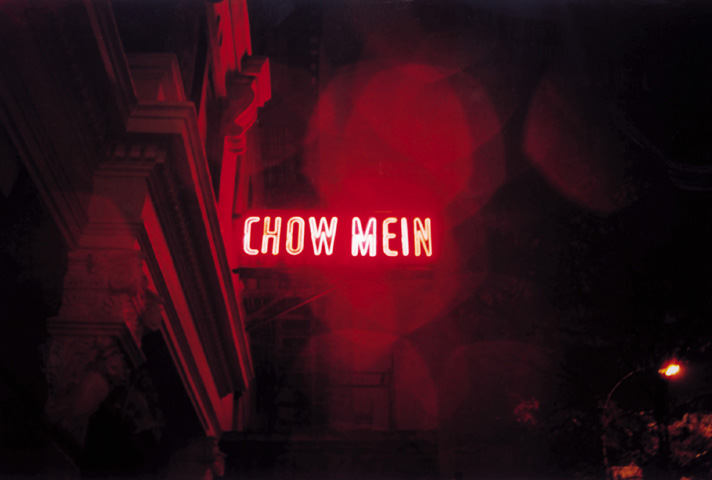
Those of us who gather under the warm pink glow of the Chow Mein sign in Manhattan’s East Village to watch the Yankees annual playoff run are a quirky lot. Since the 1998 season, my friends and I have assembled in some combination or other to share in the excitement and the tedium of modern-day postseason baseball, to cheer the Yankees and share the accompanying suffering which awaits us in those times we’ve got nothing to cheer for (fortunately, there haven’t been too many of those).

Along the way, we’ve honed our routines and developed various superstitions. Lucky t-shirts and replica jerseys, rally caps, brands of beer, you name it, we’ve tried it. For example, my pal Nick always brings over several bags of David’s sunflower seeds; no other brand will suffice. Nick munches on the seeds nonstop throughout the games. I, as my own personal logic dictates, only partake in the seeds when the Yankees are at bat, and then only if I feel the necessity for a rally. This formula, we have found, works very well.

I am, as my readers may have noticed, a firm proponent of rally totems, both at home and at the ballpark. To that effort, I introduced the Rally Beer™ concept to the general masses back in June (as if any of us needed an extra reason to reach for a cold one), and once I did, the American League East race was never the same. At times, I’ve even encouraged other people’s children to sit in specific seats to keep the Yankee mojo working.

The Yanks’ just-completed AL Championship Series with the Mariners found my friends and I searching for new combinations of the right stuff. At the same time, we were on the lookout for objects and habits to act as scapegoats. On Saturday, my girlfriend innocently bought a bag of unsalted peanuts from the downstairs deli. When all hell broke loose and the Mariners exploded for nine runs over the next two innings, I began having my doubts about the peanuts. And when the score went from 9-2 to 14-3 after we turned the game off, I knew that the peanuts, not the suddenly awakened Mariner bats, were the cause of the Yanks’ defeat. So the nuts went. My poor, puzzled girlfriend, a rookie in our October gatherings, endured a very curt explanation about the hard facts of autumn in relation to her chosen snack. Fortunately, she understood.

Sometimes, thinkgs get silly. On Sunday night, amid the world’s sloppiest pitching duel ever, between Roger Clemens and Paul Abbott, Nick reached an absurd and spectacular level of desperation. He spent two innings wearing a black plastic bag (the very same one from my just-procured Rally Beer™, actually) tied around his head as an ad-hoc rally cap. When that didn’t work, he resorted–I shit you not–to an attempted headstand which lasted all of one minute. Skeptics may guffaw (I know several of us in the apartment did so). But it’s worth noting that the next time the batter for whom Nick stood on his head, Bernie Williams, came to bat, Williams tied the game with a solo home run. Coincidence? I think not. Even my brother, decidely not a Yankees fan, refused to cast aspersion on such a ridiculous display: “You gotta do what you gotta do,” he said.

In the afterglow of Alfonso Soriano’s game-winning home run on Sunday night, I issued a decree that had as much to do with the Yanks closing out the series the next night as did Lou Piniella’s choice of starting pitchers. With the chance of victory imminent, tomorrow night’s dinner, I announced, would be grilled pork chops from our favorite Vietnamese takeout joint, New Saigon. Laugh all you want, but the pork chops have history on their side. Last year, during the first-round series against Oakland, with the Yanks having lost Game 1, we ordered the very same pork chops and were rewarded with a 4-0 shutout, courtesy of Andy Pettitte and Mariano Rivera. When that series came back to a do-or-die Game 5, the Yanks’ starting pitcher and our choice of meals were the same. The Yanks scored six runs in the first inning, and though Pettitte faltered in the fourth, the Yankee bullpen, inspired by our choice of cuisine, held off the A’s to take the series.

When an ailing Roger Clemens took the mound for Game 5 in this year’s series with Oakland, we knew the Yanks would need all the help they could get. Once again, pork chops were in order. End result? Yanks win. So it made sense that we would again be dining on New Saigon’s finest grilled meats when the appropriate time presented itself, and in the jubilation of Sunday night, Monday’s menu seemed obvious. It worked yet again, as the Yanks trounced the Mariners 9-3 to take the series, four games to one.

Now, I’m sure some of you out there are snickering. Why would someone (like myself, and to some extent my friends as well) who spends so much time trying to rationally analyze a baseball game resort to such superstitions? There’s no simple answer. The human tendency to resort to myth and superstition in the face of powers we don’t understand is older than organized religion, so ten thousand years of human culture obviously plays a part. As does the near-interminable length of playoff games–with thirty-second pauses every time Chuck Knoblauch steps out of the box to undo and redo the velcro on his batting gloves, we have plenty of time to tend to our oral and manual fixations. And occasionally, like with Nick’s headstands, those of us who spend so many tense hours huddled together throughout these games simply need something to break the tension and get us laughing again, reminding us that this is all supposed to be FUN.

Even the Boss, Yankee owner George Steinbrenner, gets into the act. During Sunday’s game. Steinbrenner excused himself from the company of Reggie Jackson, Mr. October himself, to return to his lucky spot, where he was standing when Reggie hit three home runs against the Dodgers in the 1977 World Series. The results–Williams’ and Soriano’s home runs–speak for themselves. And that’s not even exploring the superstition behind Steinbrenner’s chosen attire of turtleneck and blazer for such affairs.

The Yankees recent playoff success, to some extent, defies rational analysis anyway. Facing two teams which were supposedly superior on paper–the brash A’s with their 102 wins, and the Seattle Mariners with their record-setting 116 wins–the Yanks dismantled their opposition with conviction, and the aid of little extra mojo as well. Sojo Mojo, to be exact–what else could explain the reason for Joe Torre including the veteran futility infielder Luis Sojo on his postseason roster at the expense of an extra pinch-hitter like Nick Johnson. Opposing managers Art Howe and Lou Piniella made bold predictions of Yankee doom, but it was Sojo’s brash prediction of Yankee victory that held up (an aside: my favorite scene from the Seattle series was Sojo and fellow Yankee subs Clay Bellinger, Enrique Wilson, and Shane Spencer singing along to “Y.M.C.A”–the song played over the P.A. at Yankee Stadium during the fifth inning of Game 5 while the grounds crew raked the infield–complete with hand gestures. Priceless).

Twenty-three seasons of watching baseball have proven to me that even with fancy formulas and expert analyses at hand, we simply can’t explain everything that happens on the baseball diamond. Some of it–Mariano Rivera’s postseason prowess, Tony Battista’s batting stance, Leo Mazzone’s rocking motion on the Atlanta Braves’ bench, and the perpetual presence of not one but two pathologically mediocre players named Brian Hunter, for example–simply defies both logic and random chance. There’s more between home plate and deepest centerfield than is dreamt of in our philosophies. Drama, magic, clutch performance. And the seeds.