A Weekend at the Ballpark

I spent the better part of the weekend at Yankee Stadium, watching the suddenly resurgent Yanks take on the Cleveland Indians. I already had tickets for Sunday’s game, but when Andra accepted an invitation to the beach on Saturday and my boy Cliff Corcoran offered me a shot at Old Timer’s Day in the bleachers, I couldn’t say no, not with a forecast of 80 degrees and sunshine.

During the ten years I’ve been going to see the Yanks, I’d only been to one other game in the bleachers, also with Cliff — the infamous Bloody Sock/A-Rod Slap game, Game Six of last year’s ALCS. Needless to say, I was eager for a more positive experience out there, even if I felt like a tourist in that environment.

We arrived in time for the Old Timer’s festivities, which consisted of about 45 minutes worth of introductions by John Sterling and Michael Kay, two voices of the Yankees that test the patience of even their most ardent fans. The buzz in the bleachers centered less on the pinstriped legends of our lifetime — Don Mattingly, Reggie Jackson, Ron Guidry, Goose Gossage (in tribute to whom Cliff had shaved his goatee into a menacing mustache; alas, he won’t let me post the photo) — than on the Dark Age-era scrubs who were making their OTD debuts — Scott Bradley, Dan Pasqua, Neil Allen (now the bullpen coach and perhaps the heir apparent to Mel Stottlemyre), Steve Sax (not a scrub, but of that less memorable time) — along with current Yankee coach Joe Girardi and broadcaster David Justice.

The obscure and incompetent are equally well met on OTD, forgiven for their past transgressions as if they were simply crazy hairstyles of a bygone era (which covers the decidedly less Afro’d Oscar Gamble), and so Bye Bye Balboni and Kevin Maas, a matched pair of one-dimensional sluggers, drew warm responses, as did Cliff Johnson, best remembered for breaking Gossage’s thumb in a ’79 clubhouse brawl. More predictably, the Hall of Famers (Reggie, Yogi Berra, Whitey Ford, and Phil Rizzut) drew huge ovations, but the biggest was reserved for Mattingly, a man for whom I have a decidely lukewarm reaction. With Jim Bouton not in attendance, my own cheers were loudest for Jim Leyritz, the King of the postseason (eight homers in 61 at-bats, including the big three-run shot in the ’96 World Series, and one in the ’99 Series clincher — the last home run of the 1900s, actually — which I witnessed first-hand).

As the Old Timer’s Game intros rolled on endlessly, dark clouds rolled in, and after an inning and a half of surreal play in which Luis Sojo cracked the biggest blow, in which Justice played the infield, rain began to fall, all before the crowd could watch Reggie hit. Drat.

Fortunately, the rain subsided by the time of the 4 PM start, but it quickly got out of hand. Gary Sheffield and Alex Rodriguez cracked first-inning homers off of Indians’ starter Scott Elarton, and at first it looked as though the Yanks might add to their six-game winning streak. Shef’s shot went over the visiting bullpen, which makes for a ball that ends up a looooong ways away. But Yankee starter Darrell May couldn’t hold the lead. Acquired in the Paul Quantrill trade from the Padres, May is a lefty with a career ERA above 5.00, but he’s got a pulse and enough working body parts to throw the ball towards the plate, which these days is enough to earn at least the major-league minimum (see Wayne Franklin for further evidence) and even a shot on a thin Yankee staff. He retired the side in impressive fashion in the first inning, striking out both Grady Sizemore and Travis Hafner after which I turned to Cliff and said, “Well, it’s all downhill from here for his Yankee career.”

So true, so true. Before May had retired another batter, Jose Hernandez cracked a two-run shot off of him in the second, immediately followed by a solo homer from the terminally misspelled Jhonny Peralta. Six outs into the game, and we’d seen four homers and five runs. I had predicted a total of 27 runs on the day given the two starters, and we were ahead of pace. Hernandez cracked another two-run shot in the third to keep us on schedule — seven runs, 14 outs — but the Yanks were stymied by Elarton, and the prediction of a slugfest faded.

But not the Indians’ offense, which chased May in the fifth by scoring two runs, the second on a single by Hernandez, giving him five RBI on a day in which he’d entered with a mere 16 all year; 7-2, Indians. Robinson Cano plated Ruben Sierra, who’d doubled to leadoff the home half of the fifth, but the Yanks couldn’t capitalize further.

By the seventh inning, I’d been battling the late-afternoon sun for a good hour, but even with a cap and a pair of sunglasses, I had a splitting headache. Four and a half hours at the ballpark, and I was cooked. So I took my leave of Cliff and his fellow bleacher denizens (considerably better behaved than my last outing there), only to miss an exciting comeback that fell short, with Hideki Matsui stroking a three-run homer and the two teams trading runs in the ninth. Joe Torre made some questionable bullpen decisions, and the Yanks had the tying run on second base with no outs but failed to capitalize; you can read all about in Cliff’s writeup. Thanks to my mustachioed friend for the ticket, even if he won’t let me publish the pic.

• • •

Though Sunday was about 10 degrees hotter, the view from my more familiar perch in the upper deck made me much more comfortable, as I’d spent the rest of Saturday suffering from some moderate eye strain (I’m hopelessly nearsighted, and the view from the bleachers taxes my vision to the max). With my pal Nick Stone joining me, I felt right at home in the House That Ruth Built.

Randy Johnson started for the Yanks, giving me my first opportunity for a firsthand look at the Unit in pinstripes. But after the Indians scored runs in the first and second, I began to wonder if I’d gotten a 6’10” imposter instead. Johnson gave up hard-hit balls to the leadoff hitters of the first three innings, with rookie Melky Cabrera, who’d made two sun-influenced misplays the afternoon before, again struggling on a double hit way over his head to right center. The Yankee outfield of Matsui, Cabrera and Sheffield looked particularly brutal all day long, Matsui tumbling ass over teakettle in pursuit of a Grady Sizemore fly ball that ended up a triple in the seventh.

But I’m getting ahead of myself. In the bottom of the second, the Yanks loaded the bases with one out against former farmhand Jake Westbrook (sent away in the Justice deal), and John Flaherty “Will Get You Nowhere” (to use my own Bermanism) plated a run with a sacrifice fly, only his third RBI on the year. In the bottom of the fourth, Matsui reached on an error by Peralta, and Jason Giambi, who already had four homers on the week, murdelized (to borrow from Bugs Bunny) a Westbrook pitch deep into the rightfield bleachers– a tape-measure blast for which I never saw a measurement, but I’d guess 430 feet. Cliff? — to give the Yanks a 3-2 lead.

Alas, Johnson gave the run right back on consecutive singles to Aaron Boone (who went 8-for-16 in his first return to Yankee Stadium since the 2003 postseason, helping him finally put some distance between himself and the Mendoza Line), and Sizemore and a sac fly by Travis Hafner. Though he’d struck out six to that point, the Big Unit was clearly laboring.

The Yankee offense picked him up, however. With two outs and nobody on, Sheffield worked a walk off of Westbrook, and A-Rod did the same. Matsui followed with a double to rightfield. Giambi was “un”-intentionally walked after a conference on the mound (“Did you see how far that bastard hit my last pitch? Hell if I’m going there again…”), drawing three high pitches before Indians’ catcher Victor Martinez stuck his fist out for the inevitable intentional pass. Sierra, who’d doubled twice and homered the day before, kept up his hot hitting by slapping a single to left, with two runs scoring, 6-3 Yanks.

Johnson departed after six, having gritted his way through 109 pitches, allowing nine hits but only one walk while striking out eight on a day when he clearly didn’t have his best stuff. This is the Randy Johnson we’re going to have to learn to love, Yankee fans; not all that dissimilar from the Roger Clemens we got, and that didn’t work out so badly. Wayne Franklin came on and ponderously — 27 pitches to three batters — worked his way into a jam, yielding two hits, including the Sizemore triple, and a walk, scoring a run. Tanyon Sturtze, who’d pitched two innings the day before, quickly put out the fire by striking out Martinez and inducing a popup from Casey Blake. Quality relief work there.

The game began to drag, as Indians manager Eric Wedge used three different pitchers in the seventh, each of them striking out a Yankee in the service of quelling a potential rally. With the score now 6-4 and the All-Star break in sight, Joe Torre did summoned Mariano Rivera, whom he should have used to pitch the ninth the day before, for a two-inning save situation. Rivera struck out Hernandez looking, then escaped early three-ball counts to the next two hitters to survive unscathed. The Yanks gave him some breathing room in the bottom of the inning when Sheffield drilled a three-run shot off of Bobby Howry, one set up by perennial Yankee bitch Arthur Rhodes (somewhere, David Justice was lacing up his spikes, itching to pinch-hit). The day before, Howry had put two runners on in the eighth before yielding to Rhodes, who promptly allowed the Matsui homer, so the symmetry worked out nicely. Actually, it was pretty impressive for the Yanks to bomb the Cleveland bullpen so effectively, as they entered the series with the best ERA of any pen at 2.68.

At 9-4, that was effectively the ballgame. The Yanks closed the first half by winning seven of their last eight games, with Giambi hitting .478/.586/1.217 in that span and looking like the big slugger they doled out $120 million to after the 2001 season. Behind him, the Yanks have taken over the major-league lead in scoring at 5.56 runs per game, a fact noted in my epic All-Star break edition of the Prospectus Hit List, where the Yanks rank eighth. Don’t say I never gave you anything for free.
Same Game, Different Book

Like most baseball fans, I love baseball books, an affair that began around the time my grandfather started salvaging boxes of dog-eared paperbacks from flea markets in Walla Walla, Washington on my behalf. At age nine, I was reading Roger Angell’s erudite essays in The Summer Game and parsing the more complicated swear words of Ball Four, no doubt dreaming of a day some 25 years in the future when I could combine the best (or worst) of both worlds into daily ramblings on some not-yet-invented information superhighway. I probably read every baseball book in my elementary school library twice over, if not more. Who knew Ron Santo was so interesting, or that the bio of him which I read three times was penned by former major league pitcher-turned-author Jim Brosnan (who wrote The Long Season, one of the more acclaimed baseball books I’ve actually never gotten around to)?

I’ve got a 500-square foot Manhattan apartment bursting to the seams with baseball books, and a lovely wife who patiently puts up with the stacks that accumulate next to my desk when I’m working on a project. A storage space a few blocks away holds the overflow — not to mention the household items displaced by said books. And it’s not just new books of course; Internet sites such as eBay, ABEbooks and Half.com have made tracking down used and sometimes out-of-print books a snap. Here in the East Village, it takes every ounce of my being to resist the siren call of The Strand, a used bookstore that claims no less than 18 miles of books (the awning is 10 miles behind in its tally). Hell, sometimes books even find me on the streets, as did a dog-eared copy of John Helyar’s classic, The Lords of the Realm back in February. A trip up to Alex Belth‘s Riverside abode last fall led me to drop $45 on an oversized book collecting miniature reproductions of 35 years of complete sets of Topps baseball cards. It’s like that.

One of the nicer perks of keeping this site is that every so often, somebody with a new book to hawk offers to send me a free copy. The downside is that I don’t always get to read these things very quickly, especially in a season that’s seen me get married, buy the Extra Inings cable package, take on a weekly column, and pore over every word of the books two of my good friends have put out. So apologies to a small handful of authors for the relatively Robin Ventura-like speed I’ve had in getting to their books. I’m still working my way through that pile. Which brings me to today’s installment of the Futility Infielder Book Rodeo.

Steve Lombardi of NetShrine and the Yankees-oriented Was Watching blog has self-published a book called The Baseball Same Game: Finding Comparable Players from the National Pastime. Spurred by endless hours in front of the Sabermetric Baseball Encyclopedia, Lombardi has found over 60 pairs of players with roughly similar career stats in a small handful of important categories. For hitters, those categories are Games, Plate Appearances, Runs Created Above Average (the main currency of the SBE), Offensive Winning Percentage, OPS vs. League, and Runs Created per Game vs. League. For pitchers, the categories are Innings Pitched, Runs Saved Above Average, ERA vs. League, K/BB vs. League, BB/9 vs. League, and K/9 vs. League.

With these metrics, Lombardi comes up with some fairly random-seeming pairings; Roy Campanella and Sixto Lezcano lead off, and juxtapositions like Mike Scioscia and Derek Bell, Thurman Munson and Terry Puhl, or Barry Larkin and Jim Rice abound. If these duos have you scratching your head, well, you’re not alone. Lombardi’s earnest comparisons, which each provide two or three pages on the two players’ careers, make no allowance for defensive position, nor for the shape of a player’s offensive contribution (nor for even the shape of the player — take the burly Scioscia and the skinny Bell, please).

Not all of his pairings are that strange. Will Clark and Duke Snider make for a nice matchup of championship-caliber sluggers, while Honus Wagner and Willie Mays is a comparison of two of the game’s all-time greats. But the lack of a positional match is still a problem, even as the author’s main point is to focus on sets of players who have similarly valuable total offensive contributions.

While Lombardi tosses terms like Runs Created and Offensive Winning Percentage around frequently, he runs into trouble early on. In the lengthy introduction to his methods, he makes absolutely no mention of Bill James, who created those metrics — even when dragging out the formula for Runs Created! — though he does spend considerable space playing up Lee Sinins’ creations for the SBE such as RCAA and RSAA. Elsewhere he’s not clear as to whether his “vs. League” stats are ratios (A/B) or differences (A – B). That’s a crucial, basic distinction worth making, and Lombardi’s failure to do so is a serious strike against this undertaking (FYI, the answer appears to be the latter). Also not clear is whether any of these metrics has park adjustments built in. Given my other reservations, I’m not sure I want to know the answer.

At the same time, Lombardi has found it necessary to include the official rule book definition of innings, as in innings pitched, and it’s worth noting that throughout the book, every one of his statistical categories under investigation is italicized throughout, which is rather grating. I’m just not really sure who the author takes his audience for; if you’re going to toss a lot of numbers at a stat-savvy crowd, you ought to be quite clear as to where they’re come from, and if you’re going to do something as basic as define an inning, your respect for your audience’s baseball acumen is called into question.

For all of my reservations about Lombardi’s methodology, I have to admit I’ve enjoyed browsing through the comparisons, even if it’s to rubberneck at the strange bedfellows of each chapter. Take the pairing of two contemporaries who were in fact teammates for awhile in the ’70s with the Atlanta Braves, Ralph Garr and Davey Johnson. Garr, “The Roadrunner” as he was called, was a speedster with little power or patience but a great ability to utilize his primary asset (.306/.339/.416 for his career), while future manager Johnson (.261/.340/.404) was a slow second baseman with great plate discipline and some pop (his 43 homer-season in 1973 was the Brady Anderson fluke of its day, but he did reach double digits four other times).

Lombardi’s point isn’t that the two players were analogous, but that the relative value of their offensive contributions was similar. Turning away from his metrics and towards some independently derived ones, that premise holds up. Garr’s career OPS+ was 107, and his Equivalent Average was .270, Johnson’s OPS+ was 111, his EqA .278. Of course, Lombardi’s point avoids the fact that Garr was a subpar outfielder (-56 Fielding Runs Above Average according to Baseball Prospectus’ defensive metrics, and a Rate2 of 96 in leftfield) and Johnson an above-average second baseman (35 FRAA, and a Rate2 of 103). Your mileage may vary as to whether you find such comparisons enlightening.

I wish I could say that I liked The Baseball Same Game more than I do. Obviously, a good deal of effort went into this project; very few people write baseball books that aren’t labors of love. But I wish Lombardi had taken a big more care at the outset to clarify his methodology, and that his comparisons made allowance for defense, at least via a positional adjustment. The Baseball Same Game isn’t without its charms, but its got its warts as well.

Go Fourth and Prosper

As promised, my New York Sun debut is up today. It’s on the predictive value of the July 4 standings:

There’s an old baseball axiom which holds that the team in first place on July 4 will win the division. While the direct route from regular-season glory to the World Series has disappeared, that maxim is still good news for the Red Sox, White Sox, Angels, Nationals, Cardinals, and Padres. If history holds true, four of those six division leaders should make the postseason.

Like most axioms, no one is exactly sure where this one came from. But as far back as 1934,a Time magazine cover story noted that in the previous 25 years, the leader on July 4 had gone on to the World Series two-thirds of the time. Since then, the major leagues have expanded from 16 to 30 teams, adding two preliminary playoff rounds while quadrupling the number of clubs invited to the postseason. But the predictive power of Independence Day remains intact.

I had prepared a chart for the article in its original form, summarizing the study I did to determine the axiom’s historical accuracy (special thanks to my new research assistant, Peter Quadrino, for help in compiling this):

            Divisions    1st on      Won
Era Per League July 4 Division Pct
1901-1968 1 142 (6)* 89 62.7
1969-1993 2 101 (5) 57 56.4
1995-2004 3 63 (3) 40 63.5

* Numbers in parentheses denote ties on July 4 and are included in total.
The strike years of 1981 and 1994 have been excluded from this study.

In other words, being in first place on the Fourth is almost exactly as predictive of reaching the postseason in the three-division era as it was in the single-division era. If Wild Cards are factored in, the predictive value grows to 68.2%, as three teams in the lead or tied on the Fourth entered the postseason through the side door.

The second portion of the article deals with another way of looking at postseason chances, namely via Baseball Prospectus’ Postseason Odds page, which uses a variant of a team’s Pythagorean record [Winning Percentage = (RS^2)/(RS^2 + RA^2), where RS is Runs Scored and RA is Runs Allowed] to determine a team’s chances of winning the division and the Wild Card. A sibling of BP’s Adjusted Standings page (the foundation of the Prospectus Hit List), the Odds page uses third-order winning percentage, which is based on run elements (hits, walks, total bases, etc.) and is adjusted for park, league, and the quality of opposition and then fed into a Monte Carlo simulation to estimate how many wins each team will finish with. As of the close of play on the Fourth, here were the division leaders’ chances:

Division    Leader      W-L    Lead  Win Div Pct
AL East Red Sox 46-35 2.5 61.5
AL Central White Sox 55-26 8.5 68.6
AL West Angels 50-32 6.5 78.4
NL East Nationals 50-32 4.5 39.0
NL Central Cardinals 52-30 11.5 92.3
NL West Padres 45-38 4.5 79.2

By this method, the two East divisions are the ones that are the most up for grabs, which is good news for the Yankees (up from 10.8% at that writing to 13.4% now) and Mets (a 5.9% chance of winning the division, but an 8.1% chance of the Wild Card).

Anyway, there’s some analysis tacked onto the piece, much of it cut for space reasons (sigh, that’s print for ya). Still, it’s nice to get my name in the papers, especially when it’s spelled correctly.

Workin’ On My Monitor Tan

I spent a good portion of the holiday weekend in front of a computer, putting the finishing touches on a piece for the New York Sun, with whom Baseball Prospectus has a content deal, and of course, this week’s Prospectus Hit List. After getting more of a monitor tan than a suntan, I made both deadlines in time to dash out to Brooklyn to enjoy BBQ’d burgers, dogs, and wings and watch the fireworks with friends while enjoying some cold beers. Not a bad way to go.

The Sun piece, on the predictive nature of the July 4 standings, will run Wednesday. An old baseball axiom — I found references in Time magazine dating back to 1928 — holds that the team in first place on July 4 will win the pennant; a 1934 Time cover story noted that in the previous 25 years, the team in first on the Fourth won two-thirds of the time. Of course, today we have three divisions, and winning one of them doesn’t equal a pennant, but the axiom holds true with about the same frequency in the three-division era regarding a division title as it did in the one-division era. More on that topic — including the chart that was axed from the piece (grr) — tomorrow.

As for the Hit List, I prepare a preliminary ranking every Sunday morning to pass on to another BP writer, Jim Baker, who uses them to prepare his Prospectus Matchups column and start my own work for the week’s list. Each of the past two Sundays has found the White Sox in first, but by Monday morning, the Cardinals have the upper hand. Weird.

Anyway, the Yanks come in at #10, with an extended riff about the unimpressive fruits of their bullpen retooling. Since that tally, they’ve dropped 25 runs on the heads of the Orioles, who after several weeks of ruling the roost have fallen to #6 on the Hit List. Jason Giambi’s been heating up for the Yankees, launching three homers over those two games. He’s now hitting .268/.420/.433 (.329/.490/.575 since June 1), which is starting to look a lot more like an asset than a liability, at least in the batter’s box. The big galoot is so slow that rookie Bubba Crosby, in the weekend’s most entertaining gaffe, practically ran right up his back as he dug for second on a looper, not realizing that Giambi had held up between first and second waiting to see if the ball was caught. The two slid into second base one right after the other, with Crosby, who rarely makes it onto the basepaths on his own accord (just 13 major-league hits to his credit in 85 games played), the one called out. It would have been maddening if it hadn’t taken place in a seven-run inning.

Where the Yanks are really having trouble now is in the rotation, with Carl Pavano scratched from Saturday’s start, and Will Carroll using the L word (emphasis added):

The Yankees are… very concerned about the upcoming MRI on Carl Pavano. The new Yank has been more or less performing up to expectations, their only off-season acquisition to do so. The major concern is that there’s some labrum involvement, with reports of popping and locking not seen in the New York area since Ozone and Turbo showed Special K how it was done back in the day. A severe shoulder injury to Pavano could put the Yankees into as close to a full-panic mode as they can be in.

Uh, Will, wasn’t Breakin’ based in southern California? Anyway, Pavano’s scratch led to Tanyon Sturtze taking Monday’s start, thinning out a bullpen that’s already undergone some pruning. If Pavano really is hurt… well, let’s just say that counting down the days until Kevin Brown and Jaret Wright are healthy isn’t exactly a ticket to sanity.

As frightening as that is, at this writing the Yanks are just 3.5 games behind the first place Red Sox, who have lost five out of seven and who continue to have their own bullpen nightmares. As noted in the Hit List, the pen posted a 6.50 ERA in June, and closer Keith Foulke’s ERA now stands at 6.23 after he blew his second game in five days. It’s tough to believe that as bad as the Yanks have been, they’re really not out of the AL East race.

Out of it, on the other hand, is where the #22 Dodgers appear to be headed. On Sunday, an errant pitch from the Diamondbacks’ Brad Halsey hit J.D. Drew on the hand, and naturally — given the Dodgers’ rash of bad luck — it’s broken, sidelining Drew until September (oh, and that’s not a rash of bad luck, that’s a flesh-eating virus). Though he’d recently been sidelined by chondromalatia, Drew had been hitting like the real deal so far (.286/.416/.520), especially given that he started the season 0-for-25. Meanwhile, shortstop Cesar Izturis, who had been sidelined with a strained hamstring, finallyu went on the DL, which comes as something of a relief. As noted on the Hit List, he’d hit .085/.128/.098 in 86 plate appearances since June 2, with Jim Tracy stubbornly keeping him in the leadoff spot all the while. Gee, Jim, we know the offense has taken a hit without Milton Bradley, but d’ya think it might have been time to drop Little Cesar to #8 until he started hitting again?

On a positive note for the Dodgers, Izturis’ replacement, Oscar Robles, is 10-for-19 since taking over. In other words, it took him only four games to surpass the number of hits that Izturis had accumulated over the past 20 games. Wow.

Two Saturdays

In the past week I’ve experienced as full a spectrum of emotions regarding the passages of life as anyone probably should in an eight-day span. None of this has much to do with baseball except tangentially, but I need to share it nonetheless as I count my own blessings.

Last Saturday, I attended the wedding of Issa Clubb and Johanna Schiller, a beautiful ceremony up in the Catskills. A close friend since college, Issa was my roommate at the time I created this site (he’s perhaps best known here for the David Segui Foul Ball Incident), and we’ve enjoyed hundreds of ballgames, thousands of meals, and heaven knows how many pints of beer together. In Johanna, he’s found a wonderful soulmate, one who occupied the very next cubicle to him at Criterion, and as I said in toasting their union at the reception, I couldn’t be happier for either of them.

On Tuesday I received the joyous news of the birth of Clemens Charlot Goldman, the son of my good friend Steven Goldman and his wife Stefanie. Young Mr. Goldman is named not for the big dumb ox and former Yankee Roger Clemens but for the infinitely more witty and irreverent Samuel Langhorne Clemens, who in his alter ego of Mark Twain begat A Connecticut Yankee in King Arthur’s Court, Huckleberry Finn, and other classic tales. A couple of weeks ago, my wife Andra and I had the pleasure of dining with the expectant Goldmans, making the arrival of this babe all the more tangible. Mazel tov to them both.

Less than an hour after I heard the good news emanating from Camp Goldman, I received much more tragic news. A friend and business partner of the woman who introduced me to my wife had taken her own life at age 34. I didn’t know Kim very well at all; in fact I didn’t even know her last name until after her untimely passing, and I probably saw her on less than a dozen occasions. Nonetheless, in the brief time I knew her she touched my life and those of my friends with an unforgettable warmth that compelled me to attend her funeral service this morning.

I met Kim at the housewarming party Andra and I threw for ourselves upon moving in together two years ago. She arrived early with our mutual friends, bearing gifts: yo-yo water balls. She had recently discovered the squishy, springy joys of these silly toys, and it didn’t take ten seconds of playing with one to understand why. Kim and I bonded in laughter and fun as we bounced them around while marveling at the view of Manhattan from our rooftop. I spent a good part of my baseball watching that summer and fall with that toy as my security blanket through tense moments, a nice little outlet for my petty frustrations, and when it expired, I replaced it with another and thought of Kim.

Kim was an exuberant, charismatic woman who emanated a warmth and generosity that was instantly recognizable. She never greeted me with anything less than a beaming smile and a hug, and as I think of her, I’m reminded of the title of an obscure song by the pop group Blondie: “I’m Always Touched By Your Presence, Dear.” That may sound incredibly trite, but it’s true. To this casual acquaintance, she was never less than a joy to be around.

In attending her service today, I came to know Kim a little bit better, and particularly to understand just how deeply her generosity ran. This was a woman who routinely went to the main post office in Manhattan every December to collect letters to Santa Claus, doing her best to fulfill the Christmas wishes of hopeful children, selflessly spreading her love to those who might never even know who she was and encouraging her friends to do the same. To those of us who recoil in cynicism at the crass commercialism of the holidays, her actions provide a model of the small effort we can make to help make the world a better place for those around us.

The poor woman obviously had her own demons, but who among us does not? I’m heartbroken to know that in her darkest hour she was unable to see that the love she so vividly radiated was reflected back towards her a hundredfold by those whom she touched. I know that if someone like me, who only knew her for a short time, could feel the sadness I do right now, then those closest to her must be enduring an unfathomable sorrow. My heavy heart goes out to her friends and family. Rest in peace, Kim.

Shef to 29 GMs: F— Off

Apologies to those of you who believe this is a family blog which should be free of the kind of language used in the above headline. Silly, silly people. If you don’t know me after four years of this, you’re not paying attention. The above was the back-page headline I imagined a more gutsy tabloid editor would use in describing Yankee rightfielder Gary Sheffield’s response to rumors that he might be traded in the wake of the latest attempt to revive the Bronx Bummers’ season. And if said tabloid editor won’t run it, I will.

But first, a little context. It rained on Wednesday night, washing away the evening’s Yanks-O’s game and making Joe Torre’s decision to tap Mike Stanton over Mariano Rivera on Tuesday look all the more foolish. Stanton, of course, had a one-pitch outing that resulted in a walk-off homer by Brian Roberts. As disquieting as that decision and the Yankees recent performance has been, the news reports — or shall we say rumors — that emerged in the wake of Tuesday’s defeat were even moreso. With the Yankee brass gathered down in Tampa for a skull session (vision of George Steinbrenner as DeNiro’s Capone taking skull a little too literally), the local papers had the Yanks mulling all kinds of options.

The first, and juciest, revolved around Sheffield, with the Yanks trading him to the Mets for Mike Cameron and Miguel Cairo, according to the New York Post. The move would give the Yanks a quality centerfielder; quite frankly, Cameron should have been wearing pinstripes after 2003 instead of Kenny Lofton, but the team had yet to face the reality of Bernie Williams’ decline. But trading Sheffield would leave a gaping hole in the Yank lineup, as Shef is currently hitting .300/.396/.502. Additionally, with the emergence of Robinson Cano, who’s hitting a surprisingly useful .284/.311/.464, Cairo’s utility to the Yanks would be considerably diminished. He had a surprisingly fine season as the Yanks second baseman once Enrique Wilson was kicked to the curb, but both he and the Yanks missed the boat for his return in the offseason, and it’s just as well.

Shef has barked about his contract structure, but after Tuesday’s game he said hell no, he won’t go if traded:

“I’m not going anywhere,” said Sheffield, who is signed through 2006. “If I have to go somewhere, I won’t go. If they said, ‘Wouldn’t you want to get paid?’ I’d say, ‘I’ve got plenty of money.’ I’m not playing nowhere else. I can promise you that.”

Yesterday, Sheffield backed off that statement, but in true Shef fashion, dialed things up a notch at the same time. In a New York Times article titled, “Sheffield Warns 29 Teams: You Don’t Want Me,” he told reporters:

“I would never sit out,” Sheffield said. “I would go play for them. It doesn’t mean I’m going to be happy playing there. And if I’m unhappy, you don’t want me on your team. It’s just that simple. I’ll make that known to anyone… I’ll ask for everything. Everything. You’re going to inconvenience me, I’m going to inconvenience every situation there is.”

Which is where I envisioned a competing editor of one of the city’s less dignified rags running the above headline. Decency may prevent them from doing so, but like Shef, I’m less inclined to mince words.

Fortunately, my favorite Yankee isn’t going anywhere. The Yankee brass assured Sheffield he was untouchable. “I just wanted to let him know that we turned down any inquiry about him,” Joe Torre told reporters. “We said, ‘No thank you.’ I wanted to give him what Cash gave me.” Whew.

There are those who will point to Sheffield’s comments as being in line with the rest of his controversial career, and they may have a point. But the man is considerably more complex than some simple knee-jerk response to being traded, as I discovered in a lengthy three-part series I wrote for this site late last summer (Part I, Part II, Part III). Here’s the conclusion:

Gary Sheffield has come a long way since those hot-headed days in Milwaukee. Though he’s continued to generate controversy at nearly every stage of his career, his outbursts have rarely been without provocation. As he’s aged, his temper has cooled, his level of maturity has visibly increased, he’s stayed healthier, and his bat has remained lethal. Rather quietly for such a controversial player, he’s made his mark as one of the game’s best hitters, destroying the ball in even the most inhospitable environments. He’s won honors and he continues to contend for them. He’s helped a team win a World Championship, he’s fighting to do so again, and he’ll have at least a couple more opportunities beyond this year.

Sheffield’s coming to the Yankees fits in with a certain definable career arc. In recent years, talented but star-crossed players, from Darryl Strawberry and Dwight Gooden to David Cone, Roger Clemens and Ruben Sierra, have found their way to the Yankees seeking redemption for transgressions both real and perceived. With the benefit of years of often harsh lessons, they subsume their egos in the name of playing for a winner. That the winner is the winningest team in the history of baseball, playing in a stadium steeped in tradition, in the glare of the country’s top media market, is part of the point. Older and wiser, they strive to show the world that they can stand up to life in the pinstriped crucible. If they can make it there, they can make it anywhere: words to a song, and the key to the Yankees’ seductive myth, one that Gary Sheffield has bought, lock, stock, and bat barrel. Thus far, he’s done everything in his power to hold up his end of the bargain.

Beyond Sheffield, other rumors abound. Newsday reported that the Yanks might tap the Marlins for a centerfielder in either Juan Pierre or Juan Encarnacion. Both are execrable hitters who more closely resemble Tony Womack, the root of so many evils regarding the current lineup, than anything else. But George Steinbrenner been enamored of Pierre’s speed-and-bunting style (not substance) since he helped beat the Yanks in the 2003 World Series; as Derek Jacques and I agreed a couple of weeks ago, they’ll be paying for Pierre until they’re literally paying Pierre. Newsday version has Paul Quantrill as the rotten carrot being dangled in the case of the latter deal, while the pricetag on the former is likely to be out of reach unless the Yanks start offering whatever B-grade prospects they’ve got, such as centerfielder Melky Cabrera, who was promoted from Double A to Triple A.

Today’s Palm Beach Post has an even more salacious rumor which reads like a combo plate of the Marlins and Mets rumors: Sheffield to his old team for Encarnacion and starter A.J. Burnett. As attractive as acquiring Burnett might be (he’s put up a 3.14 ERA, an 8.13 K/9 and 2.82 K/BB ratio), I’m not even going to sweat that one in light of Torre and Cashman’s comments. Other centerfield-related rumors include Oakland’s Mark Kotsay and Seattle’s Randy Winn. Here’s a handy clip-and-save guide to these guys:

                  ----Current----    -----------Career----------
Age AVG OBP SLG AVG OBP SLG Rate2 (CF)
Cameron 32 .297 .396 .535 .250 .342 .443 102
Pierre 27 .257 .303 .337 .306 .356 .376 98
Encarnacion 29 .271 .347 .457 .265 .314 .441 96
Kotsay 29 .281 .339 .401 .286 .343 .423 108
Winn 31 .276 .348 .374 .283 .344 .407 101

As you can see, each has his plusses and minuses. Cameron is probably the superior one of the group, and he’s been hitting well above his career levels this year, but he also missed five weeks with a wrist injury, and of course, he’s the oldest of the bunch. Kotsay’s the superior fielder, but don’t think Billy Beane doesn’t know this; his price will likely be prohibitively high. He’s also got a history of back problems. Encarnacion’s got the most pop, but in a hacktastic way that brings to mind Ruben Sierra Lite, which isn’t what the doctor ordere with the low-OBP Sierra Genuine Draft, Cano, and Woemack all contributing higher than normal out-making abilities to the lineup.

But while centerfield remains unresolved, it looks as though the Yanks are about to get decisive with their bullpen. ESPN and many other sources report that both Quantrill (6.75 ERA) and Stanton (7.07 ERA) have been issued the proverbial blindfold and cigarette, with Jason Anderson (who made the Yanks Opening Day roster in 2003 but was shipped to the Mets in the Armando Benitez deal), Colter Bean (who’s got a funky sidearm motion), and Scott Proctor, all righties, in the mix for their roster slots. All three have been blowing hitters away in Columbus to various degrees:

          IP  ERA    K/9   K/W  
Anderson 47 2.85 7.99 3.82
Bean 40 3.15 11.03 2.58
Proctor 35 4.15 11.94 4.18

The team’s commitment to youth might be laudable if Mel Stottlemyre’s track record with young pitchers were more sterling, but beware that the Yanks might also simply be auditioning these players for other scouts as they look ahead to a difference-making deal in centerfield or the rotation.

If there’s one certainty in all of this, it’s that the organization, from the Boss on down, appears committed to keeping rookie starter Chien-Ming Wang as well as Cano. Reports Newsday‘s Shaun Powell:

The best news to emerge from Tampa is that not even Steinbrenner is desperate enough to trade Chien-Ming Wang or Robinson Cano, two prospects who came from nowhere to give the Yankees what they haven’t had in years: cheap talent with upside.

Both are in direct contrast to the overload of mega-million-dollar names on the roster who are either tapped out or burned out. You can even make the case that the Yankees are being bummed out by the veterans and bailed out by Wang and Cano. Too many established stars aren’t living up to their reputations and paychecks; that’s why the Yankees are still staring up at the Red Sox and Orioles in the division. If the state of the Yankees isn’t disappointing enough, imagine where they’d be if not for those two?

Wang is arguably their most reliable starting pitcher after Mike Mussina. Cano is making strides and giving life to perhaps the most unstable infield position of the Joe Torre era. And they’re not swelling up the payroll. This makes them more valuable to the Yankees as keepers, not trade bait.

Brian Cashman didn’t need to do a heavy sell job on Steinbrenner regarding Cano and Wang, which means The Boss finally understands he can’t swap every promising prospect who comes along for an old player with an expiration date. This means Cano and Wang will not meet the same fate as others who came up through the system and were dumped as soon as they showed the slightest bit of skill… Nick Johnson, for instance.

As Cliff Corcoran notes at Bronx Banter, Wang’s got the highest percentage of Quality Starts (six or more innings, three or fewer earned runs) of any Yankee starter at 70 percent, well above the team average of 48.1 percent. Hearing that he’s in pinstripes to stay is good news, but I’ll believe when the clock strikes midnight on July 31 and the trading deadline passes. Until then, no matter what they’re saying, anything can happen in such a volatile situation.

That Sinking Feeling

The new Prospectus Hit List went up at Baseball Prospectus yesterday, with the St. Louis Cardinals barely edging the Chicago White Sox for the top spot. The Cards are the sole representative of the NL among the top nine teams, a byproduct of the completion of an interleague segment which saw the AL soundly whup the NL 136-116 (.540 winning percentage) or 133-101 (.568) if one excludes the Tampa Bay Devil Rays, who though they have shown they can beat the Yankees, barely qualify as major league. In fact, the average ranking of each division, which Jim Baker included in his latest Prospectus Matchups column, closely mirrors interleague results:

Div      Avg Rnk  Int W-L   Pct
AL Cent 11.6 53-37 .589
AL West 13.0 41-31 .569
AL East 14.0 42-48 .467 (39-33, .541 w/o Tampa)
NL East 14.4 41-37 .526
NL Cent 17.7 43-44 .494
NL West 23.2 32-55 .368

Though they’re only a game above .500, Yanks hold the #9 spot, but don’t be too fooled: the numbers underlying the list put them much closer to #17 (the Mets, ironically) than to the #5 Orioles. Here’s what I wrote about them:

Now starring in Back! Or Not! a musical based on this team’s ability to mount only the occasional gallant rally — setting off new rounds of tea-leaf reading in which the question, “Is this the turning point?” is endlessly invoked — as opposed to the more mundane ones that sustain the real business of winning. Don’t be fooled by the intermittent dramatics; these Yanks may be too rich, but they’re also too thin (Kevin Reese? Russ Johnson?), they don’t have enough pitching (Sean Henn?), and to paraphrase Bob Dylan, they ain’t goin’ nowhere.

Since writing that, the Yanks have split a pair with the Orioles, with both games being decided in the late innings. Last night’s was a particularly sickening affair in which Joe Torre was once again burned for improperly using his bullpen.

The Yanks led 4-1 at one point on the strength of homers by Hideki Matsui and Robinson Cano, but Chien-Ming Wang gave up a two-run blast to Rafael Palmeiro in the 6th to cut the lead to 4-3. Tough to fault the kid, as he gave the Yanks seven strong frames, scattering seven hits and walking no one. The homer was Palmeiro’s 563rd, tying him with Reggie Jackson for ninth place on the all-time list — and man, isn’t that a strange contrast between the hot-dog-with-extra-mustard superstar Jackson and the comparatively nondescript Raffy, who if he gets 10 more hits could qualify for both the 3,000 Hit Club and the Federal Witness Protection program.

Tom Gordon came on in relief of Wang, promptly issuing a leadoff walk to Brian Roberts and then throwing wildly on a sac bunt, an error which led to the tying run. That damage done (gee thanks, Flash) Gordon did manage to blank the O’s in his second frame to send the game to extra innings.

With the O’s at home and able to end the game with one swing of the bat, the situation called for extreme care; per a Win Expectancy chart, the home team could be expected to win 63.4 percent of the time in a tied, no-out, home half of a potentially final inning. Torre had his ace closer, Mariano Rivera, he of the 0.91 ERA, available. Mo had worked single innings the previoius two nights, barely breaking a sweat by throwing only 23 pitches combined. But with the switch-hitting Roberts coming up, Torre decided to get cute, reaching in his bag of shit tricks to pull out Mike Stanton, he of the 6.43 ERA in a grand total of 14 innings. One poorly located sinker later, the O’s had broken their six-game losing streak with a walk-off homer.

As I listened to the game, Stanton’s entry conjured up two bad memories: the pivotal Game Four of the 2003 World Series, in which Torre tapped Jeff Weaver to pitch the 11th and 12th innings instead of Chris Hammond, with Alex Gonzalez belting a walk-off homer, and a 2001 contest in which Stanton himself surrendered a walk-off homer to Jason Giambi. In both of those instances, Torre played the platoon matchup rigidly. In the World Series, he chose the beleaguered righty Weaver, who hadn’t pitched in four weeks, while ignoring the fact that the lefty Hammond had a reverse platoon split: a .648 OPS allowed against righties in ’03 compared to .797 against lefties. In 2001, he chose Stanton, a lefty with a reverse platoon differential (.646 vs. righties, .774 vs. lefties), over Rivera, who hadn’t pitched in three days.

Here, Torre threw the platoon concept out the window and chose to go after the natural righty Roberts (who was hitting .402/.460/.675 from the left side) with Stanton, which is great if you’ve got a time machine. It’s not 2001 anymore, and Stanton isn’t getting anybody out these days. The take home message is that the gap in abilities, particularly between Mo and anyone else, is a much more important than some small-sample platoon advantage. When you’ve got the best, you go with it, particularly when the manager himself is saying, “Every game from here on out has to have a message attached to it.” As Leo Durocher said, “You don’t save a pitcher for tomorrow. Tomorrow it may rain.”

Chances of showers for tonight’s game in Baltimore: 50% according to Weather.com. Grrrrr.

License to Deal: an Excerpt

ESPN Insider columnist Jerry Crasnick has been generating a good amount of buzz with his new book, License to Deal: A Season on the Run with a Maverick Baseball Agent, a book that’s been described as “Moneyball with agents instead of a front office.” In the book, Crasnick provides a telling glimpse into the history and the realities of the cutthroat world of representing ballplayers through the lens of Matt Sosnick, an up-and-coming agent who represents Florida Marlins sensation Dontrelle Willis, among others.

I haven’t had a chance to read the whole book, but the excerpts have been fairly engrossing, and I’m pleased to offer one here myself. Enjoy!

• • •

License to Deal
Published by Rodale; June 2005; $24.95US/$35.95CAN; 1-59486-024-6
Copyright © 2005 Jerry Crasnick

Arn Tellem, a devout fantasy baseball player who runs the basketball and baseball groups for SFX, was once described by Oakland general manager Billy Beane as having the intelligence of Alan Dershowitz coupled with the neurotic behavior of Woody Allen. He’s a profound man as well. It was Tellem, after all, who observed that the average Jewish boy realizes by age 13 — the time of his bar mitzvah — that he stands a better chance of owning an NBA team than of playing for one.

Arn Tellem also believes that The Godfather is a wonderful how-to video for aspiring agents, an observation that resonates with Matt Sosnick, even though he’s too conflicted to do more than fantasize about ambushing one of his rivals at a causeway tollbooth.

“I can’t decide whether I want to kill myself or my competitors first,” Matt says. As life decisions go, it’s a lot tougher than choosing between the traditional burr walnut and the gray-stained maple veneer for the interior of his Jaguar.

Sometimes it’s hard to know where you stand, given the shifting nature of alliances in the agent game. Several years ago, Matt became aware that Scott Boras’s group was hawking Jerome Williams and Tony Torcato, two San Francisco minor leaguers represented by the Levinson brothers’ agency in New York. So he called the brothers with a heads-up, and Sam Levinson thanked him for the courtesy. Not long after that, the Levinsons took Mets outfielder Jeff Duncan from Sosnick-Cobbe, while claiming, naturally, that it was strictly Duncan’s initiative.

Other veteran agents have taken turns providing counsel to a kid with ambition. Tommy Tanzer, who represents Steve Finley, John Burkett, and others, encouraged Matt in the early going, and Joe Bick, a former Cleveland Indians front-office man who now runs a successful agency in Cincinnati, listened patiently when Sosnick was frustrated by several client defections and needed somewhere to turn.

“He had some issues that were bothering him, and he asked me for opinions on how he should handle it,” Bick says. “He seemed like a nice enough guy, so I tried to give him my thoughts.”

The fraternity usually isn’t this collegial. Talk to almost any agent, and he’ll quickly point out that he works longer hours and has higher standards and a more devoted client base than the competition. The agent will recoil with horror at the slightest negative commentary about his own business practices, while gladly pointing out that Agent B has the emotional and moral depth of your average protozoan.

Professional wrestlers are more inclined to say nice things about each other. Tony Attanasio, who’s represented big leaguers since the early 1970s, appeared on a talk radio show several years ago when the host stumped him with a question: If you had a son about to enter pro ball, which agent would you choose to represent him?

“Once I got past Ron Shapiro and Barry Axelrod, I couldn’t think of anybody,” Attanasio says.

Furthermore, if you had a dollar for every agent who said, “You know, I was the real basis for the movie Jerry Maguire,” you wouldn’t have to invest in a 529 plan to fund your kids’ college tuition.

Given the tendency for agents to undercut each other and players to change allegiances so cavalierly, it’s no wonder that insecurity abounds in the profession. At the All-Star Game, where baseball’s best and highest-paid players congregate, agents walk around with their heads on a swivel to make sure rivals aren’t sampling the merchandise. A Major League Baseball official recalls an All-Star tour of Japan several years ago, when agent Adam Katz was so hyper about competitors stalking Sammy Sosa, “You wanted to shoot him with an animal tranquilizer.”

When Paul Cobbe was doing his early research, he came across a profile of David Falk, the king-making agent who represented NBA pillar Michael Jordan. Falk seemingly couldn’t ask for more, but when the interviewer asked him to identify his biggest regret, Falk didn’t hesitate. He said it was difficult for him to get over losing out on Grant Hill.

It struck Paul as odd that an agent could represent the greatest player in basketball history, yet feel such remorse over not representing one who was merely very good. The anecdote showed Paul that for the big boys, maybe it wasn’t just about money after all.

***

Matt has never operated under the illusion that he would find many friends or mentors in the agent business. For most of his life, he’s regarded his father as his best friend and sagest counsel. Ron Sosnick is a gentle, big-hearted man who ingrained a sense of industriousness and obligation in his son. On the rare occasions when he showed anger, it was prompted by lapses in judgment or the abdication of responsibility.

Late in Matt’s senior year at USC, he called his father and said that he was dropping accounting and wouldn’t be graduating until the following semester. Ron Sosnick got as mad as his constitution allowed. “Here’s what you’re going to do,” Ron told his son. “You’re going back to USC and pay the tuition out of your pocket and you’re going to graduate, and I don’t even want to talk about it anymore.”

Ron also believed that his boy should spend a year on his own before joining the company business, so Matt took a job selling fax machines for Lanier and wowing his customers with personal service. He knew that all the machines were basically the same, so customers would be inclined to buy from the salesman they liked the most. He took them to concerts and tended to their needs, and they overlooked the fact that his fax machine expertise began and ended with knowing how to plug one into the wall.

Matt’s next step was running his uncle Howard’s company, a Silicon Valley electronics firm called Allied Electronic Recovery that recycled used computer parts. He hated the job, felt antsy and bored, and knew he was destined for something more.

An escape route was ultimately provided by his mother, the novelist. Victoria Zackheim was living in France in the late 1990s when she befriended the brother of David Morway, a sports agent living in Utah. Victoria believed there was something cosmic about the link, and she passed along a phone number to her son under the assumption that he’d feel similarly.

Within days, Matt made an appointment with Morway and traveled to Utah, where he heard a tale that was both cautionary and uplifting. David Morway had graduated from law school and worked in the San Diego Padres’ front office in the mid-1980s before taking a blind leap into athlete representation. He built a client roster that included Junior Seau in football and Tony Clark and Esteban Loaiza in baseball, and he handled marketing deals for a number of golfers and volleyball players.

Morway gave Sosnick what he calls his “10-cent speech” on the hazards of the industry. He talked about client stealing and the risks inherent in the business model. If you sold pens for a living, Morway told Matt, you could recover from a bad stretch by working harder and selling more pens. If you were an agent and crapped out on the draft, you had to wait a whole year to try again. The only alternative was luring players from established agents, and good luck doing that.

The agent business was also an emotional grind. Agents, no matter how accomplished, had to kiss athletes’ asses all the time. It was degrading when you made phone call after phone call on behalf of a player and still couldn’t find him a job. And just try feeling like a hotshot when you were talking to the general manager and one of your players happened by and asked, “Have you picked up my dry cleaning?”

Morway’s speech should have deterred Matt, but it only served to invigorate him. Determined to become a baseball agent, Matt rushed out and recruited his first client, a San Francisco–born infielder named Lou Lucca who’d been drafted by Florida in the 32nd round in 1992 and kicked around the minors for 6 years. When Matt spirited Lucca away from Reich, Katz & Landis, the firm’s agents didn’t care, because they barely noticed.

David Morway has since left the agent business and is now a high-ranking official with the National Basketball Association’s Indiana Pacers, and Matt calls him regularly with updates.

“I’ve had tons of people do what Matt did,” Morway says. “I just try to give them an honest feeling about what they should expect — the risks and ramifications. He was the one guy who came back for more. He went after it and did it. That’s the amazing thing. He actually did it.”

Blue Turns to Rage

With the wife out on a dinner date with a friend last night, I was dining bachelor-style, just me and the TV, and my frutti di mare pasta made three. Belching and scratching with impunity, I naturally flipped over to the Yankee game, where Randy Johnson was facing the Tampa Bay Devil Rays. The Rays had beaten the Yanks the night before, ending their six-game winning streak, but with Johnson having grooved through his last two starts, I — like most people — figured he’d have his way with them.

Two batters into my meal, I was watching Damon Hollins circling the bases after swatting a two-run homer, the first runs of the game. Damn. I thought I was watching a replay of the ball’s flight over the leftfield wall when Jim Kaat exclaimed “back to back” as Kevin Cash had deposited Johnson’s next pitch — another slider that didn’t slide — in a nearly identical spot, 3-0 Rays. Three straight hits followed, including a triple by the speedy Carl Crawford, and the Rays had extended their lead to 5-0. Shrimp was practically coming out of my nose.

I watched the Yanks get a run back in the bottom of the inning thanks to a seeing-eye ground-rule double by Jason Giambi, but when Johnny Gomes poked a two-run homer in the top of the third, I turned away in disgust. This was going to be one of those nights; as Derek Jacques put it today, “The Big Unit was getting smacked around like Zed’s Gimp.” Muttering under my breath, I puttered around the apartment with the game in the background, but when Scott Proctor, fresh off the turnip truck, came on to relieve Johnson in the fourth and gave up a hit and a walk, I decided to flip over to the Brewers-Cubs game in hopes of catching rookies Prince Fielder and Rickie Weeks (alas they were hitless on the night).

By the time I learned about the Yanks’ rally — from down 10-2, they clawed back to 11-7 by the eighth (Gary Sheffield reports that when they’d cut the lead to five in the third, “I saw the guys on the bench running to the bat rack…”) then dropped 13 runs on the hapless Rays to make the final score 20-11 — it was via a flurry incredulous emails. First Joe Sheehan responded to some kvetching about the possibility of the Yanks acquiring Juan Pierre by telling me the Yanks were up seven runs. Then my brother chimed in from the west coast, marveling at an eighth-inning game log that included back-to-back-to-back homers by Gary Sheffield, Alex Rodriguez, and Hideki Matsui. Soon Nick Stone was invoking one of our favorite baseball lines (first heard via an article in the Brown Alumni Monthly by a professor named Jim Blight, who in the late Sixties had a brief minor-league pitching career that included suffering through a slugfest with an unsympathetic manager) that must have echoed Lou Piniella’s words to Travis Harper, who gave up nine runs and four homers in two-thrids of an inning: “If you think I’m wasting another pitcher on this game, think again.”

Piniella’s hesitation wasn’t exactlly Nero fiddling while Rome burned — more like a drunken hobo ranting through a raging tire fire in Gary, Indiana, given the state of the Rays pitching and of Sweet Lou’s increasinly short temper — but even watching the rerun, it’s unsettling. As Nick further opined, his leaving of Harper to suffer such an indignity was evidence of Piniella’s general dislike of pitchers, and even Sheehan admitted that he’d never wanted to see a pitcher drill someone like he did Harper. Had I been Harper (and if you’ve ever seen my arsenal of junk, you’d realize that there’s little separating us), I simply would have argued balls and strikes with the ump until I was put out of my misery.

The mayhem had ended by the time I checked in, but I did spend considerable time ogling the box score, one of the sickest you’ll ever see. D Jeter ss 6 5 5 2… G Sheffield RF 6 3 4 7… H Matsui DH 5 4 4 2… B Williams CF 4 1 2 5, and that’s just the Yanks, who rapped out 23 hits, while the Rays racked up 18. It’s like somebody tallied up a beer-league softball match. For the blow-by-blow, check Cliff Corcoran’s meticulous account over at Bronx Banter.

One more note from watching the replay on YES: Bernie Williams’ glare into the Tampa dugout after smacking a bases-loaded triple following Jason Giambi’s intentional walk which put the Yanks ahead was priceless. The ol’ graybeard appeared to be telling Piniella, “It’s June, bitch. Nobody gets me out in June.” And indeed, checking the guy’s track record, he’s right: .335/.421/.580 in that month over the course of his career, his highest OPS of any month: .787, .881, 1.001, .805, .896, .842. I used to joke, “It’s not a significant sample size until Bernie Williams is hitting .300,” and though he’s unlikely to push his stats up to where they once were, it’s nice to see those vital signs climbing.

• • •

Alas, the Yanks’ rally hardly put me in a festive mood. A four-word email from Will Carroll, subject: Gagne, had me cursing a Dodger blue streak: “Tommy John, scheduled asap.” Aw, shit. Game over, indeed.

As I’ve said before, I’m livid over Gagne’s stupidity in contributing to this injury, first by throwing through his early-spring knee sprain, then by reaching back for those missing MPH. In the Hit List, I suggested throwing the book — Carroll’s Saving the Pitcher — at the lunkheaded closer.

But I’m equally angry at the Dodger management, coaches and training staff for failing to protect Gagne from himself. Gagne’s a professional athlete whose hypercompetitive instincts are to try to get back to the dominant form he had ASAP, while lacking the roadmap for how to do so. The team is supposed to protect its investment — in this case a two-year, $19 million deal going forward — by forcing him to override that instinct, to proactively impart some perspective and prescribe a proper routine to prevent him from throwing when his body is less than 100 percent. They fucked up royally — I can’t put it anymore bluntly than that — by not doing so, and now they’ve thrown about $10 million down a hole (Gagne figures to be back by next May, but the All-Star Break is a more conservative estimate). For once, L.A. Times columnist Bill Plaschke was right about something. Blind chicken, meet corn; corn, blind chicken:

When taking the mound for his first game this spring, baseball’s toughest pitcher didn’t swagger, he limped.

Why didn’t I scream about the limp?

When throwing his first pitch to an opposing hitter this spring, baseball’s most fearless pitcher didn’t fling, he lobbed.

Why didn’t I rail about the lob?

After Eric Gagne’s first appearance in late March, in the quiet of the Vero Beach clubhouse, I approached him with the intention of writing a column.

He was altering his mechanics to compensate for an injured knee. He should stop pitching immediately or risk damaging his arm.

I had seen it a dozen times before. It was Baseball 101. The story was clear.

But Gagne talked me out of it.

He talked the Dodger organization out of it.

“I know my body, my arm is fine, my mechanics are the same, I would never do anything to hurt myself, it was a normal first day,” he said at the time.

Plascke invokes the chilling fates of Orel Hershiser and Fernando Valenzuela, two Dodgers greats who carried the team to World Championships as they passed through Tommy Lasorda’s patented Arm Mangler. He then dredges up the Paul Lo Duca trade, which sent setup man Guillermo Mota to the Marlins as well, but I’ll part ways with his opinion while noting that young Yhency Brazoban, now the Dodger closer, has handily outerperformed Mota since the trade:

            IP   ERA   K/9   K/W   HR/9  BABIP  VORP  Salary
Brazoban 61.2 3.50 7.88 2.16 0.58 .268 14.2 $0.32M
Mota 53.2 5.37 7.88 2.24 1.01 .300 2.1 $2.60M

Mota did a stint on the DL with elbow inflammation early in May and then came back too quickly; he’s been getting lit both before and after. It wouldn’t be a shocker at all if he winds up in Gagne’s boat. But while the Dodgers made an astute move in dumping Mota and anointing Brazoban, they’ve undone that good work by failing — miserably so — to take care of their blue-chip asset in Gagne. Paul DePodesta’s regime is going to take some heat for this one, and rightly so. Will Carroll often writes about smart teams gaining an edge in their ability to keep their players healthy and on the field. For all of their ballyhooed brainpower, the Dodgers look incredibly stupid here. Honeymoon over.

• • •

While I was busy sulking about Gagne last night, Neil deMause gave me even more cause to fret about the new Yankee Stadium. Over at his Field of Schemes site, deMause offers up an overlay comparing the upper decks of the current and proposed stadia. At Saturday’s ballgame, Derek Jacques and I spent time bemoaning the fact that the very seats in which we were sitting, in the lower part of the upper deck, would be the ones earmarked for extinction, and judging by deMause’s diagram, that’s exactly the case:

As you can see, the main changes from the existing stadium would be: Eliminating the middle loge deck entirely to make room for luxury suites, and replacing some of these seats with new rows at the back of the two-level lower deck; and shifting the entire upper deck about 30 feet further back from the field, while lopping off the top few rows. While the resulting stadium would be shorter than the current stadium, it would also have about 12% fewer seats, meaning the 50,000th ticket sold would still be at about the same height. And with the upper deck pushed back from the field, the worst seat in the new smaller-capacity building would be just as far from the action as the worst seat in the current 57,000-seat stadium.

Damn, damn, damn.

• • •

Though it won’t be available until September, I’m pleased to announce that the long-awaited Baseball Prospectus book on the Red Sox, to which I contributed two chapters, is now available for pre-order via Barnes and Noble’s website. Mind Game: How the Boston Red Sox Got Smart and Finally Won a World Series by Steven Goldman and the Baseball Prospectus Team of Experts, is on sale for the low, low price $11.65. Step right up and buy yourself a copy.

I’m even more pleased to note that my chapter on David Ortiz is prominently featured in the blurb:

The Red Sox finally did it. By making decisions that other clubs would not have made and using talent that other clubs ignored or lacked the statistical understanding to perceive, the new, focused Red Sox management built a championship team that overcame 86 years of baseball history. And along the way, argue the writers of MIND GAME, created a blueprint for winning baseball.

Savvy, insightful, statistically brilliant, and filled with the thudding sound of the sacred cows of received baseball wisdom biting the dust, Mind Game relives one of modern baseball’s greatest success stories while revolutionizing the fan’s understanding of how baseball games are really won and lost. Created by Steven Goldman and the writers and analysts at Baseball Prospectus–the preeminent annual on the inside game of baseball, with 91,000 copies in print, and Web site, baseballprospectus.com, that receives 5 million hits a month–Mind Game explains why the unenlightened Twins gave up on David Ortiz; what led the Sox to understand Johnny Damon’s true value and give him the ideal place in the batting order; how Boston actually gained by having Keith Foulke as a closer vs. Mariano Rivera; and what would likely have happened if the Boston-A-Rod trade went through. (Hint: even worse for the Yankees.) And as the suspense ratchets up before the historic seven-game AL playoff, readers will never look at baseball the same way again, learning that leadoff hitters don’t need to be fast and RBIs are not the rock solid barometer of an offensive player’s contribution. And all that stealing and bunting? Forget it! Just wait for a three-run homer.

As for the curse of the Bambino? Hogwash! The real curse behind Boston’s 86-year drought was its decades of bigoted, inept ownership and management.

Finally, something from the night — other than my sweetheart coming home to rescue me from my bachelorhood — that put a smile on my face. Awww yeaaaaah!

50 Greatest Hits

Like clockwork, the Prospectus Hit List is up at BP today, and it now features team logos for those of you who like them purdy pictures. This week finds the Orioles reclaiming the top spot from the Cardinals, with the White Sox not too far behind. The Yankees, thanks to their six-game winning streak, moved up eight spots to #9, thus winning the Platinum Pole Vault award (as opposed to the Golden Anvil award, which they won two weeks ago). The Dodgers, who went a dismal 0-6 on the week, fall three spots down to #21. Like the Yankees a couple of weeks ago, the Dodgers earned the ignominious distinction of being swept by the Royals, who are now 12-7 since Buddy Bell took over. Yuck.

I caught the double-whammy of my two teams losing one-run games last night. With rookie Sean Henn waking seven men, four of them in the unendurable second inning, they Yanks fell behind the Devil Rays 4-0 while George Stallings (“Oh, those bases on balls…”) spun in his grave. Worse, Casey Freakin’ Fossum no-hit the Yankees until the red-hot Hideki Matsui doubled in the fifth. Best known as one of the players traded for Curt Schilling, Fossum went 4-15 with a 6.66 last year for the Diamondbacks. Naturally, those sterling credentials qualified him for a stint in Tampa, but he’s done okay for the Rays, and this was clearly his night.

By the time it was 5-0, I surrendered to the TiVo, letting it switch channels to record some teen show for my wife (she’s a junkie for that stuff). As such I missed the Yanks’ four-run rally in the eighth (including a Godzilla three-run homer; that guy should sprain his ankle all the time), turning back to see their futile attempt to tie the game against Danny Baez. It didn’t happen, and like that, the six-game streak ende with a whimper.

Later I flipped over to the Dodgers-Padres game, where Jake Peavy and Brad Penny were locked in a thrilling 1-0 pitchers’ duel. Unfortunately, my boys were on the short end. But even with Peavy dominating (he had 13 Ks on the night, a career high), the Dodgers had their chances. When I tuned in with one out in the sixth, Penny was pulling into second with a double; alas, he died at third. A leadoff walk by J.D. Drew in the seventh turned into a double play one batter later, a two-base error on Phil Nevin to lead off the eighth went for naught, and though the Dodgers put two men on with two out against closer Trevor Hoffman, this just wasn’t their night.

Now with a seven-game losing streak, the mood out of L.A. has to be pretty bleak, especially with Eric Gagne’s terminal stupidity putting himself out of action. The Dodgers have lost over 400 days to the DL thus far, and though they’re a scrappy, likeable bunch, they’re stretched far too thin. Yhency Brazoban, who did an admirable job covering for Gagne at the start of the year, is still technically a rookie and only a recent convert to the mound. He gave up four ninth-inning runs to the White Sox on Saturday, capped by a walk-off A.J. Pierzynski homer. Duaner Sanchez, who’s only in his second full season, is now the team’s top setup man; he let Sunday’s game slip away to the Sox as well, though to be fair a fluky defensive play culminating in a bad call at first base provided the gasoline. That’s the way losing streaks go.

But it’s the offense that’s really killing the Dodgers, particularly the loss of Milton Bradley. As I pointed out on the Hit List, the Dodgers are 7-12 and averaging only 3.79 runs per game since the centerfielder went down with a torn ligament in his finger; after last night that’s now 7-13 and 3.60. Joe Sheehan actually picks up the topic of the sermon I’d composed in my head last night to discus the team’s woes from there:

The Dodgers simply haven’t been able to replace Bradley’s bat. Consider that last night against Jake Peavy, as nasty a right-hander as there is in baseball, Jim Tracy had Jason Repko batting second, Olmedo Saenz in the five spot, and Jayson Werth batting sixth. Repko is barely a major leaguer, and he sports a .308 OBP (albeit with a “backwards” OBP split in a small sample). Saenz and Werth are platoon players, capable of contributing by smashing left-handers, but out of their element when asked to play a significant role against righties. Tracy’s few remaining left-handed options, Jason Grabowski and Oscar Robles, have been awful and have little hope of improving. Like Repko, each is a marginal major leaguer.

When you have to play those three guys in your top six lineup spots against Jake Peavy, you’re asking to be shut out. Add into this mix the horror show that third base has been for most of the season, Hee Seop Choi’s devolution into a Two True Outcomes player, and the return of Cesar Izturis to his own body (2-for-his-last-46), and you have an offense that quickly went from championship caliber to being shut down by Jose Lima for eight innings. The Dodgers need Ledee, Bradley and Jose Valentin back from the DL if they’re going to keep their season together.

…While I give lots of credit to Paul DePodesta for assembling a bench using cheap, even free, talent, one of the reasons you do that is so that you can easily get rid of players who you’re wrong about. After a season and a half, it’s pretty clear that Jason Grabowski isn’t going to hit the way he did in the A’s system. Robles might have been a good player in the Mexican League, but he’s barely able to get the ball out of the infield in the majors. [Scott] Erickson should never have been employed, and is just a waste of roster space right now. Jayson Werth has a nice little run last year, but he needs a platoon partner. A month from now, we may be saying similar things about Antonio Perez and Mike Edwards, both of whom have gaudy stat lines driven by high batting averages, and who have temporarily solved the third-base problems.

That’s about the size of it. Where manager Jim Tracy has been successful in the past is in putting his players in positions in which they can succeed; in other words, knowing the difference between a role player and a regular. He doesn’t have quite the luxury of protecting those role players right now. The Dodgers desperately need Bradley and company to get healthy so that the lesser lights don’t outstrip their limitations.

Fortunately, the NL West-leading Padres don’t appear to be going anywhere fast; they were 5-12 coming into the series after a torrid 22-6 May. While they pack a stronger 1-2 punch at the top of the rotation in Peavy and Adam Eaton, the Dodgers have a more rounded group, at least when healthy and with Erickson stationed someplace where he can do no damage, like Norway. Stay tuned.

• • •


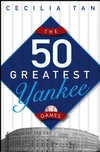
Hitting the books, I’ve had a nice time perusing Cecilia Tan’s The 50 Greatest Yankee Games, a volume that’s sure to start more arguments than it settles. With nearly 16,000 games spread over more than a century to choose from, selecting 50 is no easy task, especially coming from a history that includes 39 pennant winners, 26 World Champions, and so many marquee names. Babe Ruth is here, and so are Lou Gehrig, Joe DiMaggio, Mickey Mantle, Reggie Jackson, and Derek Jeter, but lesser heroes such as George Mogridge, “Sad Sam” Jones, Bobby Murcer, Bucky Dent, and Jim Abbott get their time in the spotlight as well.

Tan’s select 50 span almost exactly 99 years, from Jack Chesbro’s heroics on October 10, 1904 to Aaron Boone’s pennant-winning shot of October 16, 2003, which isn’t to say that the Yanks come out on top in every game. Among the ranks are such notoriously bitter defeats as the 1947 World Series game in which Bill Bevens came within one out of a no-hitter, Game Seven of the 1960 World Series, in which Bill Mazeroski hit a walk-off homer, the 1983 game best remembered as the George Brett Pine Tar incident, and Game Five of the 1995 Divisional Series in which the Seattle Mariners’ eliminated the Yanks. Even the Chesbro selection is a defeat; the hurler’s ninth-inning wild pitch cost the Highlanders* the pennant against (of course) Boston. Tan is obviously a Yankee fan, but she’s shrewd enough to recognize when history trumps pinstriped glory; along those lines, Game Seven of the 2001 World Series (the “Last Night of the Yankee Dynasty,” as Buster Olney called it) stands as a rather glaring omission.

In this highly subjective task, Tan tries to strike a reasonable balance between individual accomplishments and team greatness, though that balance comes at the expense of mere garden-variety see-saw thrillers (such as this comeback against the Indians and the nine-run ninth inining against the A’s in ’98, personal favorites that were among my recommendations when Tan solicited them). No-hitters, even the lost ones, abound: Mogridge, Jones, Monte Pearson, a pair for Allie Reynolds, Don Larsen, Dave Righetti, Andy Hawkins, Abbott, Dwight Gooden, David Wells and David Cone. The hitters are here as well: Ruth calling his shot (or not), Gehrig hitting four homers, Mantle nearly hitting one onto River Avenue, Reggie hitting the trifecta against the Dodgers, Dave Winfield and Don Mattingly battling for a batting title down to the last day of the season, Jim Leyritz restoring hope in the 1996 World Series, and a handful of guys hitting for the cycle.

Defense get a bit of short shrift, however. While Billy Martin’s World Series-saving catch of a Jackie Robinson popup in 1952 and Derek Jeter’s now-legendary play against the A’s in the 2001 Divisional Series are here, I’d have saved room for Graig Nettles’s acrobatics in the 1978 World Series, particularly in Game Three, when he made several diving stops to cover for a less-than-sharp Ron Guidry. Tan relegated that one to her “Other” 50, but as a Dodger fan first and foremost, that memory still feels like an icicle jab to the heart a quarter-century later.

Tan’s done a great deal of research for this book, drawing not only from familiar accounts but also interviews with about 30 former Yankees, including oldtimers like Yogi Berra, Jim Bouton, Jerry Coleman, and Whitey Ford. If her delving into Yankee history isn’t on the level of Steven Goldman’s (spoiled we are by high standards, no?), she’s nonetheless able to inject new insight into some of these oft-told tales, and her book serves as a pretty solid thumbnail sketch of Yankee history via this subjective sample. I only wish she’d had the space to include the box score from each game. Let’s face it; no matter how famous or obscure an old ballgame is, that wonderfully concise package of numbers adds so many dimensions to the retelling of these tales that to omit it is virtually an injustice.

Oh, and about that asterisk (*) above. Officially, the Yankees were known as the Highlanders from 1903 through 1912. Tan notes in that Chesbro chapter that headline writers and sportswriters were already calling them the Yankees by that season, and does so herself throughout the chapter. Since that was the first time I’ve heard of the informal interchangibility of the two names going so far back, it sent up a flag. My initial attempts at researching this met with no more authoritative confirmation of this than a Wikipedia entry; the venerable Mr. Goldman, an authority on all thinks Yankee, was not available for comment. However, in pulling out The New Bill James Historical Abstract, I came across the Patsy Dougherty entry on page 698. Dougherty, a Boston outfielder, was traded to New York early in ’04, and James reports that the headline “DOUGHERTY NOW A YANKEE” was the first known instance of the team being called such in print. So there you have it.