Miguel Number Sixty One

Sunday’s contest between the Yankees and Chicago White Sox was my final regular-season game at Yankee Stadium. But with thunderstorms looming beforehand and nothing much at stake for either team, I told my brother and fellow ticketholder Bryan that I’d be just as happy if the game were rained out and our tix applied to meaningful games next season.

As it was, the game went on, despite three rain-delays, the last of which ended the contest after six innings. Bry and I had an enjoyable time despite the rain, thanks to our foresight in moving from our Upper Deck seats to the covered Loge level a half-inning before everybody else got wise. We stayed dry while Andy Pettitte disappeared into a quagmire–literally and figuratively–in the third inning. The rain visibly gave Pettite problems with both his grip and his footing, and after he went from 0-2 on Aaron Rowland to walking him, the grounds crew came out to apply drying agent to the mound.

Following this ad-hoc landscaping, the next White Sox batter was catcher Miguel Olivo. With a Polaroid for his Jumbotron ID photo and legendary Yankee announcer Bob Shepherd introducing him as “Number Sixty-One, Miguel… Number Sixty-One,” clearly this kid was making his major league debut. Indeed, Olivo had been recalled after the White Sox’s Birmingham affiliate had won the Double-A Southern League Championship the night before. His 24-hour one-man fairy-tale continued. In the pouring rain, Olivo smashed Pettitte’s second pitch over the right-centerfield wall for a three-run homer in his first major-league at-bat, the 83rd player to do so.

The White Sox put two more men on base before the umps got out of their rowboats to halt play. At this point the Yanks could be forgiven if they had hopes for a rainout. I’d have felt the same way had it not been for Olivo’s homer. Aided by circumstances though it was, his auspicious debut didn’t deserve to be washed away.

The delay lasted only about 35 minutes, so Pettitte found himself still in the muck once play resumed–first and third, nobody out. Robin Ventura instantly bobbled a Frank Thomas grounder to run the score to 4-0. At this point, with the Yanks having already lost the first two games of this series by a combined score of 21-3, a fan could be forgiven for shuddering as memories of the tail end of 2000 came flooding back. Recall that for the final three weeks of that season, with the AL East essentially locked up, the Yanks played baseball so badly that historians had to dig up the 1899 Cleveland Spiders (20-134) for an apt comparison. Had they begun folding the tents again?

Apparently not. They got down to business, Bronx Bomber-style, against White Sox starter Gary Glover in the fourth. Derek Jeter led off, lining Glover’s first pitch into right-center for a single, and Jason Giambi followed two pitches later with a line-drive homer to rightfield. The sparse crowd (39,587 my ass) had scarecly quieted down when Bernie Williams sent a 2-2 pitch into the rightfield bleachers, cutting the deficit to 4-3.

Giambi’s homer had tied him for the team lead at 37 with Alfonso Soriano. As I have a sushi dinner riding on this home-run race, I was even more gratified than usual to see Soriano send a Glover pitch into the leftfield bullpen in the bottom of the fifth, tying the game.

The rain started to sprinkle again as the Yanks loaded the bases in the bottom of the sixth, bringing up Ventura, the active leader in career grand slams with 16. Sox reliever Mike Porzio was called for a balk, allowing Jason Giambi to trot home with the go-ahead run. Porzio then walked Ventura, reloading the bases and ending his day. But before reliever Matt Ginter could retire Raul Mondesi, the tarps came out, sending us home. You can only watch a grounds crew roll the tarp so many times in a given day. Amazingly, play did resume briefly–long enough for all three runs to score on a Nick Johnson single and a throwing error by Magglio Ordonez. But we were long gone by then. And Miguel Number Sixty One’s homer was safely in the books.

Oh Brother, More Trivia

On the subject of brothers, my own bro Bryan, who lives here in NYC, offered up a trivia category awhile back which we’ve both been pondering: former Cy Young award winners who are convicted felons. Bryan seems to recall the original question (passed on via his boss) stating that there were five. So far I’ve come up with three.

The list obviously starts with Denny McClain (1968 & 1969 AL), who did time for racketeering and cocaine smuggling. Vida Blue (1971 AL) went to the big house for attempting to purchase cocaine. LaMarr Hoyt (1983 AL) had two stints in the joint for drugs, including one for being nabbed at the U.S.-Mexico border with them stuffed in his pants.

This is where I get bogged down. Dwight Gooden (1985 NL) had cocaine-related problems (suspension and rehab, but no arrest) and more recently was arrested on drunken-driving charges (dropped in exchange for Doc pleading guilty to reckless driving). I don’t think anything on his rap sheet counts as a felony, but you’re reading a guy who got his law degree out of a box of Cracker Jacks, so caveat emptor.

Ferguson Jenkins (1971 NL) was arrested in Canada for possession of small amounts of cocaine, hashish, and marijuana during a customs inspection in 1980. He was convicted, but the verdict “was vacated by the judge.” That is, Jenkins was completely let off the hook because the Canadian citizen was essentially a national hero. Not that my fake law degree is worth anything under the maple leaf flag, but I’m guessing Jenkins’ short-lived conviction amounted to a misdemeanor rather than a felony.

After that, I’m stretching for candidates. Young David Cone (1994 AL) had a few sexcapades which made the scandal sheets when he was a high-flying Met, but no charges ever stuck. Jack McDowell (1993 AL) got into bar-room brawls and gave Yankee fans the finger. Roger Clemens (5-time AL winner) threw a bat at Mike Piazza and was virtually declared Public Enemy #1 in Queens.

Gaylord Perry (2-time winner) greased a lot of baseballs, while Mike Scott (1986 NL) scuffed them, and choirboy-faced Orel Hershiser (1988 NL) dabbled in the black arts as well. Lefty Carlton (4-time NL winner) was a right-wing wacko. Pete Vuckovich had suspect hygiene. Sparky Lyle (1977 AL) sat on many a birthday cake in his birthday suit. Doug Drabek (1990 NL) pilfered $1.6 million of Peter Angelos’ money in 1998 while posting a robust 7.29 ERA. Rick Sutcliffe (NL 1984) commits criminal negligence on a nightly basis as an “analyst” for ESPN’s Baseball Tonight, and 3-time winner Tom Seaver is unlistenably godawful as a Mets announcer, much to the public’s endangerment.

But I can’t pin any felonies on them, nor on any of the usual suspects on the winners’ list: Koufax, Gibson, Hunter, Palmer, Glavine, Maddux, Johnson. Or the obscurities: Mark Davis, Steve Bedrosian, John Denny, Dean Chance, et. al. So unless the question’s been incorrectly defined, I’m pretty close to stumped. Or in need of a private detective to dig up some dirt on these guys. Let’s interrogate Pat Hentgen until he cracks, shall we?

Postscript: According to our sources, the number of felons in the original question was four, not five, and Fergie Jenkins was included in that count. So we’ll put away the thumbscrews.

Barnes-storming

I had a late brainstorm on my Seven Starts for Seven Brothers piece (see below), which was to go back and check the game story of the Martinez matchup over at the Nando Sportserver to see if the other pairs of brothers were mentioned then (the Sportserver has a very useful archive which goes day-by-day back to 1995). Lo and behold, this yielded the answer: Virgil and Jesse Barnes.

The Barnes brothers were the first duo to oppose each other, on May 3, 1927. Virgil started for the New York Giants, while the Brooklyn Dodgers’ Jesse came on in relief of one Doug McWeeny and tossed seven innings. Jesse took the W as the Dodgers rallied for six runs in the 7th and 8th innings off of Virgil, to win 7-6.

Not being particularly well-versed in that era, I never would have thought of the Barnes brothers myself. And I likely wouldn’t have found them because I had been skimming the Retrosheet team game logs for games in which two brothers both started. So while I hadn’t checked for the other pairs of brothers facing each other when one came on in relief, this does bring our total to seven and jibes with the pairs listed in the Martinez story, thus accomplishing our mission. Here’s the complete list of the brothers’ first matchups, with the winning brother listed first:

- Jesse and Virgil Barnes: May 3, 1927

- Phil and Joe Niekro: July 4, 1967

- Gaylord and Jim Perry: July 3, 1973 (the Indians won, but Gaylord didn’t get the W)

- Pat and Tom Underwood: May 31, 1979

- Greg and Mike Maddux: September 29, 1986

- Pedro and Ramon Martinez: August 29, 1996

- Andy and Alan Benes: September 6, 2002

Doug McWeeny? One of the most unlikely baseball names this side of Mickey Klutts. Mr. McWeeny finished his career with 37 wins, 57 losses and a 4.17 ERA for three teams between 1921-1930. He led the league in walks and shutouts for the Dodgers in 1928. Those ’28 Dodgers, who went 77-76, were the only winning team McWeeny ever played on in the bigs. And he was no Cary Grant, either.

Seven Starts for Seven Brothers

Mike of Mike’s Baseball Rants has been on a quest ever since the brothers Benes–Cardinal Andy and Cub Alan–faced each other as starting pitchers last week. According to several news reports, the Benes boys are the seventh pair in major league history to square off, with the most recent duo being Ramon and Pedro Martinez in 1996. None of the reports listed the other five pairs of pitching brothers, and so Mike made an incomplete list of possibilities where two brothers were in the same league but not on the same team:

- Forsch (1974-‘80)

- Perry (1972-‘73, ’75)

- Niekro (1967-‘69, ’74-‘83, ’86-’87)

- Dean (1938-’40)

- Coveleski (1916-’18)

- Stottlemyre (1990)

- Maddux (’93-’94, ’96-’97)

- Leiter (’86-’92)

I was able to offer one addition to Mike’s list, recalling that back in 1979, the brothers Underwood–Tiger Pat and Blue Jay Tom–faced off against each other. Both pitched well, but Pat pitched a three-hitter and won 1-0, thanks to a Jerry Manuel solo HR in the 8th inning off of Tom. Thank you, Retrosheet.

I also confirmed that Phil and Joe Niekro, who combined for 546 wins in the big leagues, had faced off several times, with Joe holding a career 5-4 edge on Phil. On May 29, 1976, Joe connected for his only big-league homer off of Phil. Oh, brother…

A reader of Mike’s page confirmed that the Madduxes faced each other as rookies in 1986, bringing our list to 5. Initial reports that the Leiter brothers have faced each other are thus far unsubstantiated. I did find that Mel Stottlemyre Jr, who started only 2 games in the big leagues for the Kansas City Royals in 1990, faced the Tornoto Blue Jays in one of those games, but brother Todd wasn’t on the mound that day. Close, but no cigar.

Even closer without the cigar were the brothers Coveleski (Harry and Hall of Famer Stan), who missed each other by a day twice and by two days once in 1916. Further digging in Retrosheet crossed off the Forsches (Bob and Ken), the Deans (Dizzy and Daffy) and the Perezes (Pascual, Melido, and Carlos). But I did find that the Perrys (Jim and Gaylord) met: on July 3, 1973, Jim and the Tigers faced Gaylord and the Indians. Alas, no box score of the game is available via Retrosheet.

Still, we’re up to 6. Does anybody know (and have confirmation of) the seventh duo? Bloggers are standing by.

One Year Later

I just returned from Tuesday night’s Yankees-Orioles ballgame, a mercifully short, virtually split-squad affair for the Yanks. This, the second game of a day-night doubleheader against the Orioles clocked in at 2 hours, 12 minutes and was won by the Yanks 3-1, despite Enrique Wilson and Alex Arias (the middle infield of a future nightmare) batting 1-2 in the lineup. Most of the Yankee payroll–Alfonso Soriano, Derek Jeter, Bernie Williams, Jason Giambi, Jorge Posada, and Robin Ventura–rested, and those who played didn’t work too many counts; John Vander Wal drew the game’s first walk in the bottom of the 7th. Jeff Weaver scattered four hits over 8 innings, retiring 20 out of the last 21 batters (8 4 1 1 0 5) and threw only 102 pitches. Sidney Ponson went the distance for the Orioles, pitching like a man who deserved better than a team that had lost 15 of 16 playing behind him.

A year ago, September 10, 2001, I was at Yankee Stadium, snarfing down soggy hot dogs from under a rickety umbrella during a pregame thunderstorm. That game, against the Red Sox, was rained out before it even started, and my friend Nick and I merely wanted to finish our dinners before disembarking. We ate watching a young woman in a rain-sodden Nomar Garciaparra jersey dance in the six inches of water which accumlated in the front row Yankee Stadium’s upper deck. Full of nitrates, I went home to write about Andy Pettitte.

The indelible image of Dancing Nomar Girl came back to mind the next morning, as I was surprised to be greeted by sunshine and clear blue sky leaving my apartment. Heading for the deli just down Second Avenue where I get my coffee, I saw thick, black smoke rising from downtown. In puzzlement, I listened as a man at the deli babbled something about “seeing the second plane hit” while a transistor radio broke news that the World Trade Center was on fire. It was 9:05 AM.

It’s been a long year since then. The occasion of this anniversary provides us a moment to pause and remember those who lost their lives, to reflect on our own lives, and hopefully, to offer some closure as well. I was lucky enough not to have any friends or family directly affected by the 9/11 attacks, but everyone I know has been affected on some level. My own response has been to count my blessings on a routine basis, to remind those close to me of their importance in my life, to partake in a markedly more civil city than prior to 9/11, and to make an effort to savor each and every day. It’s a simple prescription that has kept me upbeat, busy, and relatively happy in the face of my own anxieties–which, I’ll wager, are pretty light compared to what some people in this city have faced.

Besides longer lines and heightened security at the airport, I notice the difference the most at sporting events. My trip to a World Series game (Game 3, the one where G.W. Bush threw out the first pitch) was a paranoid, disorganized fiasco which took two and a half hours to get from the subway entrance to my seat in Yankee Stadium. The Winter Olympics, only five months removed from 9/11, were an adventure in quelling a public’s collective anxiety via a rather byzantine (but nonetheless effective) process. Everything since then is a joke, with the Yankees’ ham-fistedness towards allowing certain items in the park while cracking down on others (those dangerous umbrellas, opaque plastic bags, and whatever will fit under a baseball cap!).

But what really galls me at Yankee Stadium is the Seventh Inning Stretch. The Yanks’ entry in the mandatory patriotism sweepstakes is Kate Smith’s war-horse rendition of “God Bless America, which is fine in and of itself. But it’s juxtaposed with Eddie Layton’s whimsical organ run through “Take Me Out To the Ballgame,” which follows a mere 30 seconds later, and the sonic horror of “Cotton-Eyed Joe,” which follows that, rendering the summoned patriotism banal and ridiculous.

For reason I’ve only just begun to fathom, I went to work the morning of September 11 (a more complete acccounting of my day up to a certain point is here). Fifteen minutes of watching the breaking news on CNN (no mention of terrorists yet), half my cup of coffee, and I was out the door, passing ambulances and fire trucks rushing downtown to the scene. No, there was no stopping me; I had appointments, I had deadlines, and I was on autopilot. The stupidity of what I was doing didn’t hit me about halfway into my subway ride, when I noticed that several of the women on the train had been crying. People were scared. Why wasn’t I?

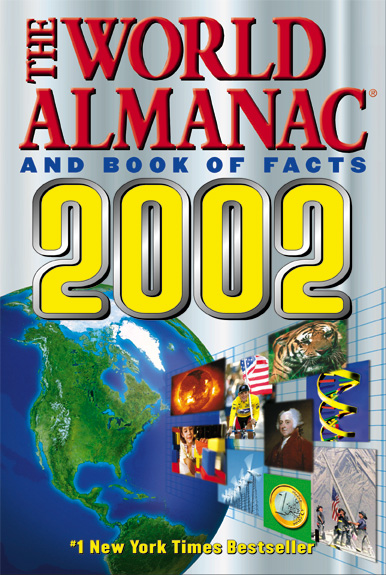
In the several times I’ve recounted the day’s events–to myself on the printed page or to anybody else who’s listened–I’ve never come up with a satisfactory explanation for why I still went to work. But in retrospect, I think it was just a subconscious way of reminding myself that I was strong enough to keep going, and that my best contribution in the coming days would be to do just that. I had to summon a somewhat clinical resolve in the days shortly after, faced with deadlines for the 2002 World Almanac which involved designing layouts around photos of the tragedy and revising the book’s cover (which I’d designed and delivered as final on Monday the 10th) to reflect events. That ordeal I’ve already written about.

Writing, both for this space and for myself, has helped me immensly in dealing with 9/11. By providing myself with a forum in which I could openly come to terms with it (in however roundabout a way), I allowed myself the space to process the day’s events, and found the opportunity to remind myself of how lucky I’d been. I’m grateful for that, as I’ve been grateful for every single one of the past 365 days. Thank you for tuning in.

A Few Quick Hits for a Blue Monday

Just a few articles I’ve been meaning to link to before they grow stale:

• The Twins Geek, John Bonnes, has a good little piece about the statistic OPS, a handy stat which stands for On Base Percentage + Slugging Percentage. OPS has over the past few years penetrated the consciousness of the baseball world, thanks mostly to the work of ESPN’s Rob Neyer. It’s to the point that even TV analysts and GMs (both generally much more resistant to new ways of thinking than the average baseball fan) even use it. OPS has found favor asmong statheads because it correlates very well with scoring–much better than simple Batting Average. Bonnes runs the numbers using runs per game over the past 10 years; OPS comes in at .956, which beats Batting Average’s .824. Anyway, worth checking out.

• Baseball Prospectus’ Gary Huckabay has a piece on how missing games due to strikes has had an impact on several players’ Hall of Fame credentials. Among those significantly affected are Harold Baines, who probably would have topped 400 HRs and may have stuck around for a run at 3,000 hits; Bert Blyleven, who would have edged ever-closer to 300 wins and 5,000 strikeouts, Barry Bonds, for whom 70 games might mean the difference between catching Hank Aaron; and Ken Griffey Jr., who along with Matt Williams lost a shot at breaking Roger Maris’ hallowed 61 HR record when 1994 went black. Also considered is Tim Raines’ missing month in 1987 due to collusion (he wasn’t offered a contract by any team at a time when he was possibly the best player in the National League, and so was prohibited from re-signing with the Expos until May 1). I still remember watching his mind-blowing May 2 debut that year–without the benefit of spring training, Raines went 4-for-5, tripling off of the Mets’ David Cone on his first pitch and hitting a game-winning grand slam off of Jesse Orosco in the 10th.

• Unless you’ve been on another planet, you know that the A’s have been on a roll. Not just with their recent 20-game winning streak, but everything they’ve accomplished over the past three seasons. Even we hard-hearted Yankee fans have admired them as they’ve pushed our team to the brink twice in the postseason. Avowed Yank fan Cecilia Tan writes of her own flirtation with the A’s, consummated when she attended their AL-record tying 19th win in a row on Labor Day. “Yankees loyalists may call me Hester Prynne,” writes Tan,”but I will wear my A proudly. At least until October.”

• Speaking of winning streaks and record-tying, the A’s brought back memories of the night I attented the Class A Pioneer League Salt Lake Trappers’ 27th consecutive win in 1987, which tied the professional baseball record. The Trappers were an independent team partially owned by actor Bill Murray, who would occasionally show up and coach third base, much to the crowd’s delight. They broke the 85-year-old record the night after I was there, and won one more before the streak ended at 29. So far as I know, the record still stands. The Salt Lake Tribune has a fond remembrance of the streak featuring a visit with then-Trappers’ manager Jim Gilligan, who finds a parallel with Oakland’s streak: “[T]he A’s are doing it without a big budget, which is kind of how we did it in Salt Lake.” Thanks to my Mom for the link.

Got a Mind to Ramble

Call me a smug Yankees fan for saying so if you want, but the meaningful part of the Yanks’ regular season is over. I had the pleasure of attending the finale Wednesday night, as the Yanks, behind a two-run opposite-field homer from Jason Giambi and a gritty performance by Andy Pettitte, beat Derek Lowe and the Boston Red Sox 3-1. The win clinched both the three-game series and the season series over the Sox, dealing Boston a mortal blow that had Lowe doing the math. “If they play .500, we’d have to go – what? – 21-4?” he said afterwards, referring to the Sox chance of tying the Yanks for the AL East lead.

Not that the race is completely over, of course The Yankees are apparently putting their clichés on one pant-leg at a time. “We feel good about it, but it’s not over,” says Yankee reliever Steve Karsay. “You have to take one game at a time until we clinch. You can’t look forward to next week or you will find yourself in a position you don’t want to be in.” Uh-huh. Tune in tomorrow, when the pitching staff pledges to throw strikes and stay within their abilities, while Joe Torre promises to get everybody some at-bats while giving people some rest so they stay… zzzzzzzz.

Wednesday night’s game was a satisfying one. Pettitte struggled early, allowing three hits and one run on his first eight pitches, the key hit being Johnny Damon’s bloop bunt. It sailed past the pitcher to a vainly charging Soriano, who short-hopped the ball and made a wild throw to first that was already too late. Dandy Andy labored his way out of trouble repeatedly, throwing 49 pitches in the first three innings and not posting a 1-2-3 inning until the 6th. But he finished strongly, retiring 12 out of the last 13 hitters–not bad for a guy who’d missed his previous start due to back trouble. Pettitte and Karsay (who earned the save by pitching the final two innings) used the Sox ageless DH Carlos Baega as their inning-ending escape hatch; Baerga grounded out with two on and two out in both the first and third innings, and struck out with a man aboard to end the eighth. Yankee outfielders Bernie Williams and Raul Mondesi made a couple of fine catches to bail Pettitte out on sharply hit balls by Nomar Garciaparra and Manny Ramirez, respectively.

The Yanks threatened Lowe early, Alfonso Soriano leading off with a single and Derek Jeter catching the Sox off guard with a bunt single. But Lowe struck out Jason Giambi looking and wriggled his way out of the jam. Giambi exacted his revenge in the third. Juan Rivera doubled, Lowe hit Soriano with a pitch (perhaps in retaliation for Pettitte hitting Shea Hillenbrand in the top of the inning?), Jeter grounded into a 4-6-3 double play, and then Giambi poked a sinker that didn’t sink over the leftfield wall. Two pitches later, Lowe had Bernie Williams 0-2, but plunked him on the wrist, then bounced his next pitch past catcher Jason Varitek. One pitch later, Jorge Posada lined a single to left-center, scoring Bernie with their third and final run.

The most telling moment of last night came on the subway ride home. A well-dressed man switched cars at 86th Street, boarding the one my pal Nick and I were riding. He took one look at us in our Yankees caps, and closed his eyes in disgust, grimacing and throwing his hands up in mock surrender as a shock of recognition hit him. It was our friend Gabe–a Brooklyn-residing Red Sox fan–finding himself in exactly the wrong place for sympathy. Nick and I needled him (albeit rather gently) as we discussed Boston’s slow fade and the two ballclubs’ strengths and weaknesses on the ride home.

Anyway… following Thursday’s win over Detroit and Boston’s loss to Toronto, the Sox are now down 9.5 games and the Yanks’ magic number is 15. None of this would be worth mentioning except for the fact that neither of the two teams faces an above-.500 club for the rest of the regular season; the Yanks meet (meat?) Detroit (6), Baltimore (7), the White Sox (3), and Tampa Bay (7), while the Sox draw the O’s (7), the Jays (3), the Rays (7), the Other Sox (3), and Cleveland (4). This should leave Boston fans with a glimmer of hope for gaining ground in the Wild Card race. While the Sox play the aforementioned patsies, the red-hot Oakland A’s, surging Anaheim Angels, and sinking Seattle Mariners spend the last three aweeks of the season jockeying for position.

The Yanks do have some very real questions to answer over the next few weeks, centering around–what else?–pitching. Mariano Rivera, on the DL for the third time this season with shoulder-itis, expects to be ready for the playoffs, but he has yet to resume throwing. In his absence, the bullpen-by-committee approach starring Karsay, Mike Stanton and Ramiro Mendoza has done admirably, converting nine straight since Mariano went down the third time. Five pitchers besides Rivera have combined for 19 of the Yanks’ 46 saves. Nobody can fault the Yanks for wanting their ace back, but Joe Torre is stoically shoring up his troops for a worse-case scenario.

On a brighter note, the starting pitching is starting to resemble the guys in the catalog, with Clemens sticking the bat in the collective Sox, Pettitte rebouding emphatically from his latest health scare, and Orlando Hernandez working his crafty repertoire against the lowly Tigers. David Wells’ back has held up admirably; he’s only 4.1 innings off Mike Mussina’s club lead in addition to his 15-7, 4.12 record. Moose keeps showing up for work, and has shown signs of shaking his slump, pitching two very good games over the Mariners and the Red Sox in between three bad ones. My hunch is still that El Duque is the odd man out in the postseason, barring injury to another of the Yanks’ starting five–simply because he’s the only one who’s pitched any relief at all this season. And also because I don’t trust the Yanks to embarrass a pitcher to whom they’ve got a long-term commitment by sending him to the bullpen for the postseason (i.e., Mussina), in favor of a more difficult one whom they might look to dispose of (i.e., Hernandez).

Speaking of off-season considerations, Bob Klapisch points out the big decisions the Yanks are facing, especially with regards to Clemens. Klapisch reports that in addition to the $10.3 million in deferred compensation due Clemens next season, the Rocket is likely to seek $15 million–which is especially steep because it may influence the team’s thinking on Pettitte’s $11 million option. Given that Pedro Martinez and Boston Globe writer Dan Shaughnessy have both floated thought balloons in recent days on bringing Clemens back to Boston, it’s practically a given that George will pay whatever it takes to foil the Sox plans (unless of course this is some of that reverse psychology, as the Sox conveniently scheme to bloat the Yanks’ already bloated payroll…).

Mariano Rivera has an opt-out clause after the season, though he’s not likely to risk an $8.5 million while his value is depressed due to his injury problems. Mike Stanton and Robin Ventura are two other key free agents. The bullpen–not to mention the postseason in general–seems unthinkable without the lefty setup man, who’s been a constant for the Yanks since ’97 and who hasn’t missed a postseason since 1990 (excepting the ’94 strike, of course). Ventura, who’s already topped 25 HR and 90 RBI while hitting .258 AVG/.376 OBP/.483 SLG, has certainly earned a return invitation, especially given highly-touted prospect Drew Henson’s lack of, um, seasoning. Henson made his major-league debut on Thursday, pinch-running for Bernie Williams in the 8th inning.

One Yank who could be purged in the offseason to save money is leftfielder Rondell White, who despite staying relatively healthy has hit a pathetic .235/.286/.355, including a .130 August. Rookie Juan Rivera was activated on August 30 (recovered from a bizarre golf-cart accident) to keep him eligible for the postseason roster; he will apparently get a long look this month as the Yanks assess whether he can help them in October or next season. The kid whacked an 0-2 Lowe pitch for a double on Wednesday, starting their three-run rally, but he apparently missed a hit-and-run sign which led to Jeter grounding into a double-play prior to Giambi’s homer. Oh, those rookies.

And hey, speaking of rookies…(At this point the yammering writer rambled off to bed )…

It’s One of Those Weeks…

…where I haven’t had much time to write in this space. Paying at the back-end of my vacation, alas, with some major deadlines at work looming over the next several days, and a few ballgames mixed in to boot. So if the frequency of my postings continues at its slow pace, blame my link-gathering monkeys and their liquor-addled ways; I’m too busy to discipline them, and they’re too drunk to listen anyway.

If you’re needing a fix, I’ve added a few blogs to my links page recently: Aaron’s Baseball Blog, which I’ve quoted a couple of times here recently; Boy of Summer, which in addition to being a fine new blog has the distinction (I think) of being the first to link to my site using a small version of my banner (something I should have created a long time ago and now add to my ever-lengthening to-do list); and Mike’s Baseball Rants, a witty and prolific blog (great titles: “50% of Hindsight Is 90% 20-20″ and “Did They Spell It Muenneapolis When the Muellers Played There?”). Check ‘em out.

I’ve got a piece in the pipeline about last night’s Yankees-Red Sox game, which I attended. Should be up later tonight or early tomorrow.

One Happy Camper

When I returned to civilization–as much civilization as Pinedale, Wyoming allows, at least–last Thursday after five days in the woods, I was disappointed to find that the players and owners still hadn’t reached an agreement to avert a strike. Disappointed, but hardly surprised. After all, what’s a labor crisis without an 11th hour?

I’d spent a good portion of my five days in the Wind Rivers mountains of western Wyoming–in between the times when I wasn’t catching sardine-sized trout, chasing wayward llamas (don’t ask), or donning my Gore-Tex to fend off torrential rain and hail–debating with my fellow backpackers as to whether there would be a strike. An air of resignation and disgust held over the group; the general consensus was 1) there would be a strike; 2) who cared anyway? and 3) those greedy players were the root of it all.

I’m still alarmed that such a belief prevails among the great majority of baseball fans–over three quarters of them according to some polls. Why do fans direct their anger at players making $200,000 or $2 million or even $20 million a year doing what they do extremely well and with passion, instead of at incompetent sandbaggers worth $200 million or $2 billion who hamstring their franchises with millstone contracts and hold cities hostage until taxpayers cough up stadiums? Sufffice it to say that the owners’ badmouthing of the product (the players) took a powerful hold on a public which still refuses to understand the issues. Why anybody would believe (for example) Bud Selig instead of Forbes Magazine when it comes to an objective look at the game’s finances is beyond me. And why anybody would side with the likes of the Seligs, the Reinsdorfs, the Mooreses, and the Hicks instead of the players also escapes me.

Both ESPN Magazine’s Tim Keown and that famed iconoclast Jim Bouton offer similarly interesting views on this phenomenon. The former writes: “There is perhaps no issue galvanizing our nation quite like the distasteful notion of young, able-bodied men making millions of dollars playing baseball.” Keown remains as mystified as anybody when it comes to the reasons behind this phenomenon, especially given the Commissioner’s ineptitude as the game’s chief spokesman:

The direction of public opinion is mystifying, really. Everyone seems to understand and accept Bud Selig’s epic incompetence and seemingly bottomless capacity for — to be highly generous — twisting the truth. Just to pick something at random, Selig can’t even embrace the game’s best stories — the allegedly impossible small-payroll successes in Minnesota and Oakland. Those two franchises are models, and Bud calls them aberrations. They should be honored, instead they are belittled. Has there ever been a worse spokesman for the game than Selig?

Bouton, in a New York Times Op-Ed piece, attempts to direct fans’ anger towards the owners instead of the players. He writes that the owners have engaged in a systematic PR campaign against the players ever since the advent of free agency:

The owners are counting on your resentment of the players to frighten them into giving in at the bargaining table. Their campaign to turn you against the players, by calling them greedy and overpaid, began soon after the players won a measure of free agency in 1976. Yet all the owners have succeeded in doing is turning a nation of fans against players they once loved and admired. Which is pretty foolish when you consider that players are not just employees — they’re the product.

Bouton points out that since winning free agency, the players have been expected to compromise on top of compromise every time the Collective Bargaining Agreement comes up for renewal, “effectively giving up their free agency in bits and pieces.”

But let’s cut to the chase: I’m ecstatic there is no strike. Without being too particular about the particulars of the deal, I’m elated that the season can continue unabated. I’m happy that Minnesota Twins players and fans alike can stick it to Bud, knowing that their franchise has survived a bout with the Grim Reaper, as contraction is off the table for the duration of the new CBA. I’m filled with glee that the three-team dogfight for the AL West can continue. I’m practically turning cartwheels knowing that A’s fans and Twins fans can continue to speculate on whether their team can beat the Yankees this fall. Hell, I’m even thankful that I can fret about Mariano Rivera’s shoulder (and psyche) withstanding the rigors of the postseason. It beats the Selig out of staring at an October devoid of baseball.

And I’m not going to worry too much about whether the Yankees and George Steinbrenner will suffer unduly at the hands of the revenue-sharing and luxury-tax portions of the new agreement. Let’s face it: Raul Mondesi plays a mean rightfield when he’s so motivated, but acquiring an $11 million mediocrity midseason just because the Boss loses patience with a platoon of proven role-players doesn’t speak well for the status quo. Let Steinbrenner tighten the Yankee belt this winter, showing Roger Clemens the door when the Rocket asks for another $10 million on top of his $10 million “option” and burying Sterling Hitchcock in the Tomb of The Next Ed Whitson so that he can pick up Andy Pettitte’s option instead. Let him find a taker for Rondell White so that he can give Juan Rivera a shot at a starting job. And let him pass up Japanese star Hideki “Godzilla” Matsui so that Nick Johnson can continue to develop. We don’t need those steenkin’ free agents–well, most of them–anyway.

The one thing about the new CBA which truly troubles me is that there’s still nothing to prevent revenue-sharing recipients from pocketing the money and continuing to sandbag. The one potential positive about a strike would have been shaking out some of those skinflints crying about their inability to keep up with the Yanks while shaking Steinbrenner down for cash. What’s going to stop those owners from dragging their feet for another four years in exchange for even more concessions from the players’ union? There’s also nothing in the new CBA which distinguishes between a relatively well-run small- or mid-market team (like the Cleveland Indians or the Seattle Mariners) and the blundering large-market Philadelphia Phillies. The system can still be abused.

I’m not exactly crazy about the MLBPA’s concession on the contraction issue come 2007, but so long as it’s the Devil Rays, the Marlins, or anything with Jeffrey Loria’s fingerprints on it, I don’t really care too much from this distant vantage. I’m curious to see how the Expos situation is resolved, with regards to the team’s currrent ownership status, its future in Montreal (or Washington, D.C.), and the pending RICO lawsuit by the former minority partners which names Selig and Loria as defendents.

But on the whole, I’m impressed that the two sides were able to avert a work-stoppage. If nothing else, it sets a precedent that future negotiations don’t have to end in bloodshed, acrimony, and litigation. Perhaps the new CBA will restore some of that phantom “competitive balance” we’ve supposedly been missing, offering “hope and faith” that the Kansas City Royals and Pittsburgh Pirates can continue to bungle things on their own accord. Perhaps it will give some of those billionaires their cues to skiddoo instead of whinging about their inability to compete. Perhaps Bud Selig will stop badmouthing the product and instead work on rebuilding baseball’s fan base.

Or better yet, perhaps Bud will view this as an opportunity to exit the Office of the Commissioner, taking his bad rug and ugly mug home to Milwaukee. Or Timbuktu–let’s provide some hope and faith for Brewers’ fans, after all. While Selig may deserve at least some modicum of credit for averting a stoppage, it’s still not enough to atone for a decade of ineptitude, badwill, and a missing World Series. If a season without a strike seemed like a pipe dream a week ago, at least permit me to hold onto one more dream.

But enough of my ranting about Selig. On a Labor Day with labor peace, I’m ready to put all of this aside and get back to the game I love. It’s about time.

See You On the Other Side

I’ve reached my pitch count. My past three weeks of work have been high-stress, with long hours, longer streams of four-letter words, and a few days of broken A/C during a heatwave thrown in for good measure. It’s a perfect recipe for needing a vacation. Fortunately that’s what I’m getting as I head to my parents’ home in Salt Lake City and then on a four-day backpacking trip in Wyoming.

I’ve reached my personal pitch count when it comes to baseball’s labor situation as well. Day after day of headlines have taken me on a rollercoaster ride of optimism and pessimism, of sound truth and bald-faced lies, of speculation about the playoff races and a harrowing vision of an October without them. When George Steinbrenner begins to sound like the voice of reason, we’re through the looking glass here, people.

I’m starting to think Bud Selig’s gag rule on owners speaking out about the labor situation was a good idea. The current flaunting of the rule has me gagging every time one of the owners opens his mouth and reveals just how ridiculously stupid the lords of the game can be. Tuesday’s New York Times had an article in which San Diego Padres owner John Moores said he’s prepared to shut down the game for an entire season to get a deal favorable to the owners. Never mind the fact that Moores’ team is slated to move into a new ballpark in 2004, a ballpark which is supposed to produce the kind of revenue stream a small-market team needs to stay afloat, a ballpark which Moores wrung out of the taxpayers at the 11th hour.

Most ridiculously, Moores is quoted as saying, ” I’m not going to be a part of a crazy system where we have to keep raising ticket prices.” As if ticket prices won’t rise upon moving into a new stadium. Over at a weblog called Mike’s Baseball Rants, the proprietor cites the price gouging which occurred when the Brewers and Pirates recently moved into new ballparks:

Actually what cause the greatest increase in ticket price are new stadiums. Owners believing that a new stadium is enough of an attraction in and of itself to command a higher fare have increased ticket prices: According to CNN, when the Pirates moved into a new stadium in 2001 the “average ticket price soared 82 percent to $21.48 from $11.80″ the previous year and the Milwaukee Brewers also the recipient of a new stadium in 2001 “raised prices by more than half to an average of $18.12 from an average of $11.72.” Now those teams are complaining of decreased attendance in the new stadium’s second year. What do they expect when the gouge the locals as soon as they open the gate?

Moores isn’t alone in shoveling manure. Texas Rangers owner Tom Hicks, speaking about the owners luxury tax proposal, told a Dallas newspaper, “Every team in baseball that has any kind of business sense would try to manage its payroll to stay under that tax threshold. There might be one or two that wouldn’t, but that’s a decision those teams have to make. Certainly, I can assure you, the Texas Rangers wouldn’t be among them. If this system is implemented, the Texas Rangers will be under the threshold.”

If ever there were a case for calling bullshit, this is it. This from the man who signed Alex Rodriguez to a 10-year, $252 million dollar contract two winters ago, and who currently has Chan Ho Park at 5 years and $65 million, Juan Gonzalez at 2 years and $24 million, Rusty Greer at 3 years and $21.8 million, Jay Powell at 3 years and $9 million, Jeff Zimmerman at 3 year and $10 million, and an already-picked-up option on Carl Everett for $9.15 million in 2003. Park has been a disaster, with a Boeng-level ERA (7-something). Gonzalez has been a shadow of his former self. Greer is slated for neck and hip surgery and is probably Done. Middle reliever Powell spent the first half of the season on the DL. Closer Zimmerman has undergone Tommy John surgery. A payroll of $131 million for a team 15 games under .500 and 20 games out of first–that’s fiscal responsibility for you. As we say around here, have a nice hot cup of Shut the F— Up, Mr. Hicks.

A Murray Chass article in Thursday’s Times speculates that both Hicks and Moores, along with Steinbrenner, are headed for $1 million fines by Selig for violating the gag rule. Chass cites skeptics who think Steinbrenner will be fined more money for being critical of Selig, and those who think His Rugness put Moores and Hicks up to their comments. But he also notes that those comments may actually have played to the players’ union’s advantage. On Hicks:

In a memo to agents earlier this week, for example, Donald Fehr, the union executive director, cited Hicks’s comments as evidence that what the owners really seek with their proposal for a luxury tax on payrolls is a payroll cap, pure and simple.

On Moores:

If there were any softness in the union ranks on the idea of striking, that kind of talk would not further intimidate players but would reinforce their resolve. Players are competitive by nature, and when someone challenges them with incendiary statements, they respond in kind. As usual, the owners are doing Fehr’s work for him.

In other quarters, there are some glints of optimism. ESPN’s Tim Kurkijian, never my favorite writer, lists five reasons why there won’t be a strike, focusing on the bad PR of being on strike September 11 and the fact that the two sides are separated by only a relatively small amount of money on the luxury tax (at last count $33 million, according to Chass.

Over at Baseball Primer, labor lawyer Eugene Freedman points out that the owners have already won by getting the players to agree in principle to increased revenue sharing, a stronger salary tax system, a worldwide draft, and steroid testing. Of course, until the ink is dry, ain’t nobody won nuthn’. We’ve seen plenty of instances in the past where acrimony at the negotiating table has scuttled a deal and taken both parties back to square one.

Wednesday night my friends and I took an informal poll of each other over cold beverages at a New York City bar. 100% of us agreed there would be a strike, with 75% believing that the strike would wipe out the postseason. Today, I’m a little more optimistic. Tomorrow will probably crush that optimism. But for the five days after that, I’ll be off the grid somewhere in the Wind Rivers mountain range in western Wyoming, taking in fresh air unbefouled by the likes of Selig, Moores, and Hicks. Since I don’t return to civilization until August 30, I’m going to let the two sides take it from here without my help. Close the deal or close the doors.

I’ll see you on the other side…