Basking with the Ho-Hum Guy

Basking in the afterglow of that miraculous Dodger win, I caught the MLB.com postgame interview footage with Jeff Kent. Now, I’m not a fan of Kent’s winning personality, as I wrote before, but I respect the hell out of his game, and for a guy who treats baseball like a job instead of a passion, he’s certainly somebody who gets the job done more often than not [late note: not Wednesday night, when he struck out with two outs and the bases loaded, the Dodgers down by two, to end the game].

With the rest of the team whooping and hollering as if they’d clinched a playoff spot after Monday night’s win, Kent sounded like a killjoy:

“I’m standing here as your ho-hum guy. I’m not too excited about this. This is just one game in 162 that we’re trying to get ahead on. It was a great game, don’t get me wrong. But for me, I’m taking this one in stride.”

A killjoy, perhaps, but a correct one. Sure enough, Kent’s words came back to haunt the Dodgers, as they lost on Tuesday night to the Pittsburgh Pirates, 10-6, and fell out of first place with a Padres victory. Marlon Anderson, one of the biggest heroes of Monday night, made a valiant effort to prevent Jose Bautista’s grand slam by diving into the stands, then slammed a three-run homer — his third in two days and his fifth this month — to narrow a 10-3 lead, offering a brief flicker of hope. But the magic wand was out of batteries, and that was as close as the Dodgers got. Sigh.

As Earl Weaver once said, “This ain’t football. We do this every day.” And when that means the 2006 Dodgers, every day may include a blow to the solar plexus or pure, unadulterated joy. Still, Tuesday’s revelry was fun. A few favorite responses from around the web:

• Robert Daely, who attended the game and kept score, concludes his entry at a blog called Celcius 1414: “So what’s the scoring symbol for a miracle?”

• Jon Weisman at Dodger Thoughts, who also attended, offered up an SOS on Tuesday’s one-line entry, titled “Help Me”: “I can’t think. I can’t think about anything else.” Finally getting the chance to post at length, he wrote:

Pure, glorious torture.

One of the wonderful things about Tuesday was to see the entire community share in the wonder of the Fourmer game. (No, I know that doesn’t really work, but you know what I’m talking about.) You might not have even known there was a community until Nomar Garciaparra’s exclamation point flew into the left-field bleachers. So many people were talking about it, and man, so many people were writing about it.

And it killed me not to be able to join in. Monday night was a blessing, but my Tuesday work schedule was a curse.

It was humbling to see everyone else do everything I wanted to do: recount their tales of attending or not attending, transcribe Vin Scully’s call, round up reactions, pull together video montages, interview participants, write open letters to their sleeping children. I wanted to do it all. Instead, I was just left with being an ordinary fan blessed with having experienced the event live. It’s okay, but I’m jealous.

The genius of Scully is that he doesn’t need any extra time to put his stamp on history, not one extra moment. He speaks directly into history.

Let’s get this straight. I sit writing at home, 3,000 miles away, while you get a loge box seat to view history and you’re jealous, Jon?

I actually understand that.

• Speaking of Scully, here’s a five-minute YouTube montage — viewed over 10,000 times as I write this — that captures his call of the five homers. If it had only gone on another 30 seconds or so, his awesome, belated reminder about the team being in first place would have made the cut. There’s a more complete, higher-quality two-part clip that runs about 14 minutes which includes that reminder as well as his sign-off.

That game simply wouldn’t have been the same without Vin.

• Rob McMillan at 6-4-2, where I haven’t spent enough time lately, offers a thorough roundup of all of the Four Homer Game links. He reminded me that I neglected to include a note about the confrontation between Dodger first base coach Mariano Duncan and Padre pitcher Jake Peavy. “Obviously, it upset me,” said Peavy, “but that had nothing to do with me not throwing quality pitches.”

As Rob corrected my last post (and rightly so), I’ll point out that the spat occurred after the first inning, not before the game.

• Eric Neel at ESPN’s Page 2, wrote a letter to his sleeping young son:

What happened was one of the six best Dodgers games I’ve ever seen — right up there with the R.J. Reynolds squeeze game, the Rick Monday walk-off game, Game 4 of the 1988 NLCS, Steve Finley’s grand slam game two years ago, and the night Gibson went deep off Eckersley in the first game of the World Series. Remind me to tell you about those games some day, but for now, I’ll tell you about this one, because you asked me to, and because I can’t believe it happened.

…I’m laughing out loud as he runs the bases. And dancing, too. And so is mom. I’m singing out my list of all-time Dodgers games and shaking my head like a bobblehead. We waltz into your room and sidle up to your top bunk and I just say, “We got ‘em, T.”

I want to tell you more, but like me, you’re lost in a dream.

That particular dream is over — the Dodgers lost again on Wednesday night, but so did the Padres — but long live the dream.

• Scully was again in classic form during Wednesday night’s game. I’m simply not sure I could get through this nightly rollercoaster without presence and his counseling. He speaks with the authority of somebody who’s seen and called more than a half-century of Dodger ups and downs but has had — is still having — far too much fun to grow jaded or frustrated.

With the Dodgers trailing by two but threatening to tie:

“Well, I’ll tell you what, you might as well get accustomed to this. It’s going to be like this every day, right on through the first of October, I believe,” he said, elongating “every” into its three-syllable form.

After the game, with the fans beginning to file out once Kent’s strikeout left their comeback unfulfilled, and an on-screen graphic showing the Dodgers tied with the Phillies in the Wild Card standings and a half-game behind the Padres in the West:

“It is really something. And we still have four left here, and six on the road. Ten games left and they all go nose-to-nose down to the wire. Hope you’ll be out here to join in the fun, the excitement, the disappointment, the euphoria, what-ever. It’s a great game and a great team to watch.”

Amen, Vin.

Operas Have Been Written About Less

With the Yankees coasting towards their ninth straight division title, my attention has been riveted on the NL West the past several days, where the Dodgers and Padres have been fighting tooth and nail for control of the division and its likely consolation prize, the NL Wild Card. Coming into the series, the Dodgers held a bare half-game lead, and thanks to the most miraculous comeback I’ve ever seen this side of Game Seven of the 2003 ALCS, they still hold it four days later. In the interim they managed to rip my guts out about 17 times, but really, who’s complaining? This series alone justified my Extra Innings cable TV package. Operas have been written about less. We’re talking about a fairytale bedtime story as read by Vin Scully himself. But let’s back up a bit…

• • •

The Padres have owned the Dodgers all season; coming into the series, they’d won 11 out of their 14 head-to-head battles, including all five games at Dodger Stadium. The Dodgers would have to make some headway against that in order to survive the weekend still in the playoff picture.

Friday night kicked off the series with a marquee matchup featuring two soft-tossing fortysomething pitchers near the end of the line, Greg Maddux and David Wells. Interestingly enough, the two 20-year vets had never faced each other before. I’d attended Maddux’s previous two starts, one at Miller Park, the other at Shea, and watched opposing hitters bleed him to death. Since coming to the Dodgers, Maddux has struggled on the road, yielding a 4.87 ERA in five starts, including his six-inning no-hit bid in his Big Blue debut. In Chavez Ravine, he’s been something else, yielding just a 1.71 ERA coming in.

The 43-year-old Wells served three different DL stints this year, finally proving himself healthy enough just as the Red Sox season sank to the bottom of Boston Harbor. Theo Epstein traded him back to the Padres — for whom he pitched in 2004 — on August 31, a move that signaled a white flag for the Red Sox. Big as an RV now, he nonetheless still has his impeccable control and a penchant for rising to the occasion. Here in New York, we still miss the Boomer.

The matchup lived up to its billing, with the two wily veterans matching zeroes for the first three and a half innings. In the fourth, having just benefited from a double play, Wells issued a two-out walk to Jeff Kent — the only free pass he issued all night — before J.D. Drew drove him home with a double. Julio Lugo followed with a single to run the score to 2-0. Hampered by a sore ankle, Wells yielded to a pinch-hitter in the sixth still trailing. Meanwhile, Maddux was doing no less than making his second no-hit bid in nine Dodger starts. He didn’t allow a hit until Brian Giles singled with one out in the seventh, and he departed at inning’s end, having thrown just 68 pitches.

The Dodgers added another run in the seventh when Marlon Anderson reached second on a bunt and a throwing error by first baseman Adrian Gonzalez. Anderson then stole third on Mike Piazza, who’d only thrown out about 12 percent of opposing baserunners, scoring on a sacrifice fly by Olmedo Saenz.

The Padres mounted a threat in the eighth when Jonathan Broxton issued a leadoff walk to Gonzalez, who came around to score on a single and a throwing error by Lugo on a botched double play. Takashi Saito closed the deal in the ninth by striking out two hitters and then inducing Giles to ground out, and like that, the Dodgers had given themselves a nice cushion in the division race.

That cushion didn’t take long to be erased. The next night, in a game I mercifully missed, rookie Chad Billingsley took the hill for the first time since missing three weeks due to a strained oblique muscle. He lasted just an inning, yielding three runs, two of them on a Gonzalez double. The Dodgers quickly got one run back when Rafael Furcal poked a leadoff homer, but in the third inning, the Padres rolled a snowman, as the golfers say: eight runs on homers by Mike Cameron, Todd Walker, and Gonzalez off of Eric Stults and Tim Hamulack. The Dodgers tacked on a run late, but they were never in this 11-2 rout.

Sunday’s matchup, another battle for first place, was much closer to Friday in tone. Chris Young and Derek Lowe matched zeroes, with Young yielding just one hit through six innings. By the time he departed, the Padres had given him a 1-0 lead on Russell Branyan’s two-out home run in the top of the sixth. An inning later, the Dodgers got even on a Russell Martin solo shot off of Cla Meredith, ending the rookie reliever’s amazing run of 34 scoreless innings dating back to July 17. It was the first homer Meredith allowed all year.

The nailbiter remained deadlocked into the ninth. Broxton got into trouble by surrendering a one-out single to Josh Bard (replaced by pinch-runner Khalil Greene) and then a walk to Geoff Blum. Pinch-hitter Termel Sledge laced a single to right that brought home Greene to put the Pads on top. A wild pitch sent the runners to second and third, so Dave Roberts was intentionally walked to face Giles with one out (gulp). Broxton won the battle, striking out Giles looking on the seventh pitch of the at-bat, and he escaped the inning when Josh Barfield fouled out.

The Dodgers mounted a meager threat against Trevor Hoffman when Furcal, who never took the bat off his shoulder, drew a two-out walk. But Kenny Lofton only managed a flyball to centerfield, and like that, the Dodgers surrendered first place for the first time since August 9.

• • •

Which brings us to Monday night’s finale. This one, which I TiVOed to save until I finished the Hit List, was almost over before it began because Bad Penny turned up. Er, Brad Penny. Penny came in as the league leader with 16 wins, but after earning an All-Star Game start with a 10-2, 2.91 ERA record, he’s been brutal in the second half, posting a 5.91 ERA. He seems to run deep into nearly every count, and his labor-intensive style isn’t just hell to watch, it puts a big burden on the bullpen.

Here, Penny got two quick outs in the first, the second by striking out Giles. But Gonzalez poked a single up the middle, Piazza doubled him home, Branyan walked, Cameron tripled to make it 3-0 — I waited all day for this? — and Blum brought him home with a single. 4-0, grrrr. In an instant message, I suggested feeding Penny to rabid wolves. In my head, I devised tortures so cruel, the Geneva Convention would have blushed.

But the Dodgers quickly began chipping away against Jake Peavy. Peavy, this man’s preseason pick for the NL Cy Young, has had a trying year due to a strained latissimus dorsi muscle and other woes; he came in just 9-14 with a 4.25 ERA, though in his previous three starts he’d allowed just four runs in 21.2 innings.

Furcal started the party with a bunt and moved to second on a Lofton single. Nomar Garciaparra, back in the lineup after missing two starts due to a strained quad sustained late in Friday night’s game, grounded into a double play, but Jeff Kent drilled a double to deep centerfield to plate the run. Alas, J.D. Drew struck out looking to end the inning.

The Dodgers got another run back in the second when Anderson, whom L.A. acquired from Washington at the August 31 deadline, poked a solo homer to rightfield, his third in just 25 at-bats as a Dodger. The third brought even more fun when Furcal led off with a homer, and back-to-back two-out doubles by Kent and Drew tied the score. A whole new ballgame, baby.

Penny and Peavy artlessly trudged onward, neither recording a single 1-2-3 inning all night. The Padres left the bases loaded in the fifth, and the Dodgers, as if in sympathy, stranded two themselves. Brett Tomko, who’s been awful enough lately to push his ERA above 5.00, took the baton from Penny and promptly surrendered a leadoff double to Blum. He got as far as third base before Tomko whiffed Roberts to close the door.

Alan Embree relieved Peavy to start the bottom of the sixth and got into trouble himself, yielding a single to Anderson — his third hit of the night — and then walking Wilson Betemit. Grady Little called pinch-hitter Olmedo Saenz, slated to bat for Tomko, back to the dugout in favor of Oscar Robles, who tried to lay down a sac bunt. Embree picked it up and threw to third for the force, but the throw pulled Branyan off the bag to leave all hands safe with nobody out. Ohboyohboyohboy!

But Meredith came on in relief of Embree and quickly restored order. Furcal grounded into a forceout at home plate, and Lofton hit a feeble first-pitch comeback that started a 1-2-3 double play. I nearly swept my laptop into the floor in anger, then thought better of it. The Dodgers used the double-play escape hatch themselves in the bottom of the inning, when Joe Beimel induced Bard to ground into a 5-4-3 DP to escape a two-on, one-out jam.

Alas, the dam broke in the eighth, when Broxton came on in relief. The burly, heat-throwing rookie had surrendered the winning run the day before, and while he looked poised, the results weren’t there. A one-out walk to Blum was followed by an RBI double by Barfield, who took third when the throw got by the catcher. Todd Walker brought him home, and nearly scored himself via a steal and a wild pitch. I held my breath as Giles flied out to right to end the ordeal.

Scott Linebrink, the Pads’ fine setup man, instantly made things interesting when Anderson drove a ball into the rightfield corner. He ran through the third-base coach’s stop sign and chugged into third with a leadoff triple, his fourth hit of the game. Wilson Betemit promptly plated the run with a single up the middle, then gave way to Julio Lugo. The Dodger Stadium crowd gasped as Furcal lofted a flyball to leftfield, but it settled into Roberts’ glove for an easy out. Scully’s call was classic: “The crowd looking at that flyball with their hearts, and not with their eyes.”

With two outs, Lugo took third when Lofton slapped a two-out hit to right. Giles nonchalanted back into the infield, and Lofton, who can still motor at 39 (he’s got 10 triples and 27 steals this year), raced to second. Alas, Nomar struck out swinging to keep the score 6-5.

The Padres looked like they’d seal the deal in the ninth. Gonzalez greeted Saito with a single — the fourth time he’d reached base on the night, and the ninth time of the series — and Manny Alexander — Manny Alexander? — beamed in from the twilight zone to lay down a sac bunt. Bard drove a ball to deep centerfield that would have gone out had it not been for an amazing effort by Lofton, who knocked the ball down and kept Gonzalez from scoring. “That might have saved the season,” I thought to myself, admiring the play. Cameron was intentionally walked to load the bases, and then all hell broke loose. A wild pitch scored Gonzalez and moved the runners up, a sac fly scored Bard, and then a Barfield single scored Cameron to run the score to 9-5. Jack Cust, another long-lost soul from an alternate dimension, grounded out to close the inning but the damage was done. Fair game to the Padres, it seemed.

The big rally had taken the Pads out of a save situation, so instead of calling on Hoffman, Bruce Bochy turned on the autopilot — as Joe Sheehan writes today, this was a chance for the Padres to step on the Dodgers’ neck — and summoned Jon Adkins. Adkins threw ball one to Kent, who’d already had a great night with two doubles and a single. Kent promptly socked his next pitch over the centerfield wall, and I reminded myself about the fantastic season he had last year for the Dodgers, when all else crumbled around him. I’m not fond of the man, but I respect the hell out of his game, and if nothing else, seeing him round the bases in what still looked like a lost cause at least sent a message that the team would go down swinging.

Four pitches later, J.D. Drew, another gamer, punished another Adkins offering, sending it into the right-centerfield bleachers to trim the lead to 9-7. “Okay, okay!” I muttered to myself as Bochy belatedly summoned Hoffman, four shy of becoming the all-time saves leader and still at the top of his game.

Martin greeted Hoffman with a home run to left-center on his first pitch, the Dodgers’ third home run in a row. For a moment I wondered if I’d been looking at a replay — it was well after 1:30 AM, after all — or backed the TiVO up, but the ball landed in a different spot than either of the previous two. “Holy shit. Tying run at the plate, baby!” I said to myself, frantically flapping the blanket that I’d been curled up underneath. “The Dodgers are still a buck short,” reminded Scully as the cameras cut to Martin’s dad dishing out high- and low-fives to bystanders. In stepped Anderson and I thought, “This is asking too much.” At best I hoped he could double to complete the cycle, but really, anything this side of an out would have been fine.

And for some reason, at that moment, I was reminded of Dick Nen. Any Dodger fan who knows his history knows the significance of that name. In his fifth inning “This Day in Baseball” feature — generally the only time Scully appears on screen these days — the Dodger announcer reminded the audience that 43 years ago today, Nen, in just his second major-league at-bat, slammed a ninth-inning, game-tying home run to cap a comeback against the St. Louis Cardinals. The Dodgers had trailed 5-1, but they went on to win in 13 innings. It was the only hit Nen ever got for the Dodgers, but it helped them stave off the Cards (whom they led by three games at the time) to win the pennant. The situations weren’t parallel, but the message was clear: pennant races make for strange bedfellows and unlikely heroes.

On Hoffman’s very next pitch, Anderson hit a towering drive over the right-center wall as the Dodger Stadium crowd erupted. “Believe it or not!” exclaimed Scully, and the late Jack Buck’s immortal words to describe Kirk Gibson’s World Series homer came to the tip of my tongue: “I don’t believe what I just saw!” What came out instead was a string of obscenities, gleefully muttered through the world’s biggest shit-eating grin as I watched bedlam in Chavez Ravine. The camera cut to fans who’d left the game re-entering just to see what the hell had happened.

Four homers in a row — that’s something I’ve never seen, and unless you’re pushing 50, neither have you. The feat was done three times in the early 1960s, most recently by the Twins in 1964. To summon such magic in the service of late-inning rally in the midst of a pennant race? By a team that entered the night last in the NL in dingers? Dude, that’s why I watch baseball. Unbelievable.

“The art of fiction is dead,” wrote Red Smith on the occasion of a much more somber moment in Dodger history. “Reality has strangled invention. Only the utterly impossible, the inexpressibly fantastic, can ever be plausible again.”

And there were still no outs. Lugo slapped Hoffman’s next offering into the outfield, but Cameron got under it for the first out. Pinch-hitter Andre Ethier popped out to shallow center, then Furcal, who’s morphed into Albert Pujols this month (.388/.411/.687, with five homers in his last 10 games) tomahawked a shot that took Giles to the warning track as 55,000 fans held their collective breath. Close but no cigar.

That took the game to the 10th inning, where Aaron Sele came on in relief. Sele had crawled off the scrap heap and into the Dodger rotation earlier this year, going 3-0 with a 2.20 ERA in his first five starts. He was at 6-2 with a 2.91 ERA in mid-July when things began to unravel, and he was sent to the pen in early August when the Dodgers feared he was gassed. Since then he’s appeared only sporadically — a spot start here, a long-relief appearance there, an extra-inning stretch for good measure — with rocky results that had taken his ERA to 4.35. Not surprisingly, he quickly got into trouble, when Giles hit a one-out double and Gonzalez drew an intentional walk. One looooong flyout later (Lofton at the wall to haul in pinch-hitter Paul McAnulty’s drive), Bard singled in Giles, and a Cameron walk prolonged the agony. But Sele retired Blum to end the inning, preserving the one-run deficit.

As the clock approached 2 AM Eastern, on came Rudy Seanez, last seen drawing his walking papers from the Red Sox amid the Beantown Beatdown. Scully marveled at Seanez’s lengthy, injury-riddled career, which included a stint with the Dodgers back in 1994-95 and is now on its fourth run with the Padres; in all he’s pitched for eight big-league teams, and it took him until 2005, his Age 36 year, to record even one 50-inning season.

Seanez walked Lofton to lead off the inning. “Ball four! And the Dodgers have a rabbit as the tying run,” exclaimed Scully. Up came Garciaparra, and though his injury isn’t as severe as Gibson’s, one could be forgiven for thinking of that fairytale moment on such a weird and wonderful night. Manager Grady Little — oh jeez, what a buzzkill to think of him at this moment — had sounded like he was risking Nomar’s entire season the day before when he remarked:

“Unlike the knee injury, where he could play when the pain was tolerable, this thing, if you push it, could pop altogether and he’d be out for 10 days or two weeks, and we can’t afford that right now.. I think he’ll play tomorrow, and he could pinch-hit today.”

Indeed, Garciaparra struck out in the pinch in the ninth inning of Sunday’s game. Little was only slightly more sanguine before Monday’s contest:

“We’ll try him today… We hope he gets through it. It’s a little gamble. It could blow up if he gets overextended, but we’ll take a chance with it tonight. When a player gets under the gun with a chance to beat out an infield hit, it’s hard for them to back off… We’re trying to win the game… We need him in there to win the game. He wanted to play yesterday. He feels he can play effectively and we feel he can play effectively and that’s why he’s going to play.”

Wow. Nonetheless, there was Nomar, hitting just .224/.255/.469 in September, coming to the plate. Seanez fell behind 3-1, and then Garciaparra just crushed his next pitch.

Two-run homer.

Ballgame.

The second lead change in the division in as many days.

Are you fucking kidding me?

Leftfielder Roberts had already turned back to face the plate as the ball went over the wall as pandemonium broke out both in Dodger Stadium and in my own private viewing box; somehow I managed to keep from waking my wife. The Dodgers dogpiled at home plate as Scully, with admirable restraint, let the celebratory scene do the talking.

Two minutes later, the master of the mic remarked enthusiastically, “I forgot to tell you: the Dodgers are in first place!” Another minute of crowd shots and stadium noise passed, un-Scullyed, before he finally signed off: “I think we’ve said enough from up here. Once again, the final score in 10 innings — believe it or not — Dodgers 11, Padres 10.”

Best. Game. Ever.

So Long, Kitty

A few months ago, when Al Leiter suddenly became a staple in the YES Network broadcast booth, I predicted to a couple of friends that Leiter was being groomed to replace Jim Kaat. As great as Kaat is as an analyst, he’s clashed with Yankee brass before over everything from contracts to criticizing the team to NOT criticizing Alex Rodriguez enough, and given his advancing years (he’ll be 68 in November) and the sudden presence of another articulate former pitcher on the YES team, it seemed likely the end of his time with the team might be nigh.

Alas, the future has arrived much more quickly than I had predicted. After 50 years in the game as a player and broadcaster, Kaat is retiring, effective this Friday. He’ll throw out the first pitch at that night’s Yanks-Red Sox game, do his thing in the booth, and head off into the sunset. Damn. Set your TiVOs.

I’ve long enjoyed Kaat’s work, particularly in tandem with Ken Singleton. Pre-YES, the duo anchored the team’s coverage on the Madison Square Garden Network. As I wrote more than five years ago: “Kaat & Singleton are a smooth, even-keeled, knowledgable duo. Whereas Fox’s blaring production [these were the days when Tim McCarver and Bobby Murcer were calling 20 games a year for the Yanks on network TV] gets old real fast even in the most exciting of ballgames, MSG’s low-key approach is perfect for the long haul of a season.” The intrusion of Michael Kay once YES came about upset that dynamic a bit, but the duo’s smooth, subtle dynamic withstood the intrusion of the blathering Kay, keeping Yankee broadcasts bearable.

Which isn’t say that the opinionated Kaat gets a free pass on everything. He’s been pretty critical of the influence of Moneyball on the game, and his disdain for pitch counts isn’t surprising given that we’re talking about a pitcher who spent parts of 25 years in the big leagues, from 1959 to 1983.

For his career, Kaat tossed 4530.1 innings, good for 26th all-time (Greg Maddux passed him earlier this year) and 180 complete games, winning 283 overall and reaching 20 three times. He was a fast-working southpaw who at his peak faced off against Sandy Koufax in the 1965 World Series three times, including the decisive Game Seven. He closed his career as a lefty reliever for Whitey Herzog’s Cardinals, earning a World Series ring in 1982. Once upon a time, I touted his case for the Hall of Fame:

Kaat was a remarkably consistent performer for the Minnesota Twins for a 12-year span, a teammate of Blyleven’s for the better part of four seasons (their 1970 division-winning rotation also included Jim Perry and Luis Tiant–a foursome with at least 215 career wins apiece). Had the Cy Young Award been given in both leagues instead of just one overall, he likely would have won in 1966, when he went 25-13, 2.75 ERA, and he would have been in the mix in ’65, with an 18-11, 2.83 for a pennant-winner. Until David Cone won 20 games in 1998, Kaat held the record for the longest drought between 20-win seasons (eight years). He won in double digits 15 times (he lost in double-digits 16 times), won 17+ games six times, but had a 115 ERA+ or better only six times. A lefty, he tacked on a successful second career as a middle reliever, which enabled him to set a record for the longest gap between World Series appearances (1965-1982). Oh, and he also won 16 straight Gold Gloves, though a look at his raw fielding stats suggests several somebodys weren’t paying attention–five times in that span his Fielding Percentage was below .930, though his range factors were always 50-100 percent higher than the league average at the position. If I had to pick one of the three [Tommy John and Bert Blyleven being the others] to leave off, it would be Kaat, but I still think he should be in.

The development of the JAWS system ultimately led me to conclude Kaat wasn’t quite worthy of induction, but his work with the Yanks has more than earned my respect and even gratitude — no way in hell could I tolerate 100+ Yankee games a year with Tim McCarver in the booth. A Ford C. Frick Award admitting him to the broadcaster’s wing of Cooperstown would get no argument from me.

The New York Daily News‘s Bob Raissman recounts Kaat’s rocky early relationship with The Boss:

As a player, Kaat was a good interview. He left an impression. The late Don Carney, who directed Yankee telecasts on WPIX-TV, was so impressed with Kaat after a rain-delay interview (remember those?) he reached out and hired him to work with Bill White and Phil Rizzuto in 1986. Carney did this knowing Kaat was not on the best of terms with George Steinbrenner.

After Sports Illustrated put The Boss on its cover posing as Napoleon, Kaat wrote a scathing letter to SI accusing the magazine of poor taste. With so many great players in the game, Kaat wondered why SI would choose Steinbrenner. SI printed Kaat’s letter. When Kaat pitched for the Bombers (1979-80) he also got into a contract dispute with Steinbrenner.

Richard Sandomir’s New York Times article elaborates on Kaat’s 13-year history as a Yankee broadcaster:

Kaat first called Yankees games in 1986 for Channel 11, but he was bumped after a season for Billy Martin. Kaat thus had another reason to dislike George Steinbrenner, the Yankees’ principal owner, with whom he got into an unhappy contract dispute as a player a few years earlier. But on Dec. 25, 1994, he received a call at home from Steinbrenner.

“I was heading out to hit golf balls, and Mary Ann said, ‘It’s George Steinbrenner,’ and I said, ‘Yeah, right,’ ” Kaat said. Steinbrerner called to say he had approved Kaat as the MSG Network’s replacement for Kubek.

“He said, ‘I want everything to be good between us,’ ” Kaat said.

Kaat picked an exquisite time to join the Yankees at the start of their playoff and World Series run. From MSG to YES, he has been a low-key star, never boisterous, never loud, but always with strong views, and that made him the equal of the more nationally known McCarver and Joe Morgan.

“He knows the game so well and gets to the essence of a play so quickly,” said John Filippelli, YES’s president of production. When he was at Fox Sports, he added: “The one mistake we made was that we should have hired Kitty. I think you rate him the equal of any analyst you’ve ever heard.”

Amen to that. We’ll miss you, Kitty. Thanks for making summer evenings so much fun.

Pythagoras Gets Paid

As I mentioned earlier, this week’s Hit List — the first full one I’ve done since August 20 — is up at Baseball Prospectus. For the second week in a row, the Yanks top the list, followed by the Tigers, Mets and surging Twins, who not only look poised to keep the White Sox out of the playoffs but may give the Tigers a run for the AL Central crown.

The Dodgers are running eighth, right between the A’s and Angels. I made a bit of a deal last week out of the A’s finally passing the Angels after opening up a 7.5 game lead in the standings. But then, as now, the Angels still led in BP’s Adjusted Standings, the raw stuff of the Hit List where a team’s actual, first-, second- and third-order winning percentages (using various iterations of the Pythagorean formula) are calculated. With that 7.5 game lead back down to 5.5 through Sunday, the Angels climbed back ahead.

Even before last week’s list ran, I got an email from a disgruntled A’s fan pre-emptively complaining about the rankings. I wrote up a response that while sent as a reply, didn’t see the light of day anywhere else. Here it is, with stats through last Tuesday — a bit outdated, but the point still stands.

• • •

It’s always amusing how worked up someone can get when the stats don’t conform to their version of reality; last year it was Angels fans cranky about the A’s rating higher Hit List ranking and assuming some kind of sabermetric “bias,” to the point that I took the time to write a whole article about the Hit List process. This year, the shoe is on the other foot, and at least one A’s fan is up in arms. Reader B.O., who has written before to complain about the ranking of the A’s before, writes:

I’m going to complain about next week’s hit list now because I know I’m going to get all riled up when I see it. How is it possible that the A’s have scored 34 more runs than the Angels and are still behind them in 2nd and 3rd order winning percentage (and I therefore assume the hit list)? Have the A’s been playing KC all year? How much more difficult could the Angels schedule have been? And shouldn’t it even out by the end of the year when they’ve played all the same opponents? Is it actually taking into account the players on opposing lineups as individuals each day and if so, did all other teams have a rash of DL stints while playing the A’s but not Angels?

Assuming you stand by the methodology and rankings, do you really feel confident that the Angels and Rangers have both been better than the A’s this year and that their luck is really this horrible? If not, then I would ask what the hit list is really meant to be a measure of.

BJO can hopefully sleep more soundly knowing that the A’s have passed the Angels and Rangers on this week’s Hit List. But looking into the Adjusted Standings data, it appears that a good portion of that 5.5 game bulge (through Tuesday) is illusory, less the result of adjusting for caliber of competition than a massive gap between the two teams’ expected runs allowed and their actual runs allowed:

                      OAK       LAA
Actual RS 640 660
Projected RS (EQR) 641 663
dif -1 -3

Actual RA 595 645
Projected RA (EQRA) 636 612
dif +41 -33

Common underlying reasons for such shortfalls include either luck or differential performance in key situations (whether by starters or bullpen). Sure enough, when we check the two teams’ performance in situational hitting against, we see a massive difference in the A’s favor (dOPS is the difference between the OPS allowed in a given situation and the team’s overall OPS allowed):

Vs. LAA       AVG    OBP    SLG    OPS    dOPS
Overall .257 .319 .410 .729
Runners On .265 .328 .429 .759 +.030
RISP .267 .337 .449 .786 +.057
RISP, 2 Out .235 .328 .372 .700 -.029
Loaded .340 .377 .557 .934 +.205

Vs. OAK
Overall .266 .334 .413 .757
Runners On .267 .339 .400 .739 -.018
RISP .255 .335 .396 .731 -.026
RISP, 2 Out .243 .335 .361 .694 -.063
Loaded .320 .366 .515 .881 +.134

All in all, it looks like we’re talking about a swing of about 75 runs, or 7.5 games in the standings. I’m skipping any park adjustments in this quick and dirty exercise; I think it’s safe enough to say that the two teams play in pitcher’s parks, and given that we’re using OPS, we’re hardly dealing with precision anyway. Still, it’s apparent that despite an overall performance edge to the Angels, the A’s pitchers have fared better in every situational breakdown listed, both in actual terms and relative to the team’s overall pitching performance. But just because that’s so doesn’t mean it would be expected to hold up given larger sample sizes. Yes, the A’s have one of the league’s best bullpens (2nd in AL in WXRL at 12.9, LAA is no slouch, 4th at 10.3) but reliever performance is notoriously prone to regress over time; what we’re measuring is based on individual sample sizes of 50 or 60 innings, which really don’t tell us a whole lot that we can take to the bank year after year.

Anyway, unlike the Adjusted Standings, where the Angels still run ahead of the A’s based on second- and third-order win percentage, the Hit List does factor in the two teams’ actual records, thereby granting some amount of credit for that “lucky” performance and helping the A’s inch ahead of the Angels for the first time since July 3. Here’s hoping B.O. can finally rest easy.

• • •

A few more points to add to that. First off, I’m frequently asked how the Adjusted Standings and Hit Lists account for the caliber of competition. It comes in via the third-order winning percentage. Specifically, a team’s projected runs scored and allowed (Equivalent Runs and Equivalent Runs Allowed) are adjusted up or down based on the composite Equivalent Average of its opponents. In other words, team Y’s runs scored are adjusted based on the Equivalent Average Allowed by their opponents, and team Y’s runs allowed are adjusted based on the EqA of their opponents.

Second, things don’t always even out within a division. Not only do variable interleague and intradivisional schedules factor in (such as teams playing two series at home and one on the road against certain opponents), but there’s also the simple fact that, Team Y’s pitching doesn’t face Team Y’s hitting. If you’re the Yankee pitchers, backed by the best offense in the league, the rest of the offenses you’re facing are more likely to be slightly below average.

Third, neither the Hit List nor the Adjusted Standings account for individual lineups on a given day. I’d love to find a system that does, but for now, we’ll have to make do with the kind of general team strength calculations this system offers or look elsewhere for an answer. I’m still pretty confident that run differentials, particularly with adjustment, are vitally important in determining true team strength and predicting future performance.

Anyway, following my response, B.O. emailed me back. First he apologized for his premature griping, then he tried to lay the blame on me for the A’s dropping a pair to the Rangers on Monday and Tuesday: “thanks for putting on your curse as things are suddenly not going as well this week.” Sheesh. “A little regression to the mean, perhaps?” I suggested, reminding him that “Pythagoras always gets paid.” Teams that are eight games above their third-order win projections aren’t great bets to stay there.

Congrats, Mr. B!

Big congratulations to my good friend Alex Belth on his engagement to his lovely gal, Emily. Having met Em and watched a ballgame in the happy couple’s home up in Riverdale, I can vouch that Alex is getting one of the good ones. Mazel tov to both, and best wishes for the future.

The news comes with pix and a great story:

Ten minutes later, I had her on the five yard line in the bedroom when the phone rang. “Let it ring,” I said as she came in the room with the portable phone. Then thinking that it might be a return call from one of the potential interviews I was going to do I looked at the caller ID. My eyes–according to Emily–almost popped out of my head. “It’s Reggie,” I said.

And sure enough, it was none other than Mr. October. I picked up the phone and quickly made arrangements for an interview later this week. We weren’t on the phone longer than two minutes.

“You’re having some kind of fifteen minutes,” my fiance[e] says to me.

For the three and a half years Alex and I have known each other, Reggie Jackson has been a constant staple of our conversations. Alex is a year or two younger than me, but he’s old enough to remember the 1977, ’78, and ’81 World Series that pitted Reggie’s Yanks against my Dodgers. Reggie was larger than life to kids like us, and it didn’t matter whether you were rooting for or against him; you got your money’s worth either way. Dude had his own candy bar; even as a Dodger fan, I bought it, ate it. Today I see replays of his swing and think of a cross between the quick-wristed violence of Gary Sheffield, the pose-striking of latter-day Barry Bonds (“I’m this good and I hit it taht far, so I get to watch it, chump…”) and both the timeliness and titanic force of David Ortiz. He was a hot dog with extra mustard, with the ability to crush pitches and drop the bat to admire his own handiwork like nobody else. Or corkscrew himself into the ground as he grimaced, coming up empty in the big situation but making the pitcher earn it. Whatever happened, it was always worth watching.

For Alex, the same was true: “When I was growing up, Reggie Jackson was my favorite player,” he wrote a few years back. “He dominanted my thoughts; he was my idol.” Now, Alex is enough of a player as a writer — not just his blog, but a fine book (I’m halfway through Stepping Up myself) and a recurring spot on SportsIllusrated.com to his credit — that he’s got Reggie’s phone number. And just after he’s popped the question to the gal of his dreams, here comes Reggie to interrupt his post-engagement canoodling by returning his call.

Mr. October is forever a part of Alex and Em’s engagement, just as
Jim Bouton, one of my few heroes, is inextricably linked with the start of my relationship with my wife. Like the game itself, the truth is better than just about any story you can make up.

• • •

And yes, lest it occur to anyone to ask why I’ve got three posts (and counting) in one day, there are two reasons. First, I’m clearing out a backog of stuff built up from the past few weeks. Second, as my BP and other writing responsibilities have come to the fore, I’ve been posting here less, mainly because I tend to think in terms of articles, not quick hits. But I miss the latter, miss the immediacy of posting and then moving on, and so I’m trying to force myself into more of what I’ll call “Hit and Run” mode, just to shake things up. We’ll see how that goes for awhile.

Count Da Tangibles, Bitchez

Anyone needing an explanation for why Yankee fans love Derek Jeter need only look at his measured response to David Ortiz’s pre-emptive whining about the upcoming MVP vote now that the Dead Sox are 10.5 out of first place:

“Don’t get me wrong — he’s a great player, having a great season, but he’s got a lot of guys in that lineup,” Ortiz said of Jeter. “Top to bottom, you’ve got a guy who can hurt you. Come hit in this lineup, see how good you can be.”

To that, Jeter replied “I don’t have to do it in his lineup.”

Oh no he di-unt!

“I’m not thinking about the MVP right now,” he told reporters Monday. “We’re thinking about winning a division. We’ve still got something to play for.”

Oh, SNAP!

He then added, “No one here’s focused on individual awards.”

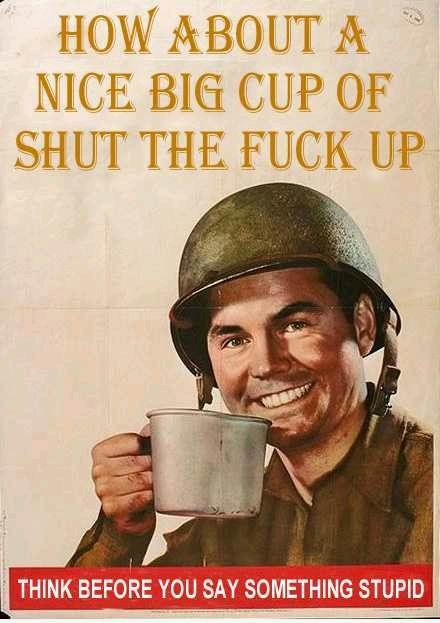
Game, set, match. As cool as the other side of the pillow, Jeter pretty much hangs the otherwise likeable but suddenly, puzzlingly petulant Papi with the rope of his own words while pouring him a frosty glass of Shut the Fuck Up.

Yankee haters love to dwell on the high esteem in which Jeter’s held for the things that don’t show up in the box scores, the intangibles. It’s true Jeter’s raw hitting stats don’t hold a candle to Ortiz’s in this or any year — they’re completely different players, and vive la difference. I’m not even sold on the notion that Jeter deserves the MVP award; if I had to vote today I’d probably cast mine for Johan Santana first. But today Jeter’s delivered something that you can mark down in your scorebook, and I’ll wager that it’s remembered come ballot time.

The Obligatory Five-Year Anniversary Post

I was pretty busy with today’s Hit List right up until near the submission deadline, so I hardly left the house yesterday and didn’t even turn on live TV except to catch the crucial innings of the Yankees-Orioles game (first question: what the hell is Fernando Tatis doing in a major-league uniform? second question: what the hell is he doing in the outfield? third question: is it possible for Earl Weaver to roll over in his grave while he’s still alive?).

As such, I didn’t spend much time thinking about the somber anniversary yesterday represented until I was done. The last thing I would subject myself to under any circumstances on such a day is the blathering of our idiot manchild shaved-ape president, who routinely politicizes September 11 to distract us from the reality that he bears more responsibility for the tragic events of that day than any American. And I’d rather jam a pen in my ear than listen to what most of the talking heads on TV have to say as they tiptoe around that truth [note: we’re not arguing these points in the comments, so don’t even bother trying].

Once the work was done I decided to mark the day in my own way, cueing up the HBO documentary Nine Innings From Ground Zero. I found myself crying almost immediately. I was here in the city for 9/11, lived through it and fortunately didn’t lose anyone close to me, though the hours of uncertainty, fear and dread as I accounted for my loved ones are something I wouldn’t wish on anyone in any lifetime. It was a life-changing experience, and reliving the reminders of that through the documentary — which has as much to do with the city in the immediate aftermath of 9/11 as it does with baseball — brought forth a flood of emotions.

For me, baseball became interwined with that September 11’s events even before the sun rose; my personal narrative begins with the rainout at Yankee Stadium on the night of September 10, where I saw a girl in a rain-soaked Nomar Garciaparra jersey dancing in the puddle at the base of Yankee Stadium’s upper deck as my pal Nick and I snarfed down hot dogs before filing back out. I went home and wrote a blog entry on Andy Pettitte, then woke up the next morning and marveled at the crystal blue sky, still thinking of Dancing Nomar Girl. It wasn’t long before I saw the smoke and the convoy of emergency vehicles rolling down Second Avenue.

Over the next couple of days my blog, just a few months old at that time, became a lifeline; writing — much of it not published — helped me to keep some semblance of sanity. I wrote a bit on September 12, then even more a few days later.

Every day I made a point of walking by Ladder Company #3 around the corner. They lost a dozen men — half the firehouse — that day. As the baseball resumed, I thought of them every time I saw an FDNY hat, and counted my blessings on a routine basis, reminded those close to me of their importance in my life, and made an effort to savor each and every day, no matter how banal. Even in the paranoid atmosphere of Game Three of the World Series — the game at the center of that HBO documentary — there was plenty to enjoy, especially if you didn’t have to endure watching the President throw out the first pitch.

Baseball was truly a part of the healing, as the HBO documentary reminded me last night. It unified us, not just in this city but all over the country, and gave us something to smile about, from the Yankees’ improbable march through the playoffs (Jeter’s play against Oakland may be the closest thing to divine intervention I’ve ever seen on a diamond) to those late-night comebacks at Byung-Hyun Kim’s expense. Even as those Yankees lost the World Series, they won our hearts while reminding us that we don’t always get the storybook ending, and that it’s up to us to make the most of what remains. “You can’t always get what you want,” as the Rolling Stones sang decades before, “But if you try sometimes, you just might find you can get what you need.”

That’s no cliché.

Clearing the Bases — Hardtland Edition

Back in New York City after my late-August travels — backpacking in Wyoming, eating fresh vegetables out of my dad’s garden in Salt Lake, and attending my brother-in-law Aaron’s wedding in Milwaukee — I banged out a streamlined version of this week’s Hit List while working on another Hit List-related piece that should run later this week. Here’s the intro:

If it’s Tuesday, this must be… home? The past two and a half months have been a blur for me, a string of seven out of ten weekends away from home for everything from weddings to funerals and milestone birthdays to miles into the Wyoming wilderness. Catching up on baseball isn’t always easy under these conditions, but thanks to a patchwork of Baseball Tonight, an Internet-capable cell phone (nearly as fast as my parents’ 56K modem) and a dog-eared pile of out-of-town newspapers, my latest ten-day absence has left me with just enough notes to get through a quickie Hit List in the service of the rankings while cobbling away at something I think my readers will enjoy: a helpful look at Hit List history that will run later this week. Until then…

The aforementioned piece, held because BP’s editorial pipeline is a bit backed up due to the holiday weekend, is based on over a century’s worth of Adjusted Standings data — the raw stuff of the Hit List — recently crunched by BP’s Clay Davenport. It’s an article I’ve been hoping to write for over a year, though the data at that point was little more than a twinkle in my eye. More on that piece when it runs.

In the meantime, the Tigers have relinquished the top spot on the Hit List for the first time since June 6, surrendering it to the Yankees; I believe the actual transfer of power occurred in the moment that skipper Jim Leyland paused mid-tirade to endure Kate Smith’s war-horse version of “God Bless America.” When I came out of the woods on August 30, I was surprised to find the Yanks eight games ahead of the Red Sox in the AL East; the latter had lost six straight and was preparing to ship David Wells off to San Diego, a de facto white flag on their 2006 season. The wheels which had begun to fall off during the Beantown Beatdown had gone the way of the axle holding them in place; the litany of injuries includes a scary diagnosis of non-Hodgkins lymphoma for Jon Lester, an irregular heartbeat that hospitalized David Ortiz, patellar tendonitis for Manny Ramirez (thus leaving the Sox without either of their two most fearsome hitters from August 27 to September 4), a strained fat lat for Curt Schilling, a transient subluxation of the shoulder for Jonathan Papelbon, and a Kevin Jarvis lodged in the rotation. When it rains, it pours.

Meanwhile, the Dodgers treated me to a three-game lead upon exiting the wilderness, the result of a seven-game winning streak. Of course, they’ve since squandered that; if there’s one sure thing about this year’s club, it’s that they combine the highest highs of the 2004 division winners with the abject haplessness of last year’s injury-addled underachievers, often within the lag time to publish an article. Case in point: my New York Sun piece was conceived on August 20, as the Dodgers put the finishing touches on a 19-3 run and widened their NL West lead to four games. By August 23, when the piece was submitted, the lead had shrunk to one game. The piece (“Dodgers Now the Sheriffs fo the Wild West”) didn’t run on August 25, as slated; the lead was still one game. Instead it ran on August 30, by which point it was back to three. I might have had to go fishing for a kill fee if they’d relinquished the lead. Not a kill fee from the Sun, mind you, a kill fee from Dodger fans to go off Ned Colletti or something drastic. Mark Hendrickson, my ass.

[As an aside, it appears that the Sun articles are no longer behind the subscription wall, so those of you who want more BP-flavored content — especially lots of Steven Goldman — can go crazy.]

Some notes from the midwestern portion of my jaunt:

• I flew from Salt Lake to Milwaukee via Chicago, and not only did I have a 6:30 AM departure out of SLC (severe enough to curtail my hike by a day because of the turnaround time in getting back to civilization), I had a two-hour layover in O’Hare for a flight leg of about a half-hour. I could have easily driven it faster. After checking every food option in three concourses and paying through the nose to download my email, I finally made my way to the American Eagle gate and found myself sitting next to two strapping young gentlemen in suits. Missionaries, I thought at first. Greaaaat.

Not really wanting to eavesdrop but having little better to do, I gradually picked up snippets of a conversation as the two of them began talking baseball. The curly-haired one broke out a USA Today sports section and began nitpicking the day’s transactions. “Why the hell would the Marlins send Randy Messenger down to A-ball at this time of year?” Not missionaries, at least.

The buzzcut one one broke out a cell phone and called his dad. Something about Nashville. And tickets. And front office. And Miller… wait, as in Park? Ballplayers? Nashville is the Brewers’ Triple-A affiliate, and it was September 1, time for the rosters to expand. When we arrived in Milwaukee, the two gents were greeted at baggage by an entourage that included an older man and a young wife with a two-year-old blonde girl in arms, wearing a Brewers t-shirt. No doubt about their organizational affiliation, at least.

But it wasn’t until I opened the next day’s Journal-Sentinel that I really knew what had transpired, because there on the page was a picture of the buzzcut one, wearing a Brewers cap. A local boy, apparently:

Growing up, Vinny Rottino spent a lot of time in the stands watching the Milwaukee Brewers. Now local youngsters will be watching him.

The Racine native, a versatile player who went undrafted out of UW-La Crosse but still worked his way into professional baseball, was brought up by the Brewers from Class AAA Nashville on Friday, when major-league rosters could expand.

Rottino, who can catch and play the corner spots in both the infield and outfield, was joined by right-hander Dennis Sarfate, a hard-throwing addition to the Milwaukee bullpen.

Rottino, 26, learned of his promotion Thursday night and was back in his home state a few hours later, living a dream he had as a kid at “quite a few games at County Stadium.”

…Rottino was tied for eighth in batting in the Pacific Coast League with a .314 average. He had 25 doubles, seven home runs and 42 RBI and stole 12 bases. He hit .391 (63 for 161) over his final 45 games for the Sounds, including .420 in August (34 for 81).

And all this while playing all over the field. Rottino appeared in 85 games at third base, 18 behind the plate, 17 in the outfield and two at first base.

…With his parents, two sisters and assorted nieces and nephews still living in Racine, Rottino figured to have a large cheering section Friday night, assuming he could get enough tickets from the club and teammates.

“I don’t know how it all works,” he said with a smile. “I’ve got to figure that out now.”

Heavens to murgatroid, a utilityman, even. Rottino’s season continues a run of success that saw him win honors as Milwaukee’s 2004 minor league player of the year for a campaign in which he drove in 124 runs for High-A Beloit. Baseball America ranked him as the Brewers’ #28 prospect in their 2006 Prospect Handbook, noting that “[c]lub officials consider him the hardest worker in the system” and praising his “low-maintenance, line-drive swing,” concluding, “He’s not far from being a solid big league utilityman.” Nice.

Here’s what BP’s Christina Kahrl has to say in today’s Transaction Analysis:

Rottino’s relatively uncomplicated, your basic organizational soldier who’s started games at third, catcher, and the outfield corners while hitting .314/.379/.440. He’s already 26 and far from prospectdom, but he demonstrates pretty nicely one of the benefits of the organization’s longstanding willingness to give local-college products a shot: signed as an undrafted free agent out of Wisconsin-LaCrosse, he’s a decent enough pick for the last spot on a major league bench. Think of him sort of as a latter-day Charlie Moore, without the unfortunate “let’s make this guy an everyday right fielder” diversion that those Brewers were prone to back in the day.

Rottino made his major league debut on the 1st, striking out in a pinch-hitting appearance. He got his first base hit a couple days later and is now 1-for-6 with a run in his short career, which has included seven innings in leftfield and two at third base. He’s got a fan here.

Sarfate, meanwhile, is a big (6’4″, 210 lb) righty out of Queens. The J-S notes that he was 10-7 with a 3.67 ERA with 117 K’s and a league-leading 78 walks at Nashville, shifting from the rotation to the bullpen midyear to take better advantage of his two-pitch repertoire and power arm. He was #24 in the Prospect Handbook, noted for a fastball which touches 97 MPH and sits 92-94, as they say. However. “[w]hen he leaves his heater over the plate he tends to get punished… None of his three pitches finds the strike zone enough.” Oof. Kahrl was a bit more optimistic:

As I noted in this year’s book, Sarfate seemed to drive PECOTA into a particularly pessimistic frenzy [weighted mean EqERA: 6.67]. His groundball rate has improved this year, and he hasn’t allowed much power, but nevertheless, after opening the year in Nashville’s rotation, he was bumped into the pen for the last month or so, a role in which he struck out 20 in 17.2 innings. His breakdown this season involves a pretty major platoon split, and since he’s never had a solid breaking pitch, a move to the pen really does seem for the best. I wouldn’t be surprised if he joins Jose Capellan next season in providing the club its best relief work, because like Capellan, he’s a minor league starter who just didn’t seem to have the staying power to make it in a big-league rotation. Taking a chance like this certainly beats investing much money in Dan Kolb, and I wouldn’t worry as much about Sarfate’s career arc as a reliever as PECOTA so obviously did over his prospects as a starter.

Sarfate pitched a scoreless 1.1 frames in his debut, whiffing three Marlins. Like his fellow passenger, rest assured that I’ll be keeping my eye on him from here on out.

• Rottino, by the way, is the first Racine native to play for the Brewers, according to this article. I note this because while I’m not from Racine, I do know a bit about its famous city-wide high school prom thanks to a fabulous, award-winning documentary made by some friends of mine, including directors Chris Talbott (a Racine native) and Ari Vena. The World’s Best Prom examines the event from the alternately amusing and bittersweet perspective of a handful of kids and adults, providing a history of this half-century-old tradition in which seniors from seven city high schools join together for a televised red-carpet extravaganza (the things you learn, man). It’s a great piece of work which you can buy here.

• At the wedding banquet, I wound up seated between my wife, Andra, and her 13-year-old cousin Jason from Minneapolis, one of two kids at the table; Livia, Andra’s shy 11-year-old second cousin, was on the other side of him. Knowing Jason’s a baseball fan and trying to engage him in conversation, I began by asking him whether he thought the Twins could beat out the White Sox for the AL Wild Card.

“I dunno,” he replied, as bored with the question as he was with the salad in front of him.

“Do you think Liriano will be back?”

“I dunno.”

“Who’s your favorite Jason on the Twins?” I figured with Bartlett, Kubel and Tyner to choose from, this might get the conversation going.

“Bartlett.” Damn. I might have to resort to amateur dentistry to get this kid to talk, I thought.

“Who’s your favorite Twin?” I finally asked in a last-ditch attempt. At which point Livia, who had spoken even less to this tableful of adults — mutely shaking off any offer to try the salad — leaned over and proudly interjected, “Mary-Kate and Ashley!”

Broke us up, that one did.

• The day after the wedding, the Hardt family and I attended a Brewers-Dodgers game exactly one year after I ran in the famous Sausage Race. This year’s race itself was rather uneventful; it didn’t even feature the newly-added Chorizo in the lineup; after his July 30 debut, he was sent out for “more seasoning” (the Brewer PR department’s words, not mine), to return next year. At least the Hot Dog (which I represented last year) won going away.

So did the home team, snapping a 10-game losing streak, much to my chagrin but the delight of some 33 thousand fans at Miller Park. Greg Maddux, who’d been golden since coming over from the Cubs, was cruising into the fifth in a 1-1 duel with David Bush when all hell broke loose. After a leadoff single and a Bush sacrifice, Brady Clark hit a sharp comeback shot to the mound. The ball glanced off of Maddux’s glove and the 15-time Gold Glove winner couldn’t find it, turning towards the rosin bag behind the mound as the ball spun behind him. Had the ball gone through it would have been a simple infield groundout that wouldn’t have advanced the runner, slow-moving catcher Damian Miller. Instead, a double, a sac fly, an intentional walk and a single brought home three runs to break the game open; only a fine throw by Dodger leftfielder Andre Ethier to nail Prince Fielder at the plate prevented the damage from being even worse.

The Dodgers rallied back with a pair of runs in the top of the sixth, but their inning ended on a play at the plate as well, with Corey Hart (not wearing sunglasses, as this was an indoor day game, and he’s not a pop singer) cutting down Jeff Kent. The Brewers pushed across two more runs in the bottom of the frame, chasing Maddux in the process, and that was all she wrote.

Nearly as bad was the fact that I couldn’t even find a “Cerveceros” shirt — a relic of the same Hispanic-themed tribute that brought the Chorizo to the big leagues — that fit. They were all absurdly long. I tell ya, tough day at the ballpark…

Beantown Beatdown, Briefly

“Where the f—- is your opus on the Yanks-Sox sweep already? I’m getting impatient already.” — Alex Belth

Apologies to Alex and the rest of my readers expecting an opus; there will be none this week. Instead I’ll refer you back to the usual suspects, Alex (and again), his compadre Cliff Corcoran, Joe Sheehan, Steve Goldman, Steve Goldman, and Steve Goldman. Them’s my go-to guys for this one.

I didn’t get a chance to watch very much of this past weekend’s five-game Beantown Beatdown, but I took great pleasure in the result nonetheless. My wife and I spent the weekend up in the Catskills with two other couples, in a beautiful log cabin without cable TV or Internet access. I caught the first four and a half innings of Friday afternoon’s game at home while packing, including Johnny Damon’s two-run homer, then the last few innings while driving upstate — this despite having to endure a woman going thermonuclear at the rental car agency for some 20 minutes while we tried to calmly slink though. Already the rout was on, but who knew it would take such lopsided proportions?

Nestled in the Catskills and engrossed in a game of Trivial Pursuit (we wuz robbed!), we were reduced to following Friday night’s game via a line score on my cell phone, repeatedly texting the Google SMS service like nickels grew on trees. 5-1, 5-5, 7-5, 7-10, 14-11… it’s no wonder the game wound up the longest nine-inning contest in big-league history, and I’m not certain I could have sat through it. At 12:45 AM, I was brushing my teeth and the bottom of the ninth was still going. Sweet.

Similarly, while we were able to read the newspaper accounts of Game One, and even managed to scroll through the cumbersome web interface on my cell phone to get the wire service account of Game Two, we had little to do with Saturday afternoon’s game beyond score checking. Even being back in the pocket by Sunday night’s game, I didn’t get a heck of a lot of viewing time; starting this week’s Hit List almost as soon I walked in the door, I was forced to speed through much of the game on TiVO. Given the rain delay, the continuous blathering of Joe Morgan, and the preening of Curt Schilling, that wasn’t a bad choice at all, and by the time Jason Giambi and Jorge Posada crushed 10th-inning homers off of Craig Hansen, I was only minutes behind. Still plowing the fallow Hit List fields, I heard more than I watched of Monday afternoon’s game, though I did have to smile at David Wells’ valiant effort in defeat. Fond memories of one of my favorite games — and writeups — of the Torre era. We miss ya, Boomer.

But wow, what a massacre. By now the figures I cited in this week’s Yank and Sawk Hit List entries are old news: 39 runs for the Yanks in the first three games, 28 walks issued by Boston pitchers in those games, nine of them by Josh Beckett, 20 runs surrendered by Boston starters in 13.2 innings, Johnny Damon 9-for-18 with 20 total bases in those games, Robinson Cano with 10 RBI, two Sox pitchers DFA’ed, the accomplishments of Bobby Abreu endlessly measured against Boston’s deadline inactivity… it’s all a blur. And while it did suck a bit to miss so much action amid an otherwise lovely weekend, my pals and I momentarily relished the thought of those beleaguered Sox fans twisting on the knife, those Boston Globe busybodies churning out “Sky Is Falling!” declarations as they throw sainted Theo Epstein under the bus. This beatdown’s been in the mail since October 2004, and while it doesn’t mean nearly as much — hell, in the grand scheme of things, it may not mean anything — capping those three wins with two harder-fought games more befitting this balanced rivalry does clinch the season series in short order and provide an indelible memory.

Through Tuesday’s play, Baseball Prospectus’ Postseason Odds Report estimates the Yanks’ chances at reaching the playoffs, either by flag or by Wild Card, at 97.2 percent, while the Sox’s chances are calculated at just 10.3 percent, down from 32.2 percent on Friday. I don’t put a ton of stock in that, but if it’s not bad enough, Deadspin has unearthed a YouTube clip of David Ortiz endorsing a product that, uh, puts the wood in one’s bat. Say it ain’t so, Papi. And speaking of which, how about a round of applause for Mike Myers, the Yanks’ lefty specialist who held Ortiz to an 0-for-4 in the series?

In any event, my time to blog is brief; I’m headed to Salt Lake City on Thursday, then Wyoming for my annual backpacking trip, then to Milwaukee for my brother-in-law Aaron’s wedding. Back just after Labor Day, with a long-awaited, historically-based Hit List piece, and a New York Sun piece on the Dodgers and the Wild, Wild NL West race that should land this Friday.

In honor of a series where everything came up Milhouse, I’ll leave you with a list of my seven favorite things about this week’s Hit List:

1. “Neifi Perez for a bucket of yak spit and a rusted-out tuba” is the best deal I’ve conjured up in ages. It’s almost good enough for Dave Littlefield.

2. Barry Bonds in orange and black. Thank you, stock photography!

3. “Reduced Fat Milk status levels” are perfect for describing slim chances. And I love watching the Blue Jays’ ship sink.

4. The Orioles becoming my designated entry where Simpsons references go to die. “Give me five bees for a quarter, is what we used to say…”

5. Nothing beats a western with an Ennio Morricone soundtrack. I’m partial to the Sergio Leone/Clint Eastwood trilogy culminating in The Good, the Bad, and the Ugly, which worked perfectly for the Cleveland Indians’ entry, but I’ll put in a good word for Once Upon a Time in the West; the scene where the man in the black hat is revealed to be noted good-guy actor Henry Fonda is one of my favorite moments on film.

6. Being pretty damn close in the Guess When Mike Sweeney Goes Back on the DL parlor game; I said August 19, and while he didn’t go on the DL, he did leave the game injured. Not that I wish injury on the poor bastard, I just like looking like I know the future once in awhile.

7. That Ozzie Guillen rant could have driven half a dozen entries.

See you on the other side, my friends…

Jeff Angus Turns Two

I’m about the last person in the world who needs a management book. Most of the work I do, whether graphic design or writing about baseball, is done from home by a squad of one… unless you count my bobbleheads, a/k/a the Futility Infielder Executive Board. They’re pretty much a bunch of Yes-Men, as in, “Fellas, should I write another rant about Barry Bonds?” Nods all around; they’re an easy bunch who, aside from regular dusting, require little attention from the boss.

Nonetheless, back when I was attending the SABR 36 Convention in Seattle, I talked my way into a copy of Management by Baseball by Jeff Angus. I’d seen the renowned blog of the same name, and heard Angus’ presentation the night before at an Elliot Bay Bookstore panel and was taken by the author’s engaging, accessible style and persuasive approach as he described his a-ha moment of combining baseball with his management consulting skills: an unsuccessful steal of second base bay the Mariners’ lumbering Jeff Burroughs as ordered by the worst manager in the history of history, Maury Wills. A couple days later, Angus presented a paper titled, “Punctuated Equilibrium in the Bullpen: The 2005 World Champion Chicago White Sox Blend Sabermetrics & Sociology to Deliver a Successful Innovation,” a mouthful of a title, but one of the best presentations of the convention.

So despite my prejudices against management books, I quite willingly gave Management by Baseball a shot, and I was pleased to find a book every bit as engaging as its author’s presentations. Angus’ central thesis is that whether you’re talking about the old-school, cigar-chomping by-the-Book game of yore or the post-Bill James variety, baseball is managed far more rationally than most other endeavors, and its openness makes tracking the effects of decision-making relatively easy. As such, there’s no shortage of lessons that can be drawn from the national pastime and applied to the workplace. “Baseball management,” he writes, “reflects more general management principles, more clearly and more broadly, than any of the academic teachings we normally use in organizations.” From the anecdote about Wills and Burroughs, for example, comes a lesson about the pitfalls of expecting that the talents that have been most important to a manager’s career are the key to success: “a classic management blunder,” as Angus notes in the intro.

I’d be doing the book a grave injustice if I simply reduced my take to a clichéd “it’s a hit!” endorsement, because first and foremost, Angus does a very good job of avoiding such groaners. This is not a book about “getting to first base” with your client, “hitting a home run” with your big project, or invoking the kinds of trite, baseball-flavored phrases which make a true fan want to throttle a boss awkwardly invoking the ol’ ballgame simply to connect with his underlings. Though Angus works with a four-base diamond model that may seem a bit clunky at first, each base refers to a set of management skills that become progressively more difficult to acquire yet important — an effective conceit.

If that’s all Management by Baseball was, it would hardly be worth mentioning in this space; I’d have put down my copy long before finishing. What kept me coming back was the myriad examples Angus uses in drawing from his baseball background (he was a sportswriter for the Seattle Sun, now writes a sabermetrics column for the Seattle Times, and is an active member of SABR) to find examples of innovation in management and their applicability to the rest of the workaday world. From long-dead icons like John McGraw and Branch Rickey to successful skippers of yesteryear like Earl Weaver and Dick Williams to modern-day winners like Joe Torre, Ozzie Guillen, and Mike Scioscia, to off-the-field deep thinkers like the aforementioned James and Leonard Koppett, Angus deploys a richly diverse cast of characters while mining the game’s history and literature to illustrate his points.

Now, to cover those bases. First base is what Angus calls “operational management,” or “managing the mechanics,” the ability to master the nuts and bolts of the inanimate objects that make up a job — money, time, schedules, tools, rules, processes, and so forth. In baseball, this covers a fairly wide scope of a manager’s job — setting the lineup, researching the opposition, knowing the rule book, deploying strategies. The fundamentals, in other words. Here we get sage advice from Rickey on time management, Weaver and Williams on keeping practice drills interesting, Lou Piniella on turnaround skills (accompanied by a chart showing Sweet Lou’s successes in taking over the Mariners, Reds and Devil Rays; Angus doesn’t shy away from offering up actual data to back up his assertions throughout the book). We also get a telling quote from Scioscia (whom Angus interviewed) about the Angels’ aggressive, contact-centric style, its suitability in relation to the talents of the team, and the sabermetrics underlying the style. Contrary to what you might think, Scioscia knows and understands his run-expectancy matrix as well as the next man, which is why he so emphasizes going from first to third on a single.

Second base is “managing the talent,” and here Angus hammers home one of the book’s most important points. In baseball, the talent IS the product; it’s the players’ skills which are the difference-maker, not only determining its winners and losers but selling the game and ensuring its long-term survival (think of the lessons of the ’95 lockout’s replacement players). So should it be in your workplace, counsels Angus. Take an active role in hiring the right people, understanding that you not only need the raw talents of superstars but the diverse skill sets of those jacks-of-all-trades like Tony Phillips (an Angus favorite) and even “chemistry” types like Doug Glanville. Improve performance by experimenting with roles to reveal otherwise-hidden strengths and weaknesses that may become valuable as circumstances change. Observe, measure and analyze what works and what doesn’t; baseball’s ability to collect data to facilitate analysis may not have easy parallels in some workplaces, but the rewards of finding means of measurement are worthwhile. Apply what’s been learned from that analysis to put employees into situations in which they can play to their strengths; hello, platooning! Coach them on the side to help shore up those weaknesses to build a stronger team. Among the baseball examples here, we’ve got McGraw breaking in a young Frankie Frisch at third because second base was occupied by Hall of Famer Dave Bancroft; Weaver recording pitcher-batter matchups on his legendary index cards; Allen Roth talking Dodger owner Rickey into his stat-gatering services; Dick Cramer’s Edge 1.000 data collection system making its way into front offices, where it was run by underlings such as future GMs Dan Evans and Doug Melvin; George Stallings using platoons to drive the 1914 Miracle Braves from worst to first; Rick Peterson learning from his students in order to facilitate passing on his own teachings; and Ozzie Guillen using his double-wide bullpen to deploy “closers by situation” on their way to a world championship.

Third base is “managing yourself,” applying those second-base skills to oneself by being emotionally and intellectually self-aware and avoiding “the Six Deadly Skins” as Angus calls them, six common behaviors generally imprinted from one’s upbringing. Each deadly skin except one — Anxiety — is linked with a manager of some notoriety: Uncontrolled Anger (Piniella), Perfectionism (Williams), Intimacy (Bobby Bragan, Williams’ inappropriately parental mentor), Denial (Hank Bauer, Weaver’s predecessor), and Uncontrolled Niceness (Chuck Tanner). Alas, while there are an interesting handful of baseball examples here — the “Management by Terror” style of George Steinbrenner, the psychology of the imagined curses of the Red Sox and Cubs, the virtues of Ichiro Suzuki, and the raw deal that Hank Sauer got early in his career — the section feels thin, its lessons the most nebulous.

Home plate is “managing change,” being flexible enough to respond and adapt to evolving conditions by recognizing the importance of patterns and probabilities rather focusing solely on facts and results. Angus gets a bit heavy here as the syllable count rises, but his points are worthwhile. He discusses punctuated equilibrium, the way cataclysmic events (asteroids hitting the earth, the strike zone being expanded) wipe out existing paradigms and leave room for experimentation and variation until a new order emerges. He advocates “prevolution” via stochastic strategies — investing resources in alternate means of distribution, deploying a lineup of both righties and lefties, and a rotation of power and finesse pitchers — as the key to success in this difficult-to-master skill set. From the history books, he invokes McGraw hanging onto his Deadball-era offense long enough to find dead-pull power hitter Mel Ott, whose swing was tailor made for the Polo Grounds’ short dimensions down the line; Rickey creating a farm system out of minor league teams to save on scouting and profit from surplus player production; Walt Jocketty trading for Larry Walker in 2004 to improve an already-winning team’s offense and defense; and Ed Barrow deciding a talented pitcher named Ruth would be more valuable to the team as an everyday outfielder.

Throughout the book, Angus draws not only on his model and the baseball examples but also his own real-world experiences in the workforce, a diversified resume that ranges from picking citrus as a teen to working on a manufacturing in a plastics factory to starting up a test center for computer products to serving as the marketing director for a $45 million computer company and ultimately as a management consultant to mid-sized and larger entrepreneurial ventures. The variety of his experiences enhances his tales from the trenches; he’s not just some MBA simply telling you about the dysfunctional corporate megaliths whose cubicles and boardrooms he’s graced. His vision of the workforce is ultimately a refreshingly humane one; if talent is your product, then it’s vital to nurture the skills and development of your employees in these ever-changing times so that everyone wins.

I’m no veteran of the genre, but I’ve watched enough pained laptop jockeys fly coast to coast to know that management books aren’t supposed to be fun; their jargon-laced blend of didacticism, drill sergeancy, and self-help fills up many a bookshelf in Hell’s anteroom. But ultimately Angus has written a book that not only comes off as a handy how-to for managers but that’s pleasantly readable even for such a cynical outsider as myself. Even better for seamheads, he’s written a concise, entertaining history of baseball innovation along the way. That’s a pretty cool way to turn two.